Chlorine-free baby wipes are often chosen by parents who want to understand how a wipe is made as well as what is in the cleansing solution. The label is one part of a practical comparison: consider the wipe material, fragrance, alcohol, preservatives, and how your child’s skin responds.
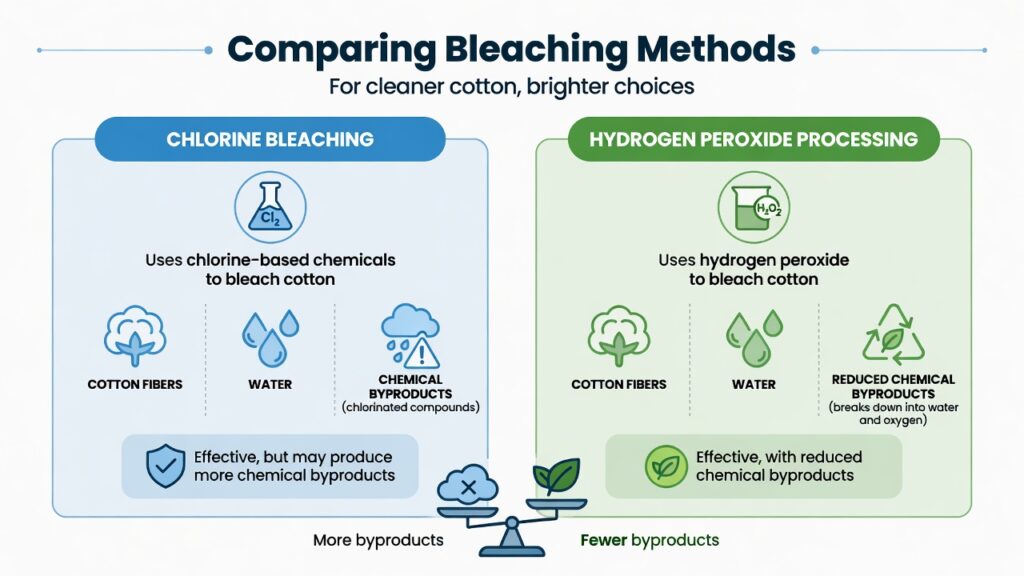
What chlorine-free means on baby wipes
For chlorine-free baby wipes, the claim usually relates to how the wipe material was whitened or processed. It does not describe every ingredient in the liquid formula, and it is not a universal safety certification. Read the package and brand information to learn exactly what the claim covers.
Dioxin-free claims in context
Some brands pair chlorine-free baby wipes with a dioxin-free claim. These terms should be read as processing information rather than a reason for alarm. A useful label explains the material and the manufacturer’s approach instead of relying on broad promises. The most relevant choice is one that fits your child’s needs and gives you clear, specific information.
How to compare baby wipe labels
When comparing chlorine-free baby wipes, start with the material: cotton, wood pulp, rayon, polypropylene, and polyester can all appear in wipes. Then review the ingredients in the cleansing liquid. Wipes need ingredients that keep the product stable during use, so a short list is not automatically better than a longer one.
For babies with easily irritated skin, fragrance-free and alcohol-free options may be worth considering. “Fragrance-free” is different from “unscented”: an unscented product can use a masking fragrance. Avoid making a decision from a single front-label phrase; compare the full ingredient list and instructions.
Gentle use matters
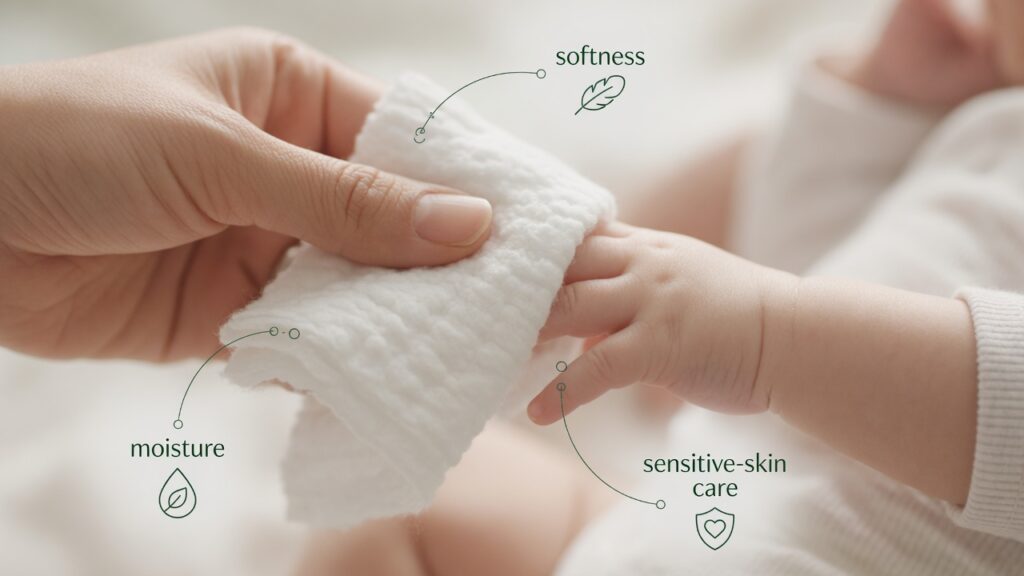
Use baby wipes gently and follow the package directions. Frequent diaper changes and gentle cleaning help limit prolonged contact with moisture and stool. If skin is raw or very irritated, plain water and a soft cloth can be less abrasive than wiping. Stop using a product that seems to trigger redness, burning, rash, or discomfort, and contact a clinician if symptoms are persistent, severe, or accompanied by fever, blisters, drainage, or pain.
Choosing chlorine-free baby wipes
Chlorine-free baby wipes can be a reasonable preference when the manufacturer clearly explains the material and processing method. Match that information with your baby’s skin needs, avoid known irritants, and choose a product that you can use correctly and consistently.
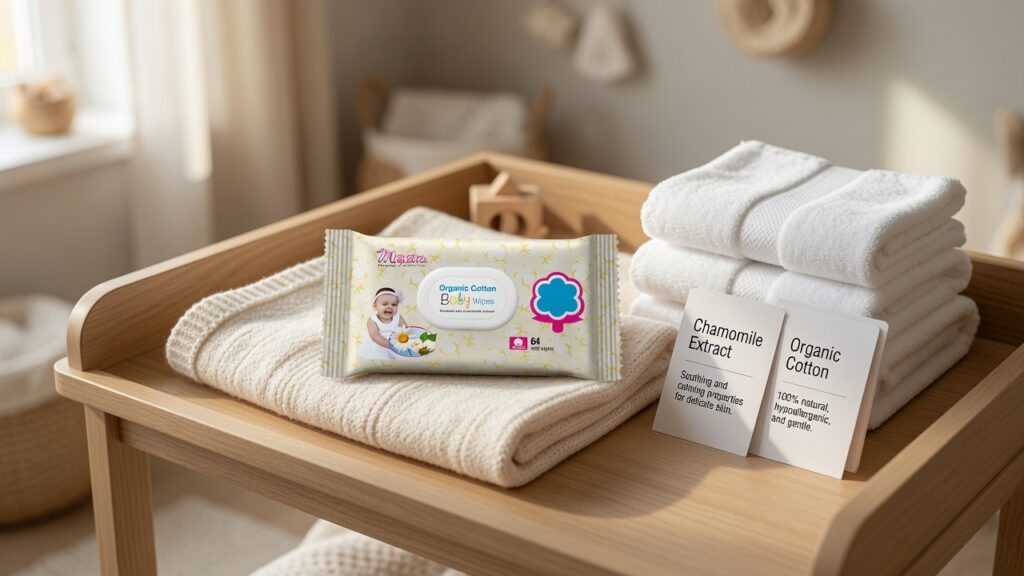
For an example of material details, see Maxim organic cotton baby wipes. You can also read the organic cotton materials guide for questions to ask when comparing fiber claims.
This article provides general product information and does not replace medical advice for a child’s skin condition.