
One “natural” or “eco-friendly” label does not define sustainable tampons. A tampon combines several components: the absorbent core, withdrawal cord, applicator when included, individual wrapper, and retail packaging. Each part has its own material and waste considerations.
A better comparison asks practical questions. What is the absorbent material? Does a recognized certifier support the organic cotton claim? Is the applicator plastic, cardboard, or absent? How much packaging is used? How should you discard the product after use?
Looking at the complete product helps shoppers compare sustainable tampons without assuming that any single material makes a product environmentally perfect.
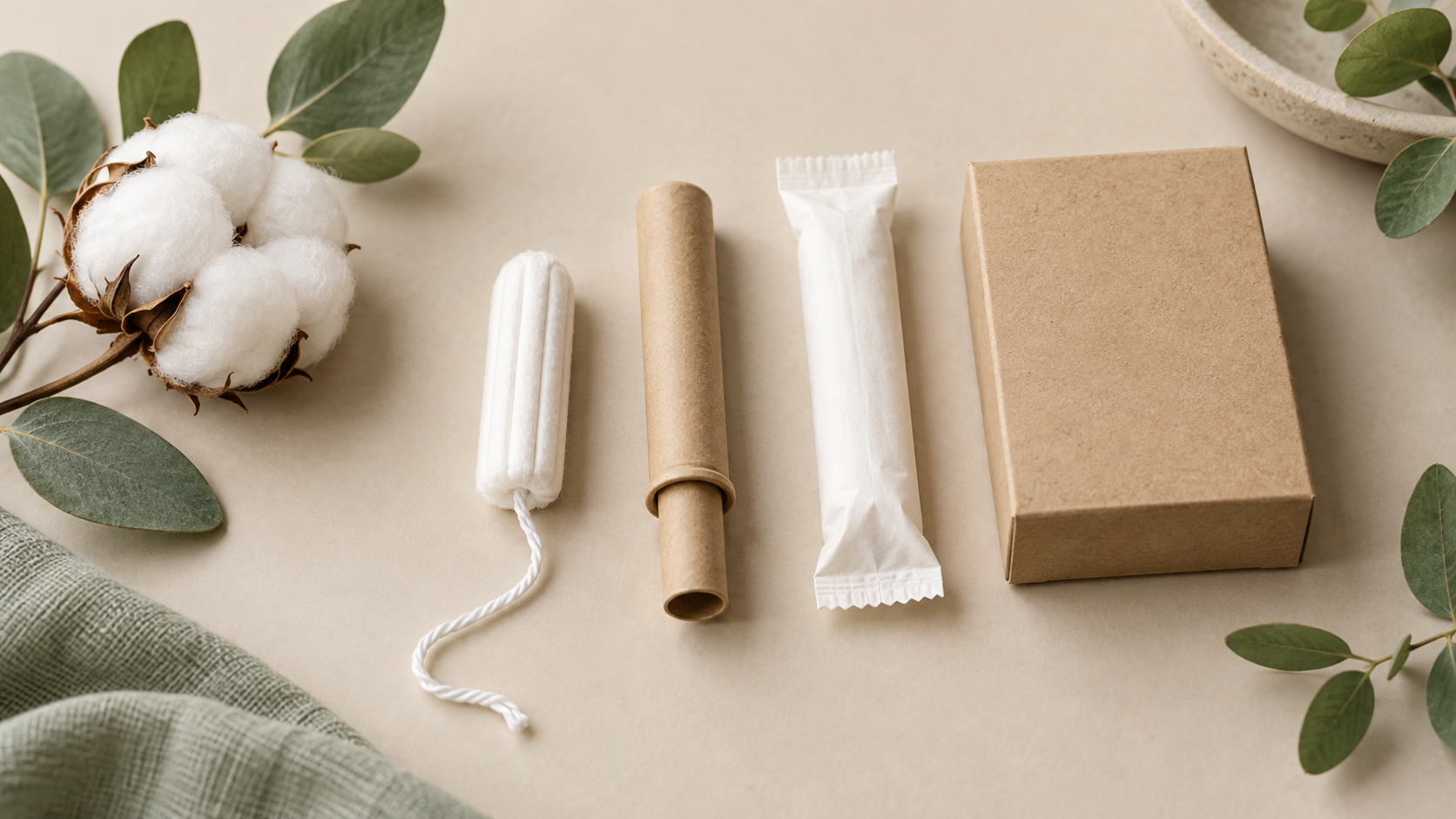
Compare the absorbent core, applicator, wrapper, and packaging when choosing sustainable tampons.
Sustainable Tampons Start With the Absorbent Core
FDA-authorized tampons use cotton, rayon, or a blend of the two. Shoppers interested in material transparency can start by checking exactly what the absorbent core contains.
Organic cotton adds another question: certification. USDA organic-labeling guidance explains that a textile may identify specific fibers as organic when an accredited certifier verifies them. Unless the finished product is certified under USDA organic regulations, the label should not imply that the entire finished product is USDA organic.
When evaluating sustainable tampons, the USDA guidance on organic labeling helps explain why a documented certification is more meaningful than a vague term such as “natural.” Maxim’s product documentation, for example, lists a certified organic cotton absorbent core, organic cotton overwrap, cotton withdrawal cord, cardboard applicator tube, and paper protective wrap for its cardboard applicator tampons.
| What to examine | Questions to ask | Why it matters |
|---|---|---|
| Absorbent core | Cotton, rayon, or a blend? Is an organic cotton claim certified? | Improves material transparency |
| Applicator | Plastic, cardboard, or applicator-free? | Changes the amount and type of single-use material |
| Wrapper | Paper or plastic-based? | Adds to the overall packaging footprint |
| Retail packaging | Is unnecessary packaging minimized? | Less material generally means less waste to manage |
| Environmental claims | Are claims tied to specific materials or certifications? | Separates evidence from vague marketing |
This framework keeps comparisons of sustainable tampons focused on specific materials, evidence, and waste considerations.
Compare Applicator Materials
When comparing sustainable tampons, remember that users discard applicators after a single use. Plastic applicators can provide a smooth insertion experience, while cardboard applicators replace that plastic component with paper-based material. Applicator-free tampons remove the applicator altogether, although individual comfort and preference still matter.
The useful question is more specific than “Is this tampon eco-friendly?” Ask how much single-use material the design requires and what that material is made from. The EPA recommends source reduction and products with minimal packaging as practical ways to reduce waste.
Readers comparing sustainable tampons can also review Maxim’s guide to plastic applicator tampons for context on comfort, material tradeoffs, and applicator preferences.
Packaging Matters for Sustainable Tampons
Replacing a plastic applicator with cardboard does not automatically make an entire tampon package plastic-free or zero-waste. Examine the individual wrapper, box, inserts, and any other components.
For sustainable tampons, paper-based packaging may reduce reliance on some single-use plastics, but environmental performance depends on the full material system, manufacturing, transport, and local end-of-life conditions. Specific descriptions such as “cardboard applicator” and “paper protective wrap” are more informative than broad claims.
Safe Use Comes First
Safe use is part of choosing sustainable tampons, and environmental goals should never replace proper tampon safety. The FDA recommends using the lowest absorbency needed, changing each tampon every four to eight hours, and never wearing one for more than eight hours. Tampons are single-use products.
Choosing sustainable tampons also means selecting the correct absorbency, which supports responsible use and menstrual health. Higher absorbency is not automatically better when a lower level adequately manages a person’s flow. Stop using tampons and seek medical care for pain, fever, unusual discharge, an allergic reaction, or possible symptoms of toxic shock syndrome.
Disposal and End-of-Life
Wrap used tampons as needed and place them in the trash. Do not flush tampons or applicators. Even when a component is paper-based, contamination and local waste rules can limit whether it is recyclable or compostable.
This is another reason to judge sustainable tampons by their complete design rather than by a single material claim. Clear disposal instructions, minimal packaging, and fewer unnecessary components make responsible handling easier.
Sustainable Tampons: A Practical Decision Checklist
- Confirm whether the absorbent core is cotton, rayon, or a blend.
- Look for credible certification when organic cotton is claimed.
- Choose a plastic, cardboard, or applicator-free format that fits your comfort needs.
- Compare the individual wrapper and retail packaging.
- Use the lowest absorbency that meets your flow needs.
- Follow the label and change tampons every four to eight hours.
- Dispose of used products in the trash and follow local rules for clean packaging.
A Better Way to Think About Sustainable Period Care
Evaluate sustainable tampons as complete products. No single feature makes a tampon perfectly sustainable. A more informed choice considers materials, certification, packaging, function, safety, and disposal together.
Products such as Maxim organic cotton cardboard applicator tampons illustrate this multi-factor approach by combining a certified organic cotton absorbent core with a cardboard applicator and paper protective wrap. Readers can also explore what organic cotton means in period care for more context about certification and material claims.
Choosing sustainable tampons is less about finding a perfect label and more about asking better questions. When shoppers consider materials, certifications, packaging, safe use, and disposal together, they can choose period products that fit both personal needs and environmental priorities.