
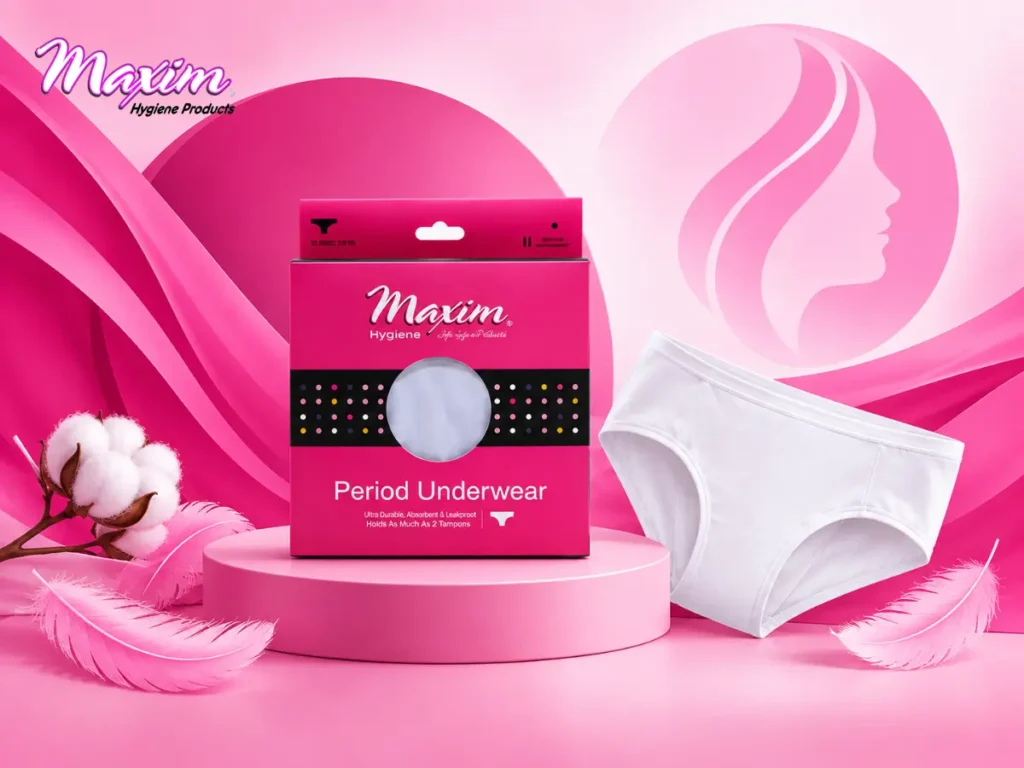
 You’re scrolling through five different browser tabs, each one promising the “best” period underwear, but you are still confused. One site swears by a certain brand for heavy flow. Another warns you away from that same brand entirely. You just want a straight answer: will this actually work for you, or are you about to spend thirty dollars on underwear you’ll wear twice and shove in a drawer?
That’s the real question behind most period underwear searches. Before anything goes in your cart, here’s what actually matters absorbency, fit, material, and a few product claims worth a second look.
What Is Period Underwear and How Does It Work?
Period underwear looks like regular panties from the outside, but the fabric is completely different to work with. Instead of relying on a separate pad or tampon, the underwear itself holds the layers that catch and lock in blood.
How Do the Absorbent Layers Work?
Period underwear for women uses three layers built into the gusset, the fabric panel between the legs.
- A moisture-wicking top layer pulls liquid away from your skin.
- A middle layer absorbs and holds it.
- A leak-resistant bottom layer keeps it from soaking through to your clothes.
How many layers a pair has, and how much they can actually hold, changes from brand to brand and style to style. That’s the part worth checking before you buy, not after.
Can Period Underwear Replace Pads or Tampons?
For some people, yes, on some days. For others, it works better as a backup. Worn alone on lighter days, paired with a tampon or cup on heavier ones. There’s no rule that says you have to pick one product and stick with it for your entire cycle.
Who Should Consider Period Underwear?
● If You’re Tired of Disposable Pads
If you’re annoyed by the bulk of pads, or you’ve started stockpiling boxes and are wondering if there’s a lower-effort option, period panties are worth trying in a single pair before you commit to a full rotation.
● If Your Flow Is Heavy or Unpredictable
Heavy-flow pairs exist, but “heavy flow” isn’t a standardized measurement across brands; more on that further down.
● If You Want Overnight Protection
Night pairs are usually cut higher in the back and hold more than daytime styles, which matters if you tend to shift positions while you sleep.
● If You Have Long Workdays, Classes, or Travel
Anyone who can’t easily get to a bathroom every couple of hours benefits from underwear built to be worn longer than a pad usually allows.
● If You Prefer Reusable Period Products
If cutting down on what you throw away each cycle matters to you, this is one of the more straightforward swaps to make.
6 Things to Check Before You Buy Period Underwear
1. Absorbency
This is the first thing to check, not the last. Look at how the brand describes absorbency, in tampon-equivalent terms, in milliliters, or in vaguer labels like “moderate” or “heavy.” Vague labels aren’t necessarily wrong, but they’re harder to compare across brands.
2. Fit and Size
A menstrual underwear that’s too loose will leak at the edges no matter how absorbent the fabric is. Check the brand’s actual size chart instead of guessing from your regular underwear size. Period underwear often fits snugger through the gusset on purpose.
3. Material
Cotton, bamboo, modal, and synthetic blends all show up in this category, each with a different feel and breathability. Organic cotton reusable period underwear tends to sit more comfortably against the skin for people who find synthetic fabric irritating, though comfort here is genuinely personal.
4. Coverage and Style
Briefs, bikinis, high-waisted styles, and boy shorts all offer different amounts of front and rear coverage. If you move around a lot during the day or sleep on your stomach, rear coverage deserves more attention than the product photo usually gives it.
5. Washing and Reuse
Cold rinse first, then a regular cold wash. Most brands ask you to skip fabric softener and the dryer, since heat wears down the absorbent layers faster. It’s a quick habit to build, once you’ve done it a couple of times.
6. Product Claims
This is where it pays to slow down. Independent lab testing over the past few years has found PFAS, the “forever chemicals,” linked to health concerns. Some pairs are marketed as organic or non-toxic.
That doesn’t mean every pair on the market has this problem; testing has also turned up plenty of PFAS-free options. It means a claim like “PFAS-free” or “chemical-free” carries more weight when it’s backed by a named lab or a recognized certification, such as OEKO-TEX STANDARD 100.
The same goes for “leak-proof” (nothing is fully leak-proof), “breathable,” and “odor control,” useful features, but worth asking what’s actually being tested before taking the word for it.
How to Choose Period Underwear for Your Flow
| Flow / Use Case | What to Look For | When It Helps |
| Light flow or spotting | Thin liner-style gusset, light absorbency | Between periods, the first or last days |
| Regular flow | Moderate absorbency, everyday brief or bikini cut | Daily wear during a typical period |
| Heavy flow | Higher absorbency rating, wider gusset, full coverage | Heavier days, especially days 1–2 |
| Overnight | High-rise back, maximum absorbency, longer gusset | Sleeping through the night |
| Very heavy or unpredictable | Highest absorbency pair, paired with a backup product | Days you can’t easily change or check |
A period underwear for the “heavy flow” label from one brand can hold more or less than a “heavy flow” label from another. When a brand publishes an actual capacity in milliliters or tampon-equivalents, that number tells you more than what’s on the tag.
Period Underwear for Women: Match the Pair to Your Lifestyle
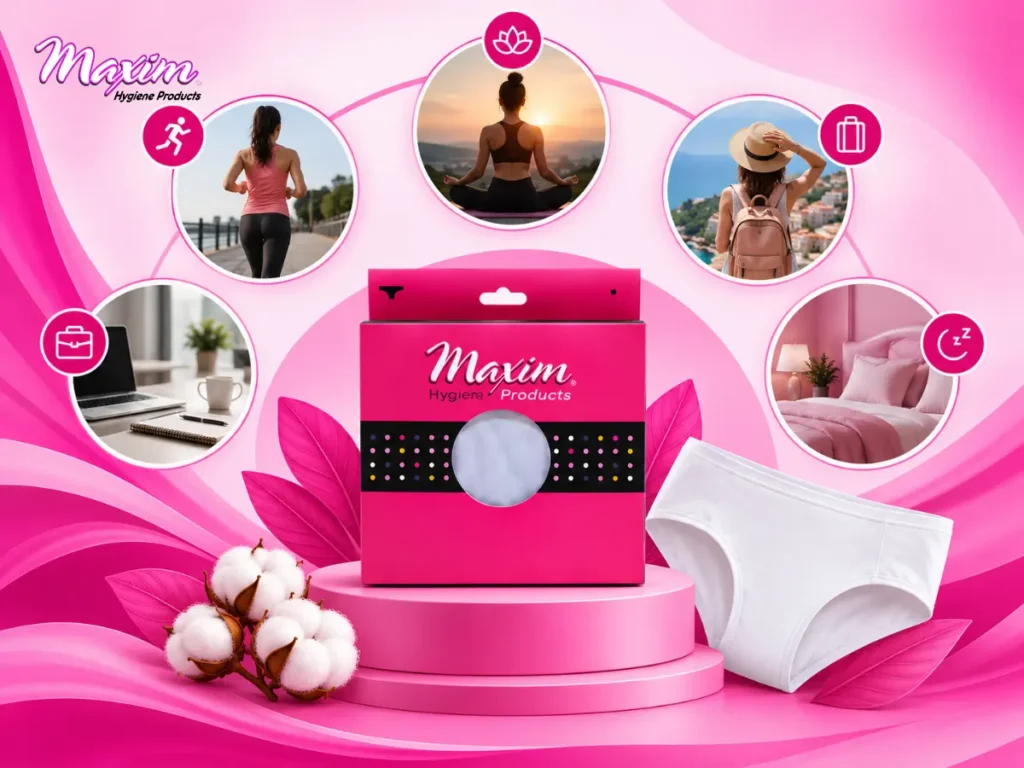
● For Work and Long Days
A moderate-to-heavy pair in a breathable fabric gets you through an eight-hour day without needing a mid-shift check.
● For Travel
Pack one more pair than you think you’ll need. Washing on the road isn’t always practical, and a spare removes one thing to worry about.
● For Exercise and Active Days
Look for a snugger fit through the leg opening. Looser cuts are more likely to shift during movement.
● For Sleeping
Prioritize rear coverage and total capacity over how the pair looks. Overnight is where absorbency matters most.
● For First-Time Users
Start with one moderate pair before buying a full week’s rotation. It’s the cheapest way to find out how a specific brand’s sizing and absorbency actually work for you.
Period Underwear vs. Pads, Tampons, and Other Period Products
| Product | Reusable? | Internal or External? | Washing Required? | Main Consideration |
| Period underwear | Yes | External | Yes, after each wear | Upfront cost, washing routine |
| Pads | No | External | No | Ongoing cost, more frequent changing |
| Tampons | No | Internal | No | Wear-time limits, insertion learning curve |
| Menstrual cups | Yes | Internal | Rinse between uses | Insertion and removal learning curve |
| Menstrual discs | Varies by type | Internal | Depends on type | Different fit than cups, mess during removal |
None of these is the “right” answer for everyone. Plenty of people use two or three of these products across a single cycle, matching the product to the day.
How Many Pairs of Period Underwear Do You Need?
● Starting With 2–3 Pairs
Enough to try the product without a high upfront cost, especially useful if you’re not sure a specific brand’s fit works for you yet.
● Building a Full-Cycle Collection
Somewhere between five and seven pairs lets most people get through a period, changing once or twice a day, without doing laundry mid-cycle.
● Using Different Absorbencies
A couple of heavy-flow pairs, a few moderate ones, and maybe one light pair for the tail end tends to work better than seven identical pairs, since flow usually isn’t the same intensity for a whole week.
The right number depends on your cycle length, how often you want to do laundry, and whether you’re using period underwear alone or alongside another product.
FAQs
Is Period Underwear a sanitary item?
Yes. Like any fabric that sits against skin for hours, it needs to be changed and washed regularly rather than left on too long.
How Often Should You Change It?
This depends on your flow and the pair’s absorbency. There’s no single number that applies to everyone. As a general habit, check in partway through the day the way you would with a pad, especially the first time you’re wearing a new pair.
What About Moisture and Odor?
Some dampness against the skin is normal with any period product. If odor or irritation feels unusual for you, that’s worth mentioning to a doctor rather than troubleshooting with a different pair of underwear.
What Should You Know About Materials and Chemical Claims?
Independent lab testing has found PFAS in a meaningful share of period underwear on the market, including some marketed as organic, and two major brands have settled lawsuits over the issue without admitting wrongdoing. None of this means the category is unsafe. It means the specific pair matters more than the marketing on the box. Look for third-party certification rather than a brand’s claim standing alone.
Can period underwear replace pads?
For some people and some days, yes. Others use it alongside a tampon or cup on heavier days.
Can you sleep in period underwear?
Yes, with a pair designed for overnight use. Usually higher in the back with more absorbency than a daytime style.
How do you wash period underwear?
Rinse in cold water first, then machine wash cold, and skip the dryer and fabric softener to protect the absorbent layers.
Common Mistakes to Avoid When Buying Period Underwear
- Choosing a pair based on the photo instead of the absorbency rating
- Guessing at size instead of checking the brand’s own chart
- Assuming every “heavy flow” label means the same thing
- Ignoring rear coverage if you move a lot at night
- Skipping the care instructions and shortening the underwear’s lifespan
- Buying only one or two pairs, then running out mid-cycle
- Trusting a chemical-free claim with no certification behind it
- Buying one style for every day of your period instead of matching pairs to flow
Your Quick Period Underwear Buying Checklist
- Does the absorbency match my flow?
- Is the size based on the brand’s own chart, not a guess?
- Is the coverage right for how I move or sleep?
- Is the material clearly listed?
- Can I realistically wash this after each wear?
- Do I need it for day, night, or both?
- Do I need more than one absorbency level?
- Are the product claims backed by a specific lab or certification?
- Do I need a backup product for my heaviest days?
Is Period Underwear Worth Trying?
There’s no universal yes or no here.
It may suit you if:
- You want a reusable option instead of buying disposables every cycle
- You’re comfortable adding one more item to your regular laundry
- You can find a pair with the right absorbency and fit for your flow
- You like the idea of external protection without a pad’s bulk
You may prefer another setup if:
- You strongly prefer not washing period products
- Your flow is heavy enough that you’d need to change more often than feels practical
- Another product already works well for you, and you don’t see a reason to switch
If you’re on the fence, one pair is a low-cost way to find out, not a full week’s supply.
Before You Check Out
You should consider period underwear that has absorbency that matches your flow, a size based on the brand’s actual chart, coverage that fits how you move, and material or chemical claims backed by real testing rather than a label alone.
Get those right, and the rest, comfort, routine, a permanent spot in your drawer and tends to sort itself out.
If you’re looking for period underwear built around organic cotton and independently tested materials, Maxim Hygiene’s line is a reasonable place to start comparing.