
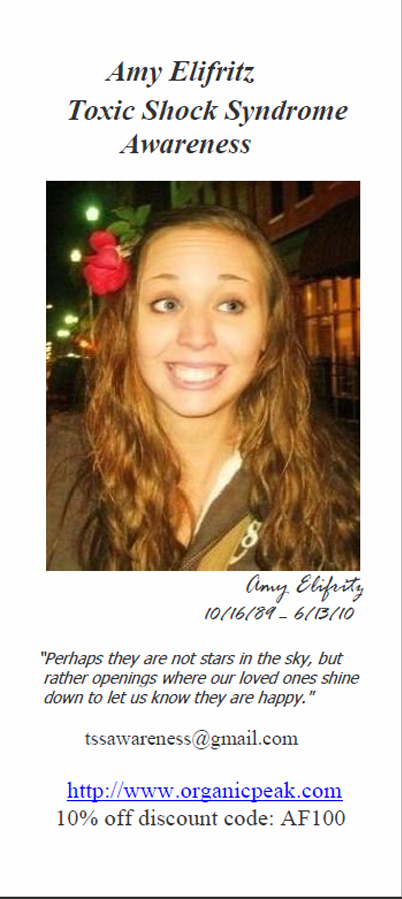
Amy Elifritz, 10/16/89 – 6/13/10
Maxim Hygiene is pleased to announce our first call to action amongst women everywhere to learn about and help with You ARE Loved, a developing non-profit committed to educating women about Toxic Shock Syndrome (TSS). You ARE Loved was started by this month’s Fierce Woman, Lisa Elifritz, after her daughter, Amy, passed away from TSS at 20 years old.
In support of Lisa’s initiatives, we have posted the information from her promotional pamphlet below:
Amy’s Story
Thursday morning, Amy felt somewhat better; her vomiting had ended, but she had developed diarrhea. She drank orange juice and 7-up to stay hydrated.
Friday morning, Amy woke up very weak with a sore throat and sore muscles so her mother took her to Prompt Med as soon as it opened. Her blood pressure was low and her pulse rate high, so it was recommended that she go directly to the ER for hydration. When she arrived at the hospital, they immediately began fluids and did blood work only to discover her kidneys were at 25% function. Amy was admitted.
Saturday Amy’s condition had worsened. She had become septic and was moved to CCU where more aggressive treatment began. Within hours she developed fluid in her lungs, was sedated and put on a ventilator.
By Sunday morning, the stress on Amy’s body began to take its toll on her heart. She had two episodes throughout the day that required her heart to be shocked back into rhythm. A third heart episode proved to be more than her body could with stand.
Amy died Sunday night June 13, 2010, at 10:55 PM.
Toxic Shock Syndrome
Toxic Shock Syndrome develops when the common bacteria, Staphylococcus Aureus, produce a toxin which is absorbed into the bloodstream. The toxin rapidly overwhelms the immune system and attacks the major organs, leading to kidney failure, collapse of the lungs and in severe cases, cardiac arrest. Alarmingly, half of all known cases of Toxic Shock are women using TAMPONS.
Symptoms of TSS
- Sore throat.
- Aching muscles
- High temperature; over 102F
- Vomiting
- Headache
- Watery diarrhea
- Red rash
- Confusion
- Dizziness
- Very low blood pressure
Only one or two symptoms may occur. They do not necessarily occur all at once and may not persist
What You Should Do
- Remove the tampon (save it if possible).
- Seek IMMEDIATE medical attention.
- Inform the doctor that you have been using tampons.
- Take a TSS information leaflet with you.
QUICK ACTION MAY SAVE YOUR LIFE
What Causes TSS?
There are two types of TSS, one is caused by Staphylococcus aureus and the other type occurs during menstruation with the use of tampons. Vaginal tampons, especially those containing any synthetic ingredients like viscose rayon, create the physical-chemical conditions that allow for TSST-1 toxin production to degrees dependent upon the composition of the tampon and the environment it creates. Research clearly shows that the toxins of Staphylococcus aureus are amplified by these tampons (the tampon connection)
After Effects of TSS?
Survivors of Toxic Shock Syndrome may have been hospitalized for weeks and there is usually a long recovery period. They may have suffered:
- Loss of fingers and toes due to gangrene.
- Permanent kidney and liver damage.
- Deafness and blindness.
- Peeling skin, and loss of nails and hair.
- Continual infections
- Short term memory loss.
- No energy for months or even years.
- Psychological and emotional distress
To Reduce the Risk of TSS
- Only use tampons made of organic cotton
- Use the lowest absorbency needed at each stage of your period.
- Avoid using tampons continuously during a period. Alternate with sanitary pads, particularly at night.
- Use a pad at the end of your period. Change tampons every 4 to 6 hours.
- Don’t use tampons if you’ve had any unusual discharge.
- Wash your hands before and after use and handle the tampon as little as possible.
- Alert your family and friends to the symptoms and emergency action required.
- Read and keep this information leaflet or the leaflet inside the tampon packet.
- If you’ve ever had TSS, NEVER EVER use tampons again!
Incidence of TSS
TSS is real, it’s common, and it kills: 1 in 700 women will get tampon related TSS in their lifetime. It’s estimated that nationwide 5,000 to 10,000 cases of staphylococcal toxic shock syndrome now occur each year, making it as common as Lyme disease. TSS can strike any woman or girl without warning and can act so rapidly that more fatalities among tampon users are inevitable.
TSS now occurs and affects primarily young otherwise healthy women.
Communication is essential. Health and safety information on leaflets should be read regularly to identify if any new, crucial information is presented. Young girls must discuss with their parent when they decide to use tampons. Someone else should know when tampons are used so that prompt action can be taken if the sufferer is unable to help herself.
The Bottom Line
If you have been using tampons and you experience flu-like symptoms and a fever, remove your tampon and go to the hospital immediately. Insist on getting blood work. If it is caught early enough, you have a much better chance of survival.
**Please note Maxim Hygiene is proud to support our friends in their endeavors to keep women Soft, Safe and Natural. Maxim Hygiene is not responsible or liable for the actions and accuracy of the messages created by our friends.