
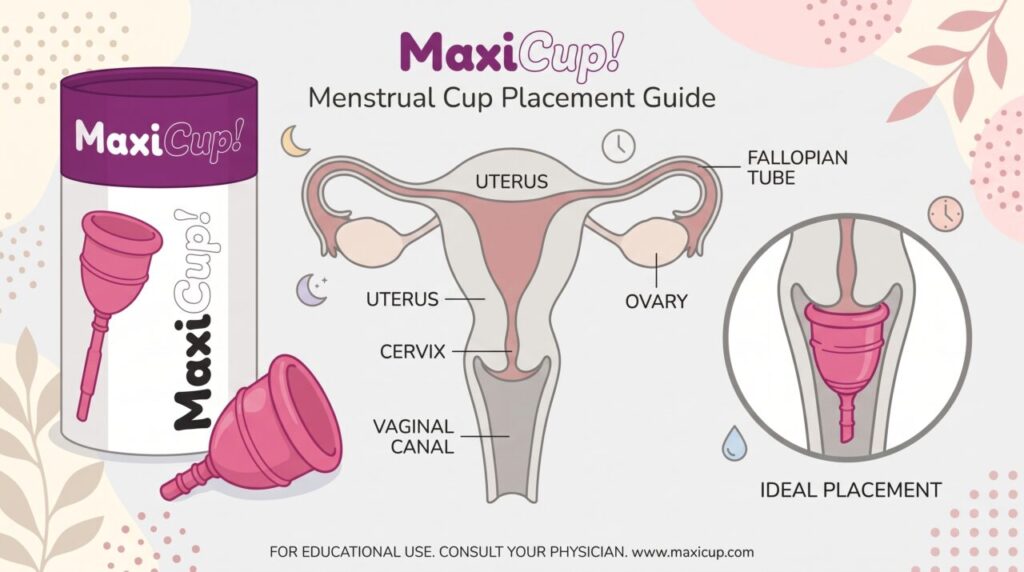
Are menstrual cups safe? For most people, reusable menstrual cups can be a safe way to manage a period when users choose an appropriate cup and follow its instructions for wearing, cleaning, removal, and storage. A large systematic review published in The Lancet Public Health found that menstrual cups appeared to be a safe option, while also noting that more high-quality research is needed.
Safety depends on more than buying a cup. Material, size, fit, hand hygiene, wear time, removal technique, and personal medical circumstances all matter. This guide explains the practical steps that support safer use and the situations that call for advice from a healthcare professional.
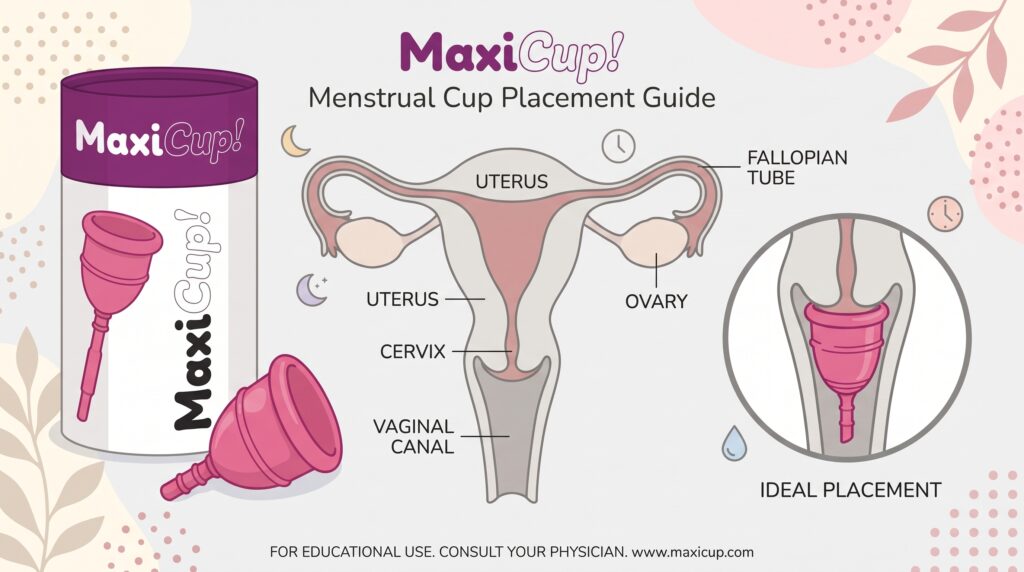
Safe menstrual cup use starts with an appropriate product, correct positioning, and consistent hygiene.
Are Menstrual Cups Safe for Internal Use?
Menstrual cups are flexible devices inserted into the vagina to collect menstrual fluid rather than absorb it. The FDA explains that menstrual cups come in different sizes, materials, shapes, and designs. The FDA regulates cups sold in the United States as medical devices. New users can also follow this step-by-step menstrual cup guide for insertion, sealing, and removal technique.
Manufacturers make most cups from silicone or rubber. Someone with a latex sensitivity should choose a silicone cup rather than one made from rubber. “Medical-grade silicone” is a useful material description, but users should still follow the specific product instructions and check the cup regularly for damage, stickiness, cracks, or other signs that it should be replaced.
The MaxiCup Menstrual Cup with Sterilizer, for example, uses 100% medical-grade silicone and includes a sterilizer container. Its medium-size design is intended to provide up to 12 hours of protection, depending on flow, fit, and correct use.
How Long Can You Safely Wear a Menstrual Cup?
“Up to 12 hours” is a maximum for some products, not a rule that every user should wait 12 hours. The FDA says users typically remove and empty cups every eight to twelve hours, but the product instructions take priority. Heavy flow may require more frequent emptying.
| Safety factor | Practical guidance |
|---|---|
| Wear time | Follow the cup instructions and never exceed the stated maximum |
| Heavy flow | Empty the cup sooner if it fills or leaks before the maximum time |
| Hand hygiene | Wash hands before insertion and after removal |
| Discomfort | Remove the cup if it causes persistent pain, swelling, itching, or irritation |
| Reuse | Wash a reusable cup according to its directions before reinsertion |
| End of cycle | Clean, sanitize or sterilize, dry, and store it as directed |
A cup that repeatedly leaks well before the recommended wear limit may be full, partially folded, or the wrong size or shape for the user. Correct opening and fit matter as much as capacity.

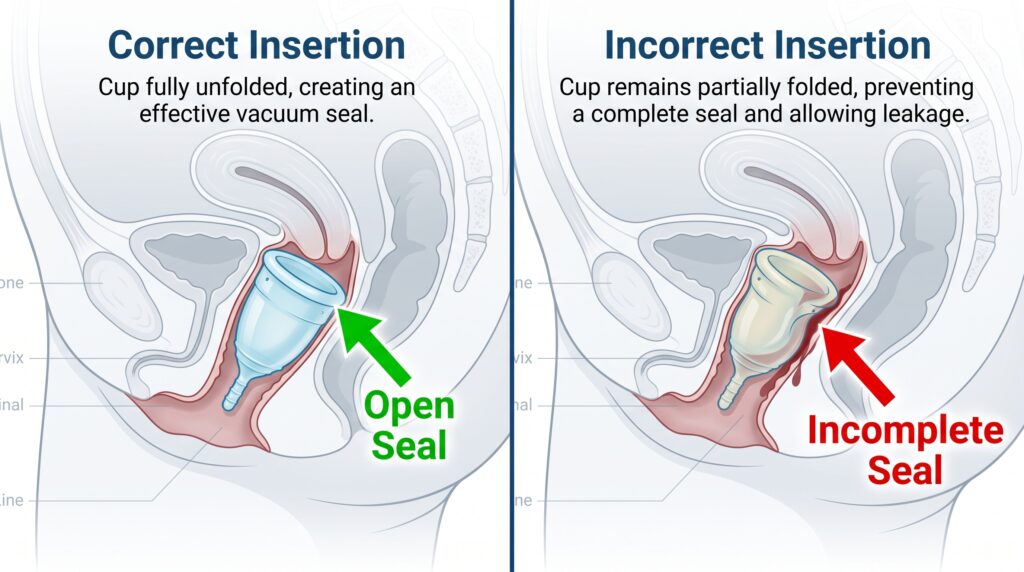
A fully opened cup forms a better seal; persistent leaks can signal a fold, poor position, or a full cup.
Menstrual Cup Cleaning and Sterilization
Are menstrual cups safe when reused? Routine cleaning and between-cycle sterilization are related but different tasks. During a cycle, remove the cup, empty it, and wash it according to the manufacturer’s directions before reinsertion. Wash your hands before and after handling the cup.
At the end of a cycle, FDA guidance says typical instructions may call for washing a reusable cup with soap and water and placing it in boiling water for one to two minutes. Always follow the directions supplied with the individual cup, because products and sterilizing containers can differ.
- Wash your hands thoroughly before touching the cup.
- Empty the collected fluid and rinse or wash the cup as directed.
- Inspect the rim, holes, stem, or drainage tube for residue and damage.
- Sanitize or sterilize the cup between cycles using the approved method.
- Let it dry completely and store it in a clean, breathable place.
Avoid harsh household chemicals, scented cleansers, or improvised methods unless the manufacturer specifically approves them. Residue may irritate tissue, while unsuitable chemicals or excessive heat may damage some products.
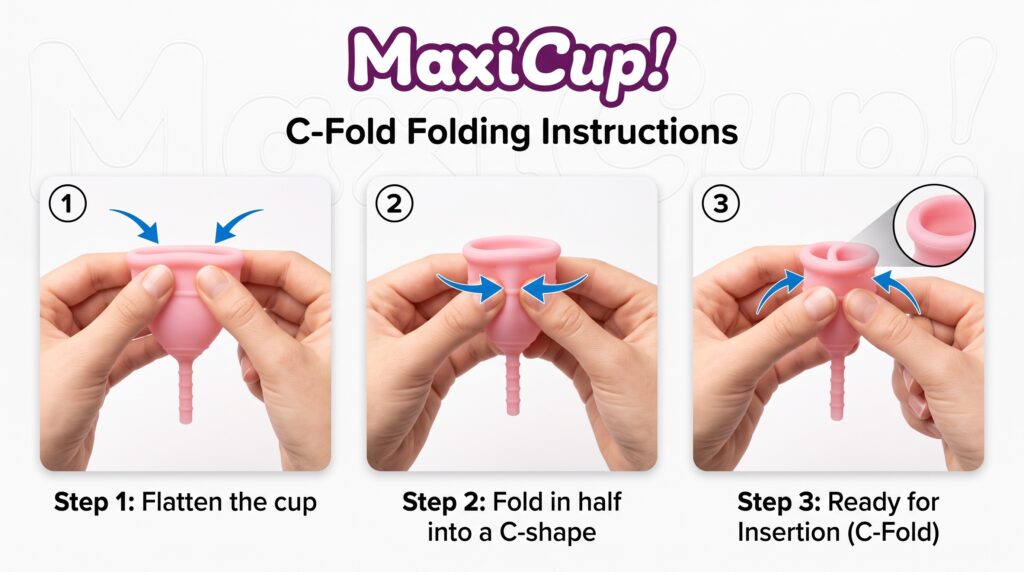
Clean hands and careful handling are central to reusable menstrual cup hygiene.
Are Menstrual Cups Safe With TSS and Irritation Concerns?
Are menstrual cups safe when toxic shock syndrome is a concern? TSS is rare, but menstrual-product hygiene and recommended wear times still matter. The 2019 systematic review of menstrual cup safety identified few serious adverse-event reports and concluded that cups appeared to be a safe menstrual-care option. Rare events do not mean symptoms should be ignored.
Stop using the cup and contact a healthcare professional if you develop itching, rash, pain, swelling, fever, or persistent discomfort. Seek urgent care for sudden fever, faintness, vomiting, diarrhea, confusion, or a widespread rash, particularly if symptoms appear while using an internal menstrual product.
Pain should not be treated as an unavoidable part of learning. A cup may be the wrong size, too firm, incorrectly positioned, or pressing on sensitive tissue. Remove it by breaking the seal first rather than pulling forcefully on the stem.
Are Menstrual Cups Safe With an IUD?
This question requires extra caution. The FDA recommends that people with an intrauterine device consult their gynecologist before using a menstrual cup because the cup may interfere with IUD strings or placement.
A 2023 systematic review of menstrual cups and IUD expulsion found a possible association, but the evidence was scarce, varied between studies, and could not establish the size of the risk with confidence. A later copper-IUD trial analysis also reported higher expulsion in some cup users, with results differing by IUD type.
Removal technique may be relevant. Pinch or press the cup wall to release the seal before bringing it down, keep fingers away from the IUD strings, and never pull forcefully against suction. Ask a clinician whether to delay cup use after insertion, how to monitor the strings, and what symptoms could indicate displacement.
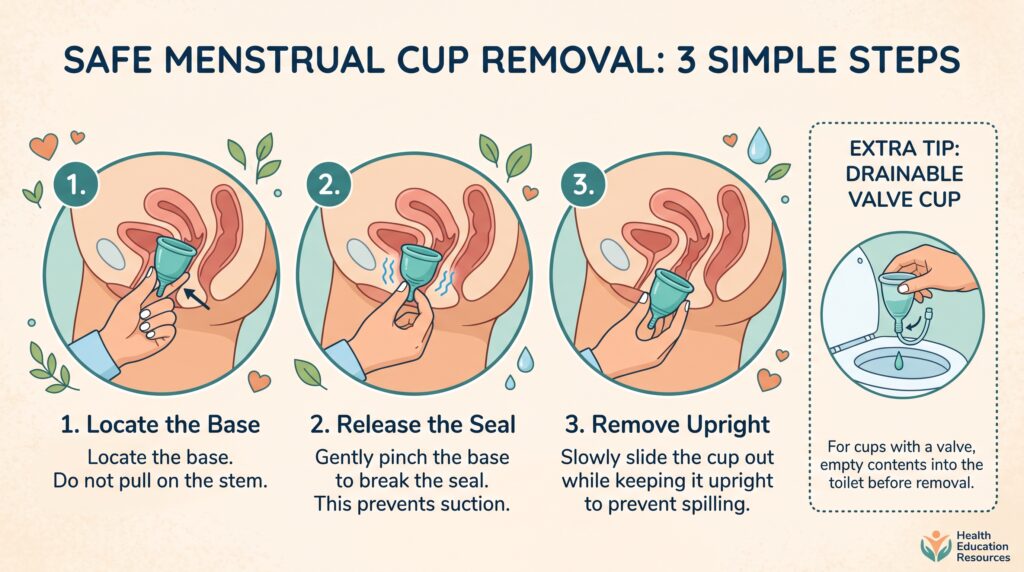
Break the seal before removal; IUD users should discuss cup use and string monitoring with a gynecologist.
When Should You Avoid a Menstrual Cup?
Are menstrual cups safe after childbirth or during an infection? The FDA says users should not use cups for non-period vaginal drainage or bleeding related to a current infection, recent pregnancy, or childbirth. A clinician can advise when internal menstrual products are appropriate after childbirth, pelvic procedures, infection, or other health concerns.
Pause use and seek advice when insertion or removal causes persistent pain, the cup cannot be removed, unexplained bleeding occurs, or you suspect an IUD has moved. External products can provide an alternative or backup. Maxim’s organic cotton pads and liners may be useful on days when an internal product is not preferred.
Are Menstrual Cups Safe? A Practical Checklist
- Choose silicone if you have a latex sensitivity.
- Select the size and firmness recommended for your needs.
- Wash your hands before insertion and after removal.
- Clean the cup before reinserting it.
- Empty it every eight to twelve hours or sooner when flow requires.
- Follow the approved between-cycle sterilization method.
- Break the seal before removing the cup.
- Stop use and contact a clinician for pain, rash, swelling, fever, or persistent discomfort.
- Consult a gynecologist before combining a menstrual cup with an IUD.
Frequently Asked Questions
Can you sleep with a menstrual cup?
Many cups are labeled for wear up to twelve hours, which may include overnight use. Follow the individual product instructions, insert it with clean hands, and empty it sooner if your flow requires.
Do menstrual cups need to be boiled every time?
Not usually after every emptying. Routine cleaning during a cycle and deeper sanitizing or sterilizing between cycles serve different purposes. Follow the instructions supplied with your cup.
Can a menstrual cup get lost inside the body?
No. The vaginal canal does not open into the abdominal cavity. A cup can sit higher than expected or be difficult to reach, but it cannot travel beyond the vagina. Seek medical help if calm, gentle removal attempts do not work.
The Bottom Line on Menstrual Cup Safety
Are menstrual cups safe? For most users, they can be safe when users choose an appropriate material and fit, keep their hands and cup clean, respect wear-time limits, and release the seal before removal. A reusable cup can be a long-lasting alternative to disposable period products, but it still requires consistent care.
The best period-care routine is the one that fits your flow, comfort, hygiene access, and health needs. When an IUD, unexplained pain, recent childbirth, infection, or another medical concern is involved, professional advice should be part of the decision.