Choosing the best sheet mask for your skin type starts with understanding what your skin actually needs. Sheet masks can provide a convenient boost of hydration, but choosing one based only on attractive packaging or a trending ingredient can produce disappointing results. Your skin type and how your skin feels right now should guide the decision.
The American Academy of Dermatology describes dry skin as typically flaky, itchy, or rough; oily skin as shiny or greasy; and combination skin as having both oily and dry areas. Sensitive skin may sting or burn after product use. American Academy of Dermatology guidance on understanding skin type
Understanding these differences can make it easier to choose a facial sheet mask that supports your skin instead of simply following a one-size-fits-all routine.
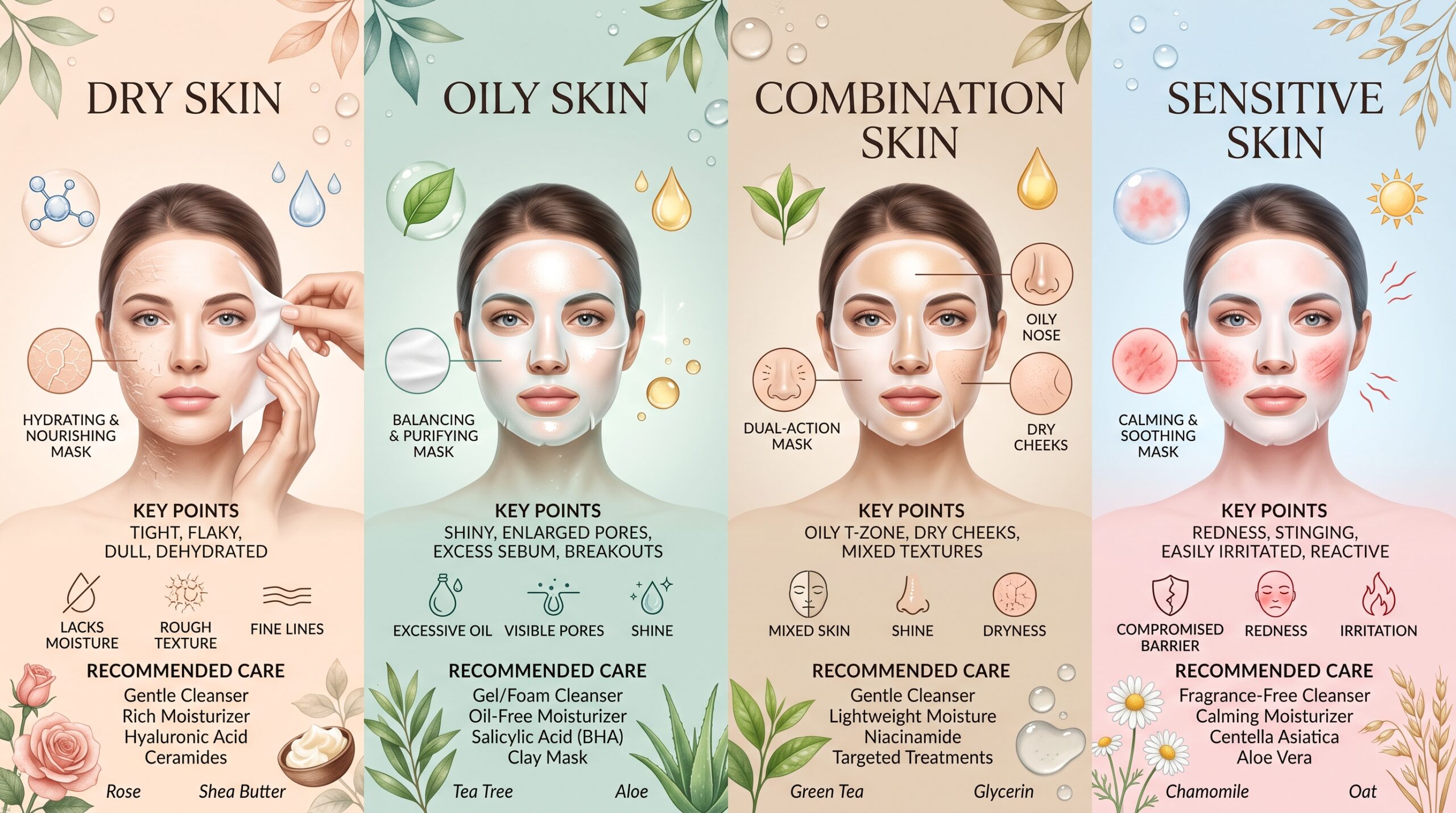
The best sheet mask depends on both your basic skin type and your skin’s current condition.
Start With Your Skin Type, Not the Product Trend
A sheet mask temporarily holds a serum-like formula against the skin, making its ingredient profile especially important. Hydrating ingredients may suit several skin types, but oily skin does not necessarily need the same supporting products as very dry skin, and sensitive skin may require additional caution.
The MaxSkin Facial Sheet Mask is marketed for normal, oily, dry, combination, and sensitive skin. Its listed formula includes glycerin, betaine, trehalose, panthenol, allantoin, aloe extract, calendula extract, willow bark extract, tea tree extract, and other ingredients.
The important question is not simply whether a mask says it works for your skin type. It is whether its ingredients and usage method suit your individual skin.
Which Sheet Mask Ingredients Fit Each Skin Type?
| Skin Type | What to Look For | Main Goal | Extra Consideration |
| Dry | Humectants such as glycerin, soothing ingredients, moisturizing support | Increase hydration and reduce tightness | Follow with moisturizer to help retain hydration |
| Oily | Lightweight hydration and non-heavy formulas | Hydrate without making skin feel overly greasy | Avoid aggressively drying the skin |
| Combination | Balanced hydration that works across oily and dry zones | Support different facial areas without overloading either | Adjust other products by zone if necessary |
| Sensitive | Gentle formulas and ingredients your skin already tolerates | Minimize irritation while supporting hydration | Patch-test unfamiliar products first |
Sheet Masks for Dry Skin: Focus on Hydration
Dry skin often benefits from ingredients that help increase and retain moisture.
Glycerin, one of the ingredients listed in MaxSkin, is a humectant. Humectants attract and bind water to the skin, helping increase moisture levels. The Cleveland Clinic identifies glycerin among commonly used humectant ingredients. Cleveland Clinic explanation of humectants and moisturizers
MaxSkin also contains betaine, trehalose, panthenol, and propanediol, which Maxim describes as hydration-supporting ingredients.
For dry skin, however, a sheet mask should not necessarily replace moisturizer. Applying an appropriate moisturizer afterward can help maintain the hydrated feel created during masking.
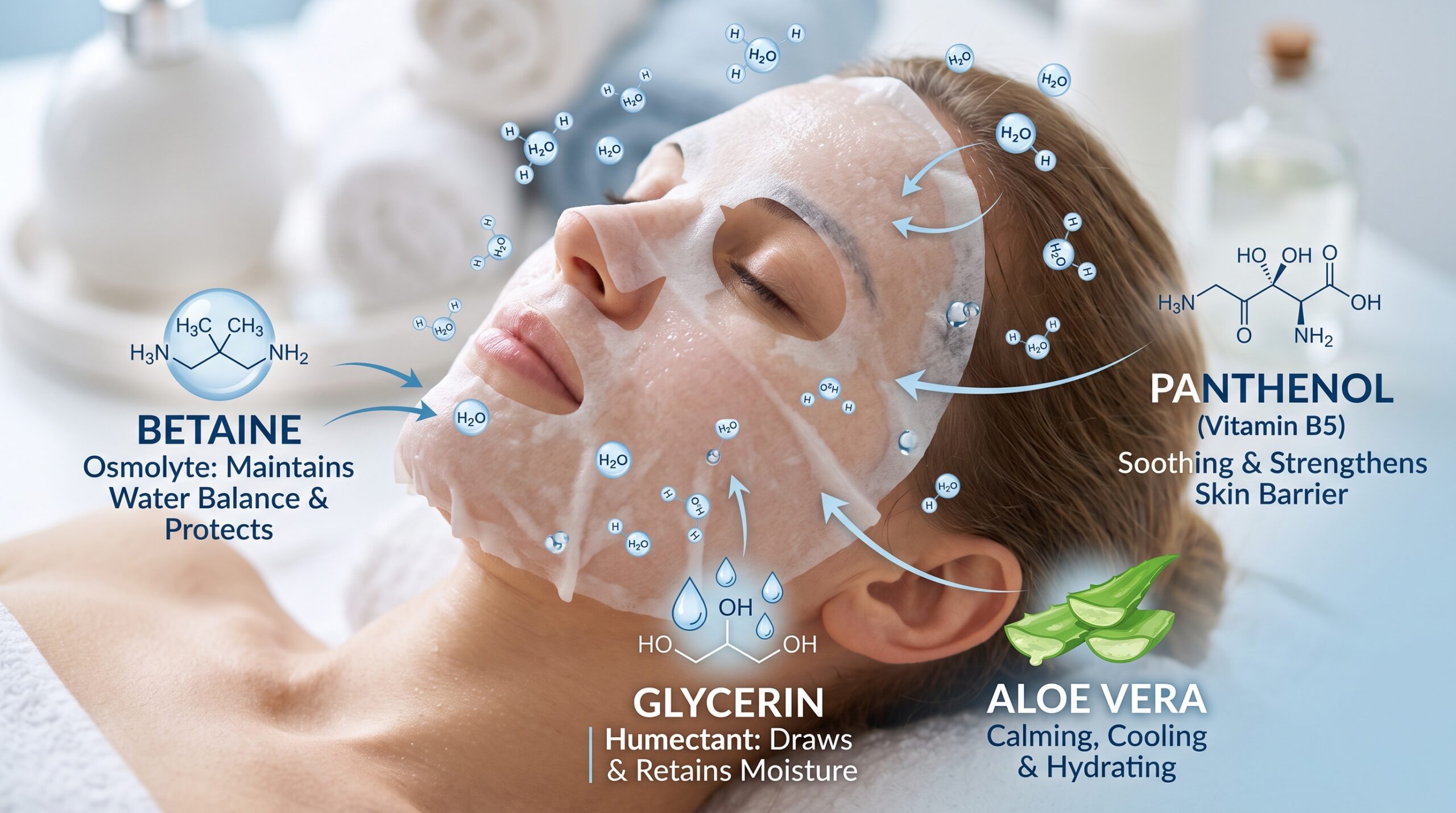
Humectant-rich formulas can be useful when dry skin needs additional hydration.
Sheet Masks for Oily Skin: Hydration Still Matters
A common mistake is assuming oily skin should be dried out as much as possible.
Dermatologists instead recommend maintaining hydration while avoiding products that unnecessarily clog pores or irritate the skin. The American Academy of Dermatology specifically notes that people with oily skin should still moisturize and generally benefit from gentle rather than harsh cleansing. AAD recommendations for caring for oily skin
For sheet masks, this means looking for lightweight hydration rather than automatically avoiding moisturizing ingredients.
MaxSkin contains willow bark and tea tree extracts in addition to several humectants. Maxim describes these botanical ingredients in the context of exfoliating, pore-clearing, and skin-soothing benefits. These product claims should not be confused with treatment for acne or another medical skin condition.
For individual blemishes, readers may also explore Maxim Hygiene’s body and beauty care range, which includes Spot Sucker clear acne patches alongside MaxSkin.
Sheet Masks for Combination Skin: Think in Zones
Combination skin can be oily around the forehead, nose, and chin while feeling normal or dry elsewhere.
That makes balance particularly important. A very heavy treatment can feel excessive in oily areas, while a strongly drying product may leave the cheeks uncomfortable.
A hydrating sheet mask can offer an uncomplicated middle ground, especially when paired with targeted products afterward. For example, a lightweight moisturizer could be used across the entire face while richer moisturizer is concentrated only where dryness occurs.
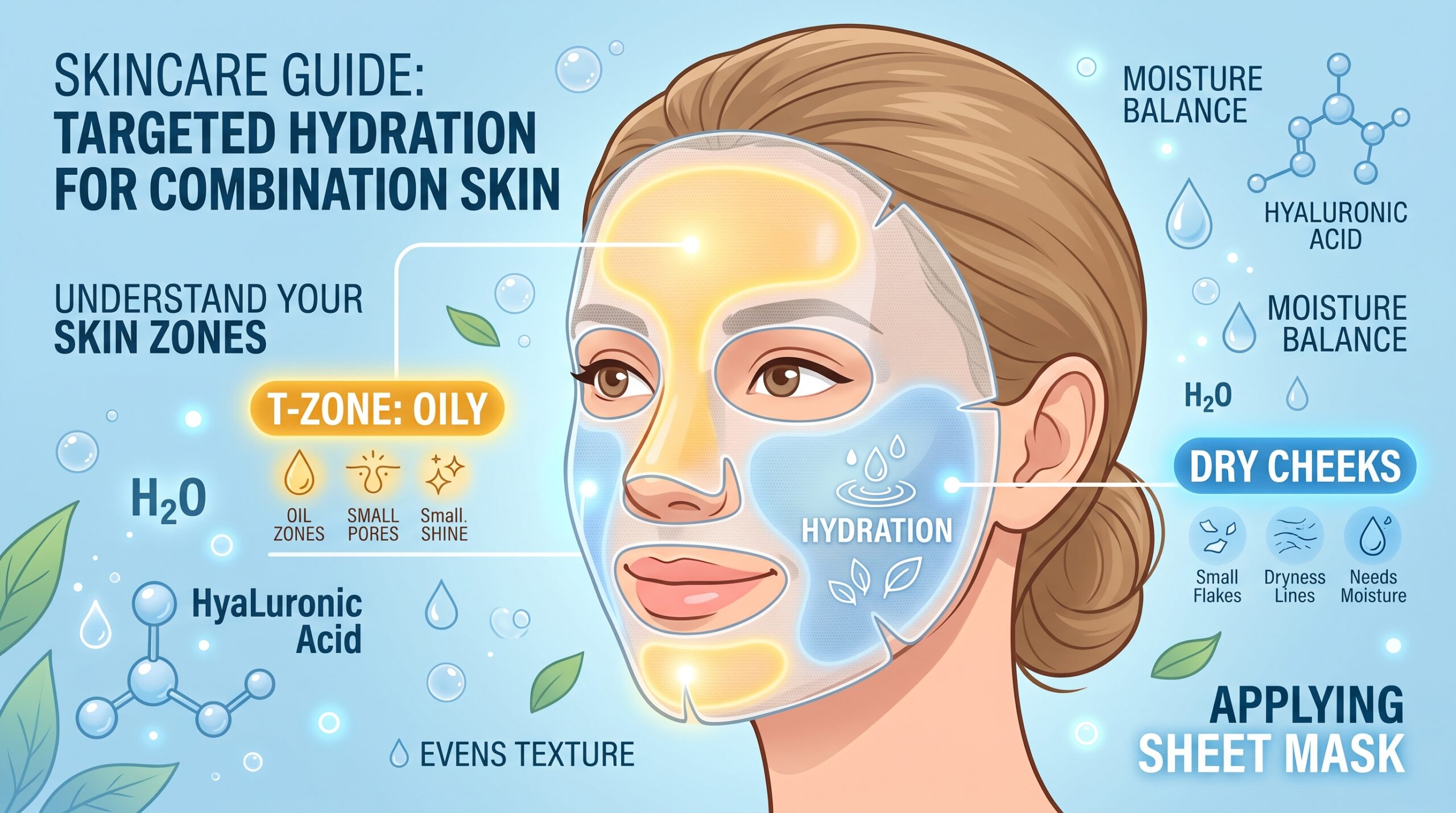
Combination skin often benefits from treating different facial zones according to their individual needs.
Sensitive Skin: Patch Testing Matters
“Suitable for sensitive skin” does not guarantee that every person with sensitive skin will tolerate a particular formula.
This is especially relevant when a formula contains multiple botanical extracts. The American Academy of Dermatology notes that even plant-based ingredients can sometimes cause reactions and recommends testing new skincare products on a small area before adding them to a routine. AAD instructions for patch-testing skincare products
Because MaxSkin contains several botanical ingredients including anise, calendula, willow bark, aloe, tea tree, and patchouli oil someone with highly reactive skin may reasonably choose to patch-test first.
If a product causes persistent burning, swelling, itching, or redness, discontinue use and consult a qualified healthcare professional when necessary.
How to Use a Sheet Mask More Effectively
Always follow the instructions for the specific mask rather than assuming every sheet mask should be used for the same amount of time.
Maxim instructs users to cleanse first, apply hydrating toner, position MaxSkin over the face, and leave it in place until the mask becomes transparent approximately three to four hours before removing it and applying moisturizer as needed.
That wear time is substantially different from many conventional sheet masks, making label instructions particularly important.
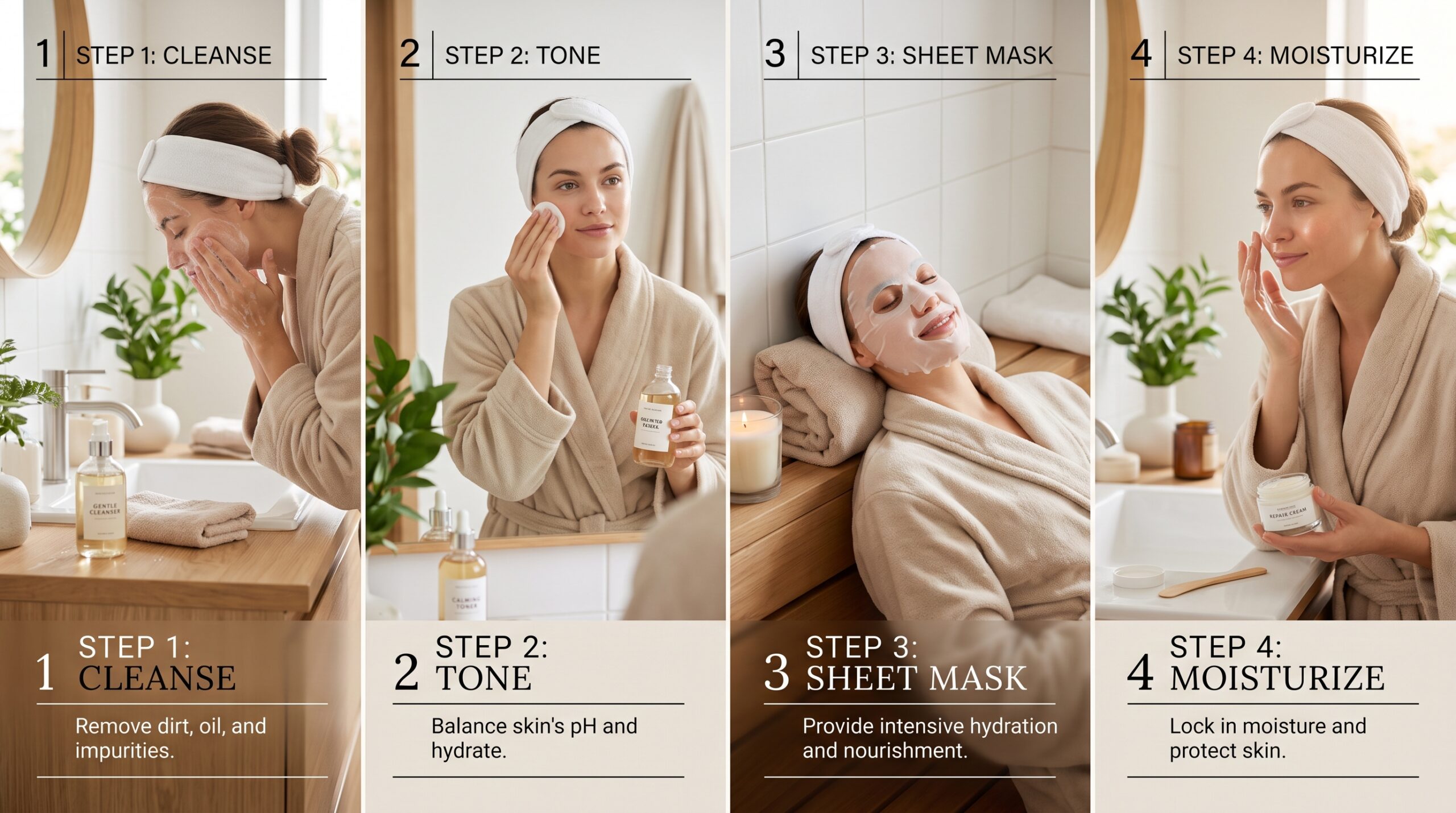
Following the specific product instructions is more useful than assuming every sheet mask works the same way.
Choose for What Your Skin Needs Today
Skin type provides a useful starting point, but skin does not remain identical every day. Weather, cleansing habits, active skincare ingredients, and other factors can temporarily change how oily, dry, or reactive your face feels.
Prioritize hydration for dry skin. Hydration should not feel heavy on oily skin. For combination skin, think in zones. For sensitive skin, ingredient awareness and patch testing are especially valuable.
The best sheet mask is therefore not simply one marketed to your skin type. It is one whose ingredients, usage instructions, and overall routine make sense for how your skin actually behaves.
That approach turns sheet masking from a skincare trend into a more informed part of personal care.