
Breathable pantiliners can provide everyday protection for vaginal discharge, light spotting, or backup with tampons and menstrual cups. Because a liner can remain in close contact with the vulvar area for hours, comfort depends on more than simply how much liquid it can absorb.
Thickness, fit, surface material, fragrance, and especially breathability can influence how a liner feels throughout the day. Understanding these factors can help you choose a pantiliner based on practical comfort rather than marketing claims.
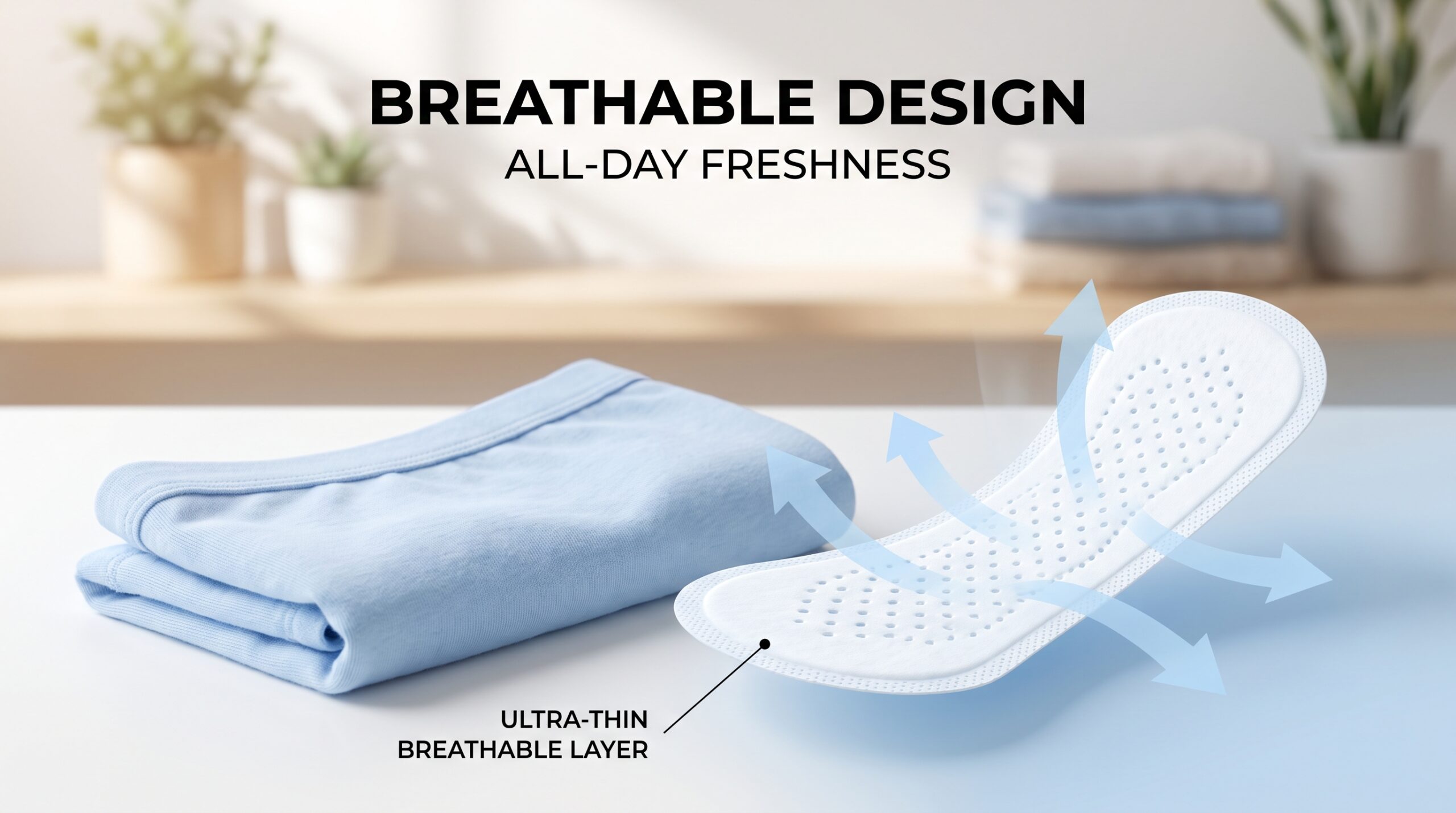
A breathable liner is designed to allow greater movement of air and water vapor around the covered area.
What Makes Breathable Pantiliners Different?
When a pantiliner is described as breathable, the term generally refers to a back layer that allows some water vapor to pass through instead of creating a completely vapor-impermeable barrier.
This matters because the vulvar area naturally has a warm, moist environment. Clothing, movement, perspiration, vaginal discharge, and menstrual products can all affect that local environment.
A study indexed by the U.S. National Library of Medicine compared different pantiliner constructions and found that a conventional liner with a non-breathable backsheet produced higher vulvar skin temperature and humidity than either no liner or a liner with a breathable backsheet. The breathable design kept measured conditions substantially closer to those observed without a liner.
PubMed research on pantiliners and the vulvar skin microclimate
That does not mean breathable liners prevent infections or treat medical conditions. It simply illustrates why material construction can matter when thinking about everyday comfort.
Moisture, Heat, and the Skin Microclimate
Skin comfort is influenced by what researchers sometimes call the microclimate—the temperature and moisture conditions immediately surrounding the skin.
When moisture becomes trapped and ventilation is limited, skin may feel warmer or damper. Friction can also become more noticeable when moist skin repeatedly rubs against clothing or another surface.
The vulvar area deserves particular consideration because its tissues differ from exposed skin elsewhere on the body. Research has noted differences in hydration, permeability, occlusion, and susceptibility to friction.
For everyday liner users, this suggests a practical principle: a liner should manage light moisture without unnecessarily creating a heavy, sealed feeling.
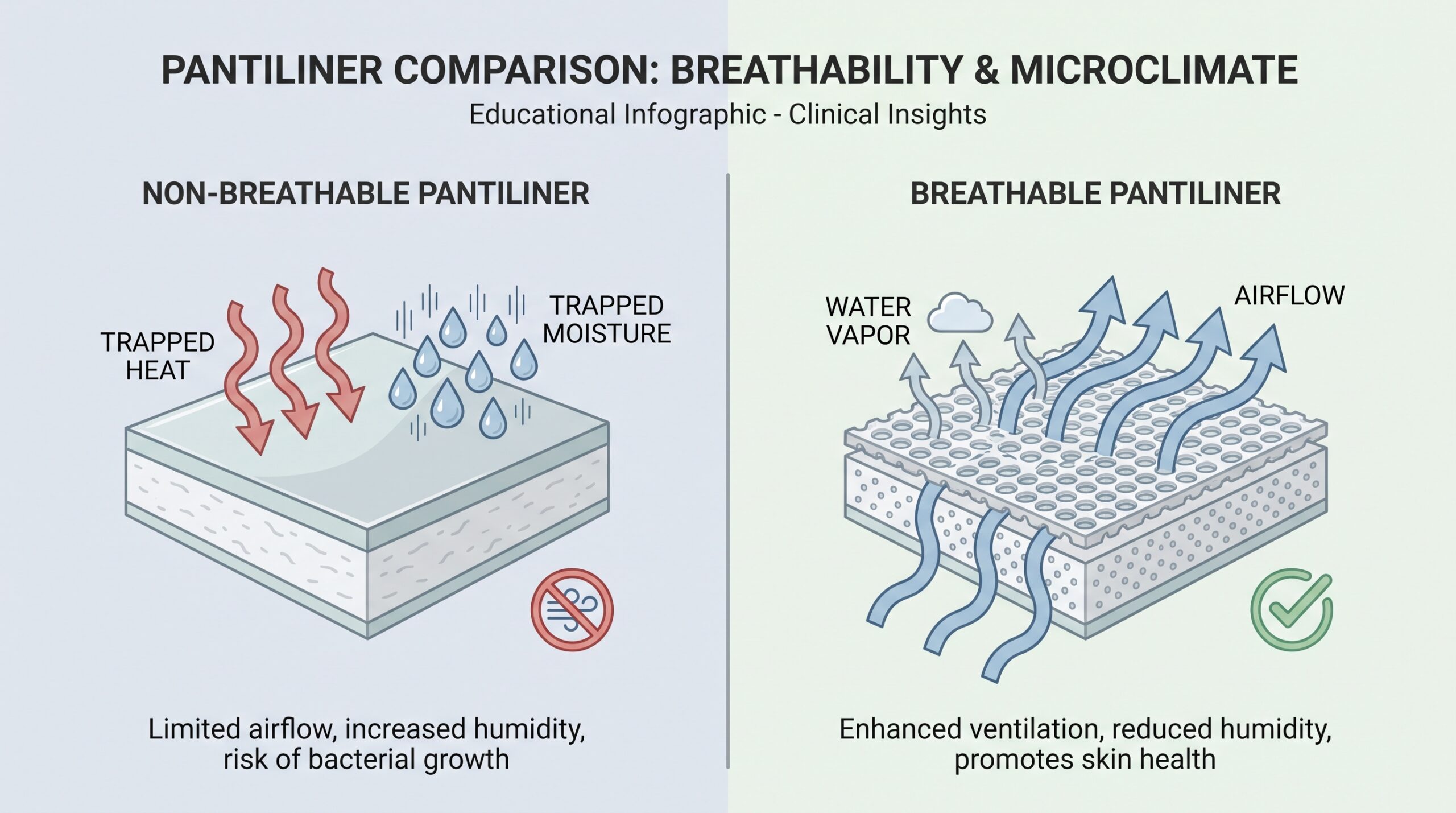
Pantiliner construction can influence temperature and moisture conditions at the skin surface.
Friction Is Part of the Comfort Equation
Breathability alone does not determine whether a pantiliner will feel comfortable.
Movement during walking, exercise, commuting, or sitting for long periods can create friction between the liner, underwear, and skin. A liner that bunches, shifts, has a rough surface, or feels excessively bulky may become uncomfortable even if its back layer is breathable.
The American College of Obstetricians and Gynecologists recommends gentle vulvar care and advises avoiding potential irritants such as perfumes and deodorized menstrual products. ACOG also recommends loose-fitting clothing and cotton-panel underwear to allow air circulation.
ACOG guidance on vulvovaginal health and everyday care
When evaluating pantiliners, consider several features together: a soft surface, secure fit, appropriate absorbency, thin construction, fragrance-free materials, and breathability.
Why Fragrance-Free Pantiliners May Feel More Comfortable
Some pantiliners are marketed around scents or a feeling of “freshness,” but fragrance is not necessary for normal vaginal hygiene.
Normal vaginal discharge can vary in amount and consistency during the menstrual cycle. A liner may help manage that moisture, but it should not be used to mask persistent unusual odor, itching, burning, or changes in discharge that could require medical evaluation.
ACOG advises avoiding vaginal deodorants, feminine sprays, douches, and other perfumed products. Cleveland Clinic similarly notes that fragranced products and menstrual products can be potential irritants for people who develop vulvar dermatitis.
For people who prefer daily liners, selecting an unscented product can therefore be a sensible comfort consideration.
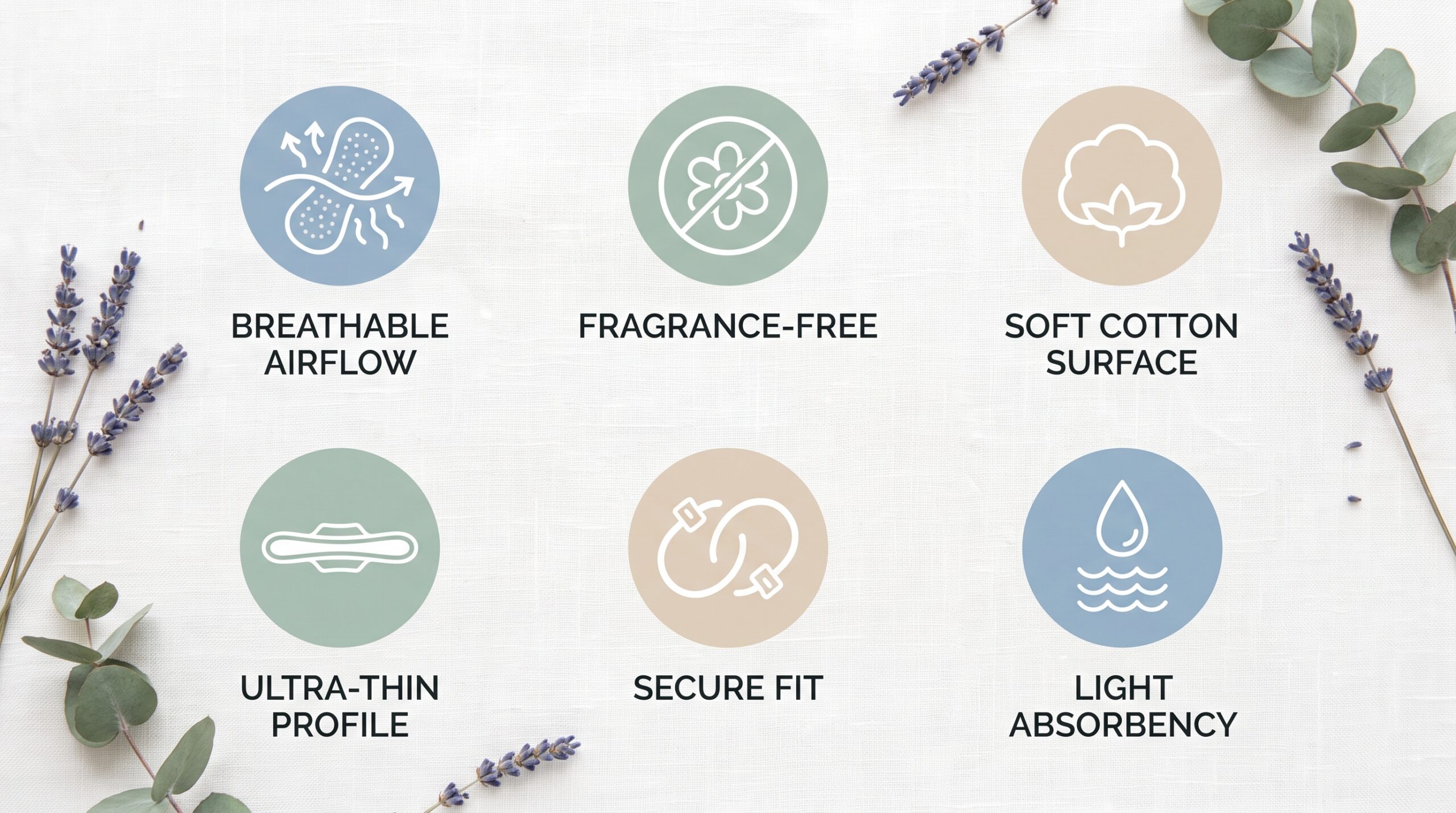
Everyday comfort depends on the complete liner design—not breathability alone.
How Natural Cotton Fits Into Breathable Pantiliners
Material preferences are another consideration. Some users prefer cotton surfaces because of their feel and familiarity, while others prioritize thinness, absorbency, or packaging.
A practical example is Maxim Natural Cotton Ultra Thin Pads and Liners. Maxim describes this range as using an organic cotton spunlaced topsheet, a chlorine-free cotton absorbent core, and a breathable natural-fiber back layer. The products are also fragrance-free and are offered in several absorbency levels.
These characteristics illustrate how manufacturers can combine breathability with other comfort-focused features. They should not, however, be interpreted as guarantees against irritation or infection. Individual skin sensitivity varies, and any product that causes persistent discomfort should be discontinued.
Can Pantiliners Be Worn Every Day?
For healthy users who find them comfortable, research has generally not demonstrated significant adverse vulvovaginal effects from pantiliners when they are used as intended. A systematic review of available studies found that intermenstrual pantiliner use did not appear to negatively affect the vulvovaginal area in healthy women, although evidence was more complicated for people with recurrent candidiasis.
Comfort still matters. Change a liner when it feels damp or soiled rather than wearing the same one for an unnecessarily long period. If you repeatedly experience itching, burning, redness, unusual discharge, strong odor, or irritation, replacing the liner more frequently—or switching products—may not address the underlying cause. A healthcare professional can help determine what is happening.
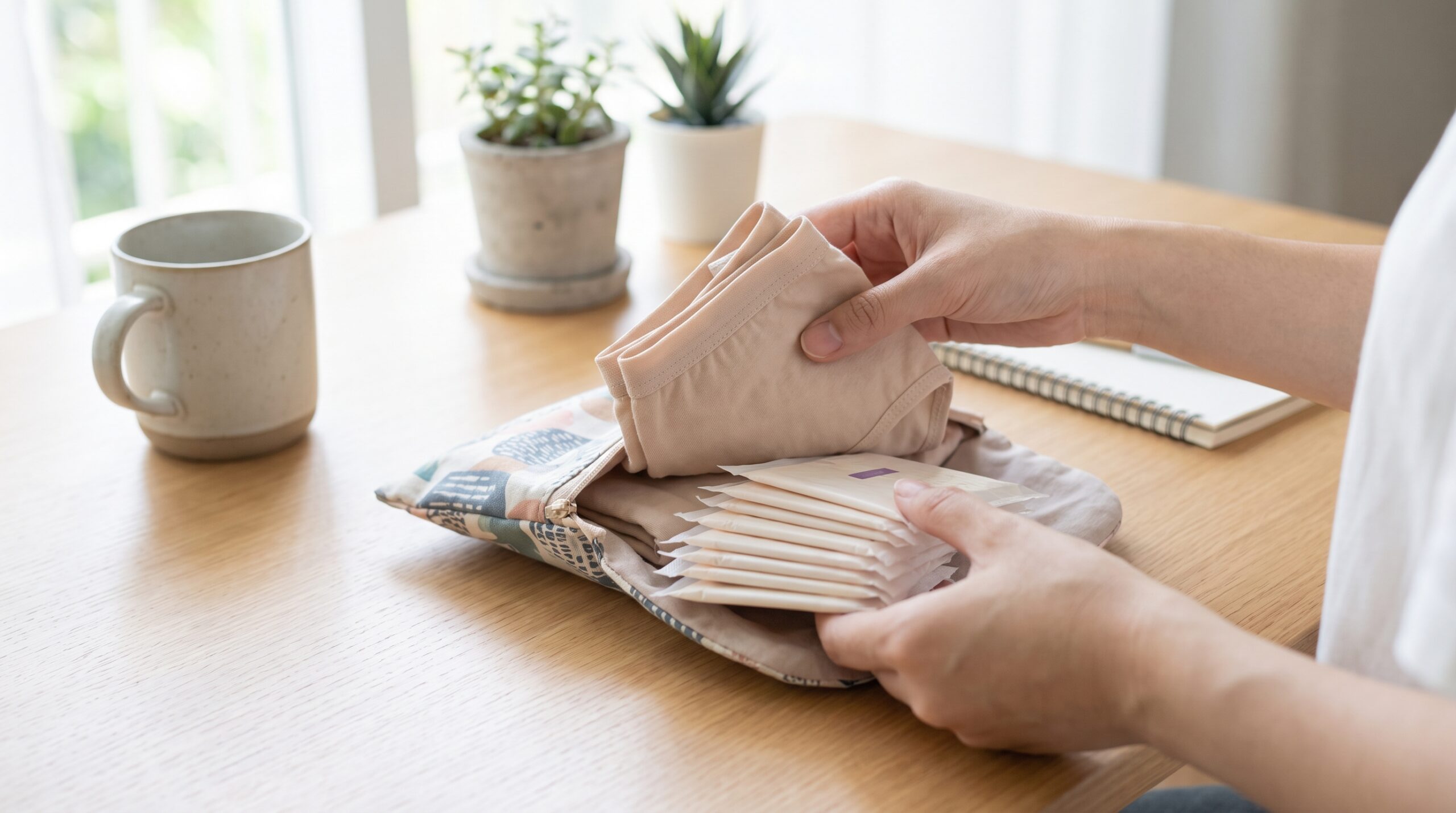
The best daily liner is one that matches your moisture needs without compromising comfort.
Choosing Breathable Pantiliners for Everyday Comfort
The best pantiliner is not automatically the thickest or most absorbent option.
For normal discharge and very light spotting, an ultra-thin liner may provide sufficient protection while adding less bulk. Breathable construction can also help reduce the occlusive feeling associated with less vapor-permeable materials.
When comparing pantiliners, look beyond a single feature. Consider breathability, softness, fragrance, fit, thickness, and appropriate absorbency together.
A pantiliner should support your everyday routine—not make you constantly aware that you are wearing one. Understanding how moisture, heat, materials, and friction interact can make choosing daily protection a more informed and comfortable decision.