
Cardboard vs. plastic tampon applicators differ mainly in the materials used to make them and what happens after disposal. Although both perform the same basic function of helping position a tampon comfortably, they differ in raw materials, manufacturing pathways, persistence after disposal, and their contribution to single-use waste.
Understanding those differences helps consumers evaluate period products on more than convenience or marketing claims. The better question is not simply, “Is cardboard better than plastic?” but rather, “How does this material fit into the product’s entire life cycle?”
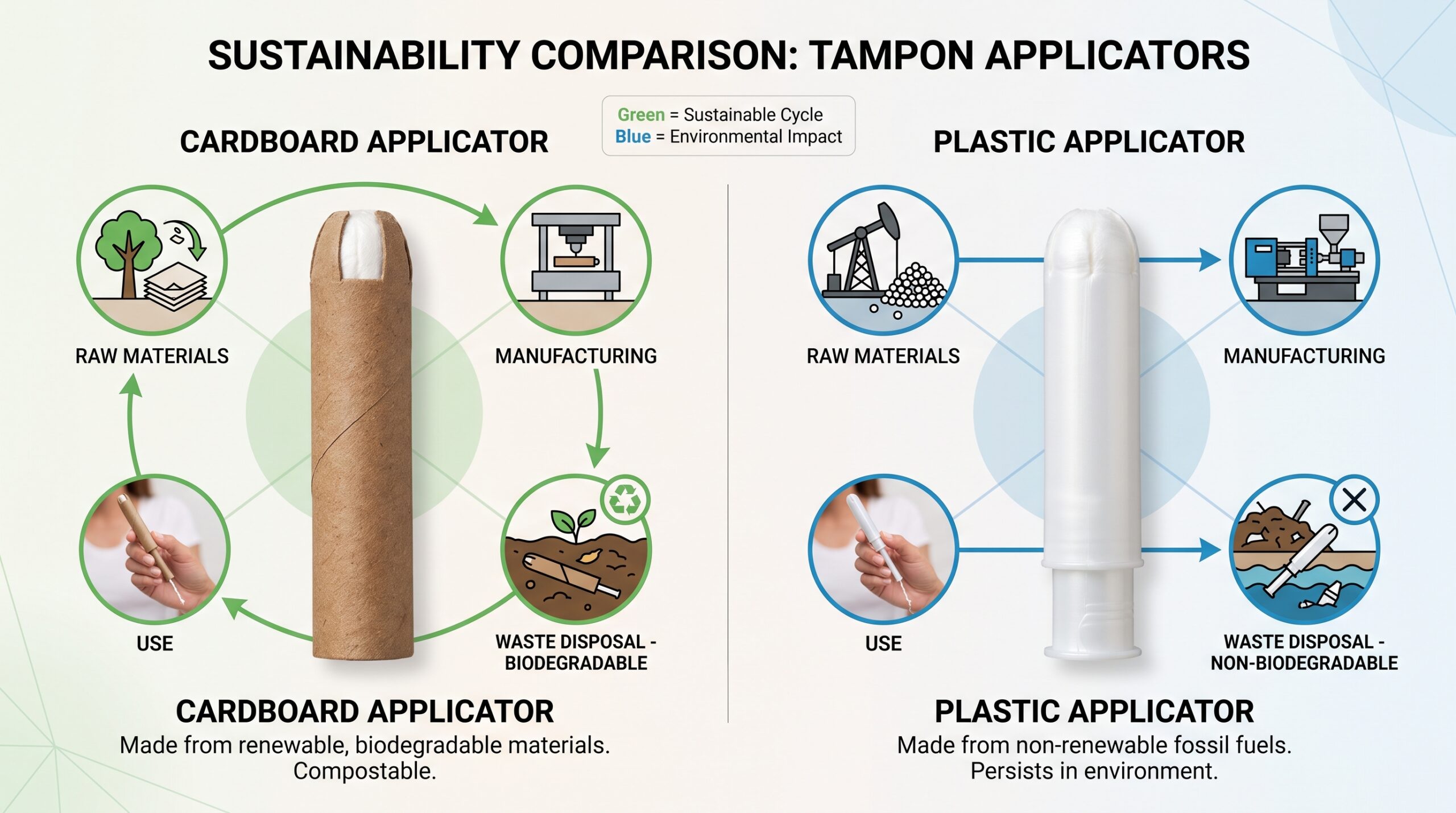
Applicator material is one factor consumers can consider when evaluating the environmental footprint of disposable period products.
Why Applicator Material Matters
Most conventional plastic applicators obtain their polymers largely from fossil-based feed stocks. Plastic offers useful properties: it can be smooth, lightweight, moisture-resistant, and inexpensive to manufacture at scale. Those characteristics explain why manufacturers use plastics so widely in disposable consumer goods.
Their durability, however, also creates an environmental challenge.
The U.S. Environmental Protection Agency identifies plastics as a rapidly growing component of municipal solid waste and reports that plastic containers and packaging alone represented more than 14.5 million tons of U.S. waste generation in 2018. EPA plastics material-specific waste data
A tampon applicator represents only a tiny fraction of that total. Consumers repeatedly use and discard menstrual products, so material choices gain significance when analyzed across millions of users and years of use.
Cardboard applicators replace the rigid plastic component with a paper-based material made from cellulose fibers. That does not make every cardboard product automatically environmentally superior, but it can reduce reliance on persistent plastic in this particular component.
Looking Beyond the Trash Can: The life cycle approach
Environmental impact begins before an applicator reaches the consumer.
Industries must extract or grow materials, process them, manufacture applicators, and package and transport them, use them, and manage waste. Environmental researchers call this a life cycle approach.
The United Nations Environment Program recommends assessing disposable products across their full life cycle rather than focusing only on whether an item appears recyclable or biodegradable. UNEP notes that plastic pollution solutions should address production, design, consumption, and disposal together. UNEP guidance on the life cycle approach to plastic pollution
This distinction matters when comparing tampon applicators. A plastic applicator’s environmental profile includes fossil-resource extraction, polymer production, manufacturing, transportation, and long-term waste management. A cardboard applicator has its own impacts, including forestry or fiber production, pulping, manufacturing, and transportation.
Neither material has zero impact. The advantage of reducing plastic is primarily that fewer persistent plastic components enter the disposable-product stream.
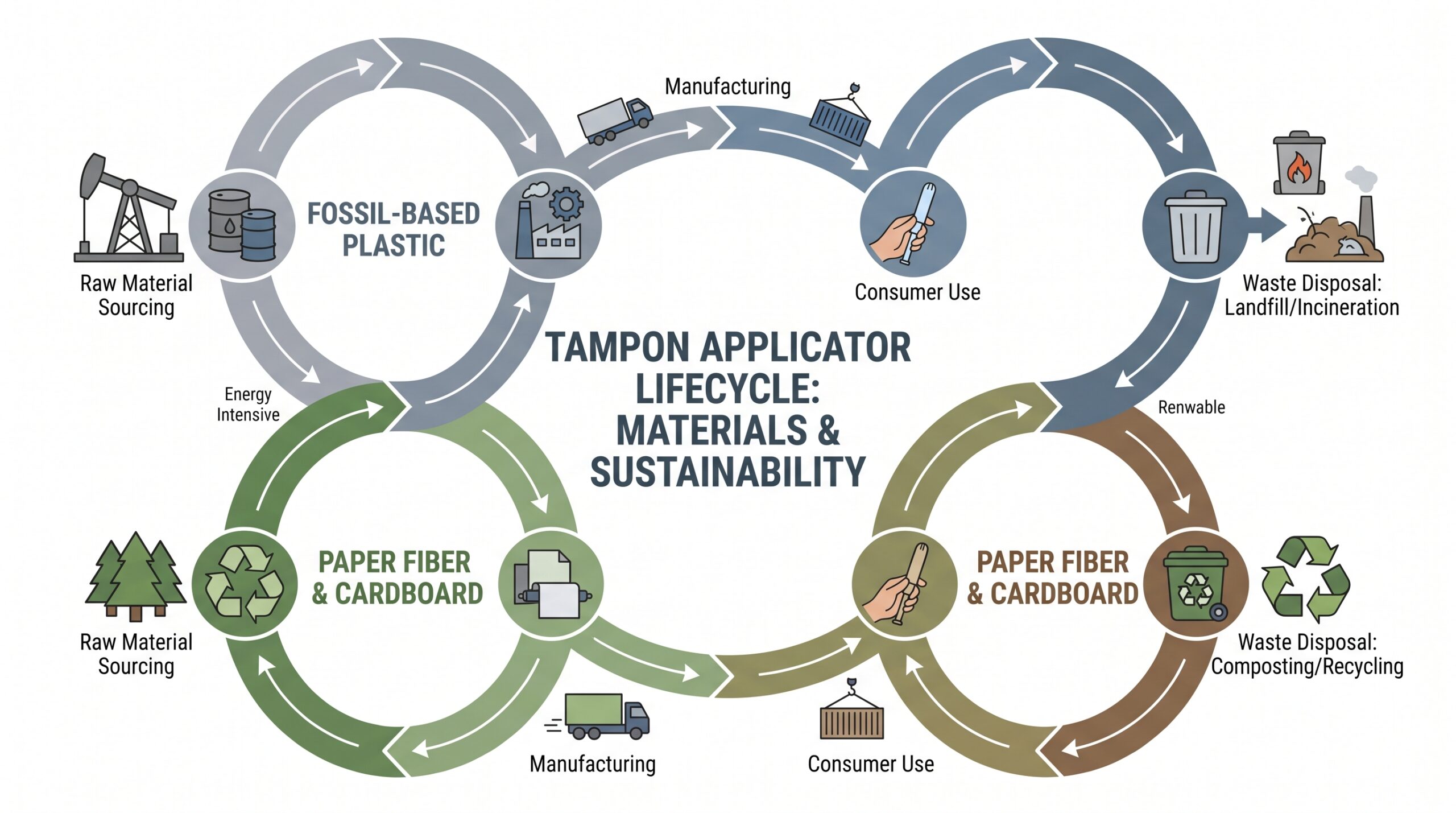
A life cycle assessment analyzes how people use a disposable product before, during, and after use.
Cardboard vs. Plastic: The Practical Differences
The most useful comparison focuses on material characteristics rather than broad environmental labels.
Plastic applicators are highly durable and resistant to moisture. Those properties can improve product handling, but they also mean the material can persist in the environment if it escapes proper waste management.
Cardboard applicators use cellulose-based material instead of a rigid plastic tube. Paper-based materials originate from renewable fiber resources when responsibly sourced, although forestry practices, processing energy, coatings, and manufacturing methods still influence their overall footprint.
Consumers should also distinguish between the applicator, tampon, wrapper, and retail packaging. Changing one component does not necessarily eliminate plastic throughout an entire product system.
For example, Maxim’s organic cotton cardboard applicator tampons pair a cardboard applicator with a certified organic cotton absorbent core, cotton withdrawal cord, cellulose-paper wrapper, and cardboard packaging. This illustrates how product designers can evaluate several components rather than changing only the applicator.
The important principle is material reduction: when a disposable component can perform its function without relying on conventional plastic, manufacturers have an opportunity to reduce plastic use at the design stage.
“Plastic-Free” Does Not Mean “Impact-Free”
Consumers should be cautious with sustainability claims that oversimplify complicated material systems.
A cardboard applicator still requires resources and energy to manufacture. We still must transport the packaging. Used menstrual products still enter waste-management systems. The environmental benefit therefore should not be described as eliminating waste entirely.
UNEP’s research on single-use products reinforces this point. Its life cycle analysis concluded that the broader problem is often single use itself, not solely the material from which a disposable product is made. UNEP report on single-use products and life cycle impacts
For consumers who prefer disposable tampons, however, reducing unnecessary plastic remains a practical way to address one part of the waste equation without fundamentally changing their menstrual-care routine.
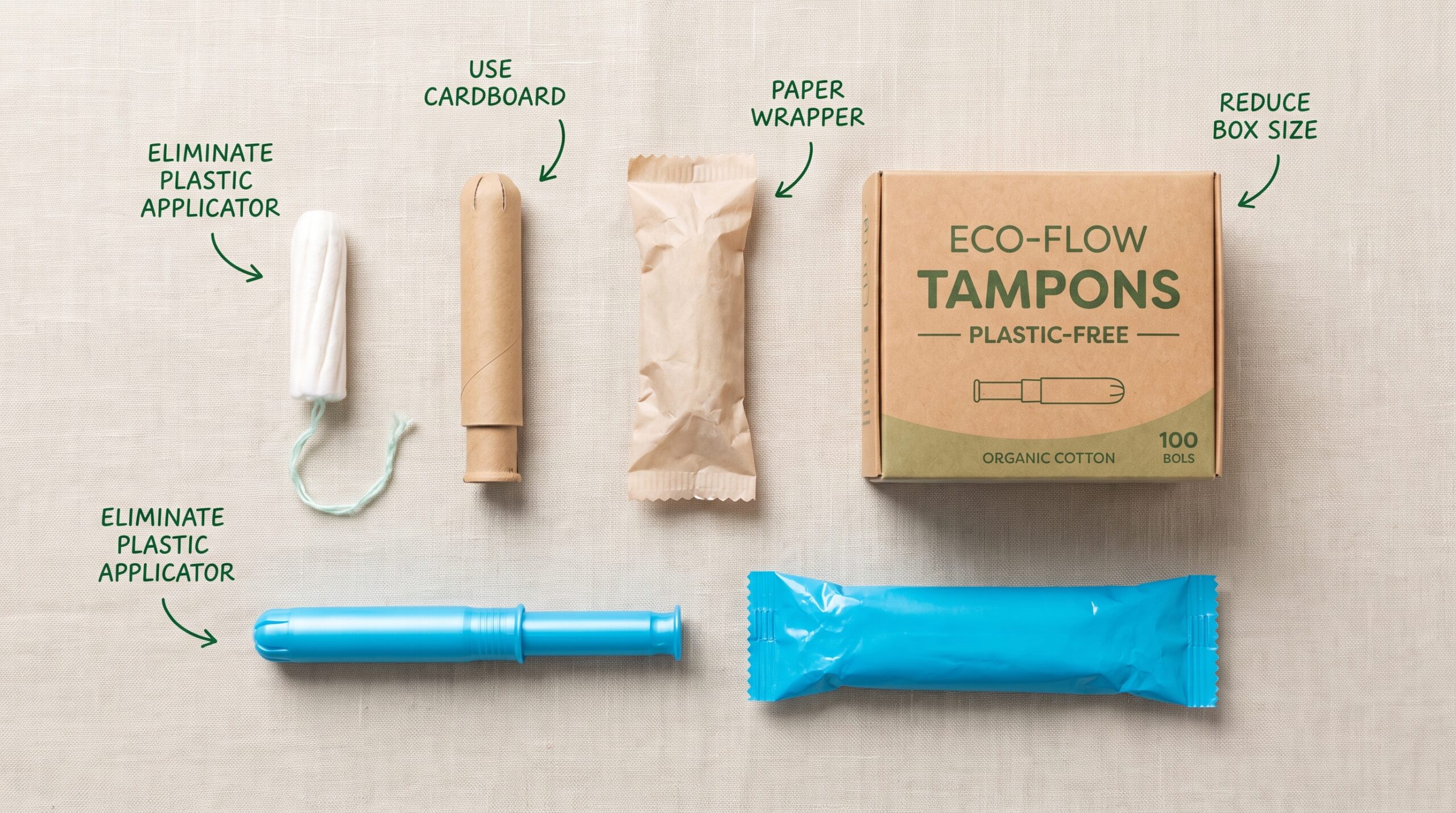
Evaluating individual components helps consumers understand where plastic reduction is actually occurring.
Sustainability Should Never Replace Safe Tampon Use
Material considerations are useful, but they should remain secondary to correct tampon use.
The U.S. Food and Drug Administration recommends changing tampons every four to eight hours, never using one tampon for longer than eight hours, and selecting the lowest absorbency needed for menstrual flow. The FDA also advises users to recognize symptoms associated with toxic shock syndrome and seek medical attention when necessary. FDA tampon safety guidance
Those recommendations apply regardless of whether the applicator is made from cardboard or plastic. In other words, sustainability should influence which appropriately designed product a consumer chooses, not encourage unsafe changes in how long a tampon is worn.
A Better Checklist for Choosing Period Products
Instead of relying on one environmental buzzword, consumers can examine several questions:
- What is the absorbent core made from?
- Is the applicator plastic, cardboard, or applicator-free?
- What material is used for the individual wrapper?
- How much secondary packaging is included?
- Are material and ingredient claims clearly explained?
- Does the product provide appropriate absorbency options and clear safety instructions?
This approach gives consumers a more realistic picture of environmental design.

Looking at the entire product system provides more useful information than relying on a single sustainability claim.
The Bottom Line
Cardboard and plastic tampon applicators may serve the same practical purpose, but their material life cycles are different. Plastic offers durability and manufacturing convenience, while cardboard provides a way to reduce reliance on a persistent single-use plastic component.
The most responsible comparison avoids claiming that one disposable product is environmentally perfect. Instead, it considers raw materials, product design, packaging, safe use, and disposal together.
For consumers who prefer applicator tampons and want to reduce plastic in their period-care routine, cardboard applicators can represent one practical material choice. More broadly, asking what each component is made from encourages a more informed approach to everyday products and gives manufacturers a reason to design waste reduction into products from the beginning.