Breast milk leakage is a common part of breastfeeding, particularly during the early weeks as milk production adjusts to a baby’s feeding pattern. The Centers for Disease Control and Prevention notes that breasts may feel full and leak and specifically identifies both disposable and cloth nursing pads as options for managing leakage.
That leaves many parents with a practical question: Should you choose disposable or reusable nursing pads?
Both are designed to absorb leaking breast milk before it reaches a bra or clothing, but they differ in convenience, laundering, fit, waste, and everyday maintenance. Understanding those differences can help you choose the option that works best for your routine rather than assuming one type is universally better.
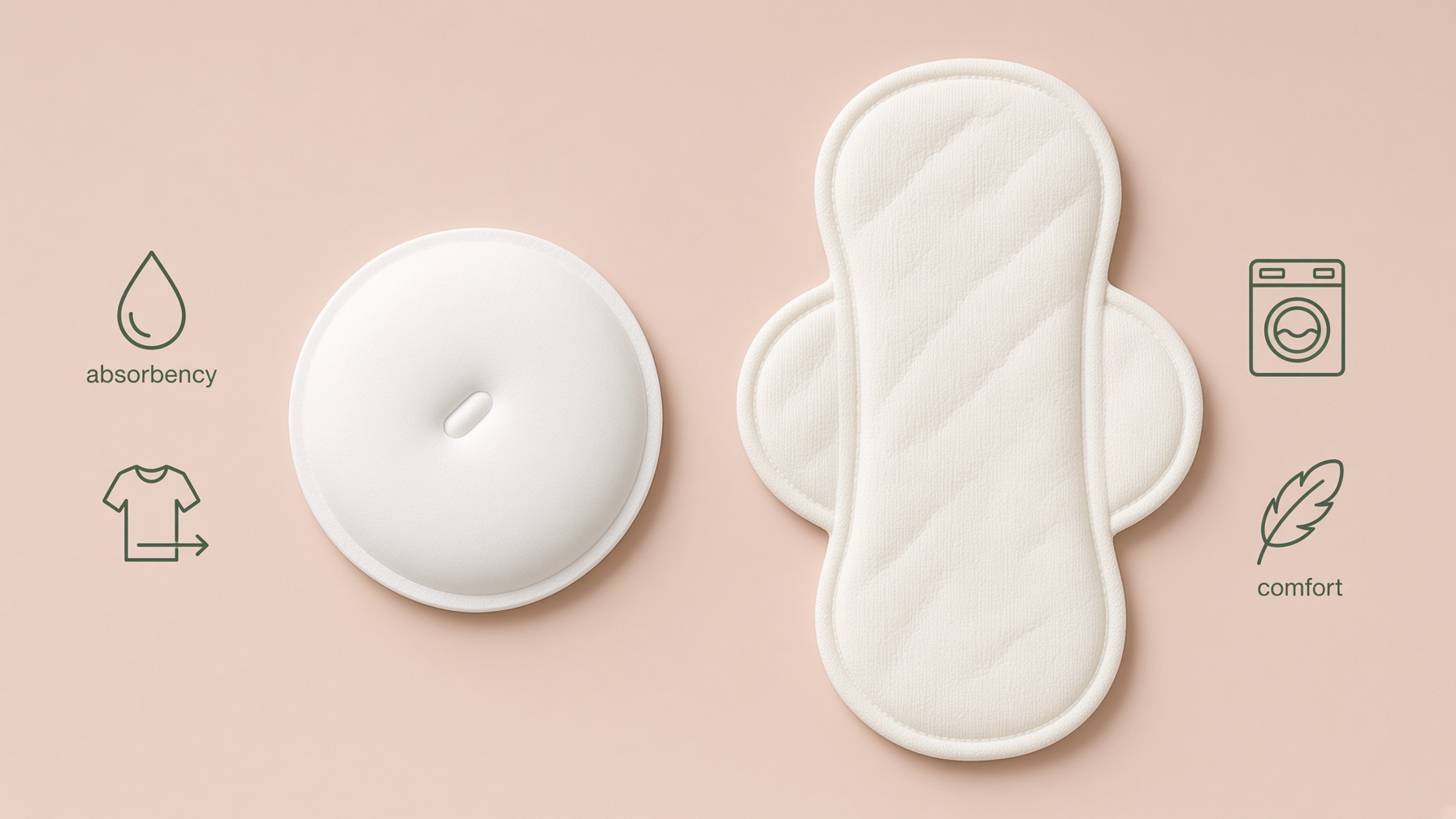
Disposable and reusable nursing pads solve the same problem but differ in maintenance, convenience, and materials.
Why Are Nursing Pads Used?
Milk leakage may occur when breasts become full, during a milk let-down reflex, or even when feeding from the opposite breast. Leakage often changes as breastfeeding becomes established. The federal Office on Women’s Health explains that breasts may feel full and leak during the first days of mature milk production and that leaking may decrease as the body adjusts over the first several weeks.
A nursing pad creates an absorbent layer between the nipple and bra. Its job is simple: capture milk, help protect clothing, and provide a practical way to manage unexpected leakage.
The choice between disposable and reusable versions is primarily about how that job fits into your lifestyle.
Disposable Nursing Pads: Convenience First
Disposable nursing pads are designed for single use. Once a pad becomes wet or soiled, it is removed and discarded.
Their biggest advantage is convenience. There is no laundering or drying, which can be helpful during travel, overnight use, workdays, or the demanding first weeks after childbirth. Individually packed or resealable formats can also make clean pads easier to carry away from home.
Many disposable pads incorporate multiple functional layers: a soft layer against the breast, an absorbent center, and a leak-resistant outer layer. Some also include adhesive strips that help prevent the pad from shifting inside the bra.
For example, Maxim Natural Cotton Disposable Nursing Pads use a natural cotton absorbent core and adhesive backing designed to hold the contoured pad in place. Maxim advises changing the pads when wet rather than continuing to wear a saturated pad.
The tradeoff is that every change creates another piece of single-use waste, and regular use means maintaining a supply of replacement pads.
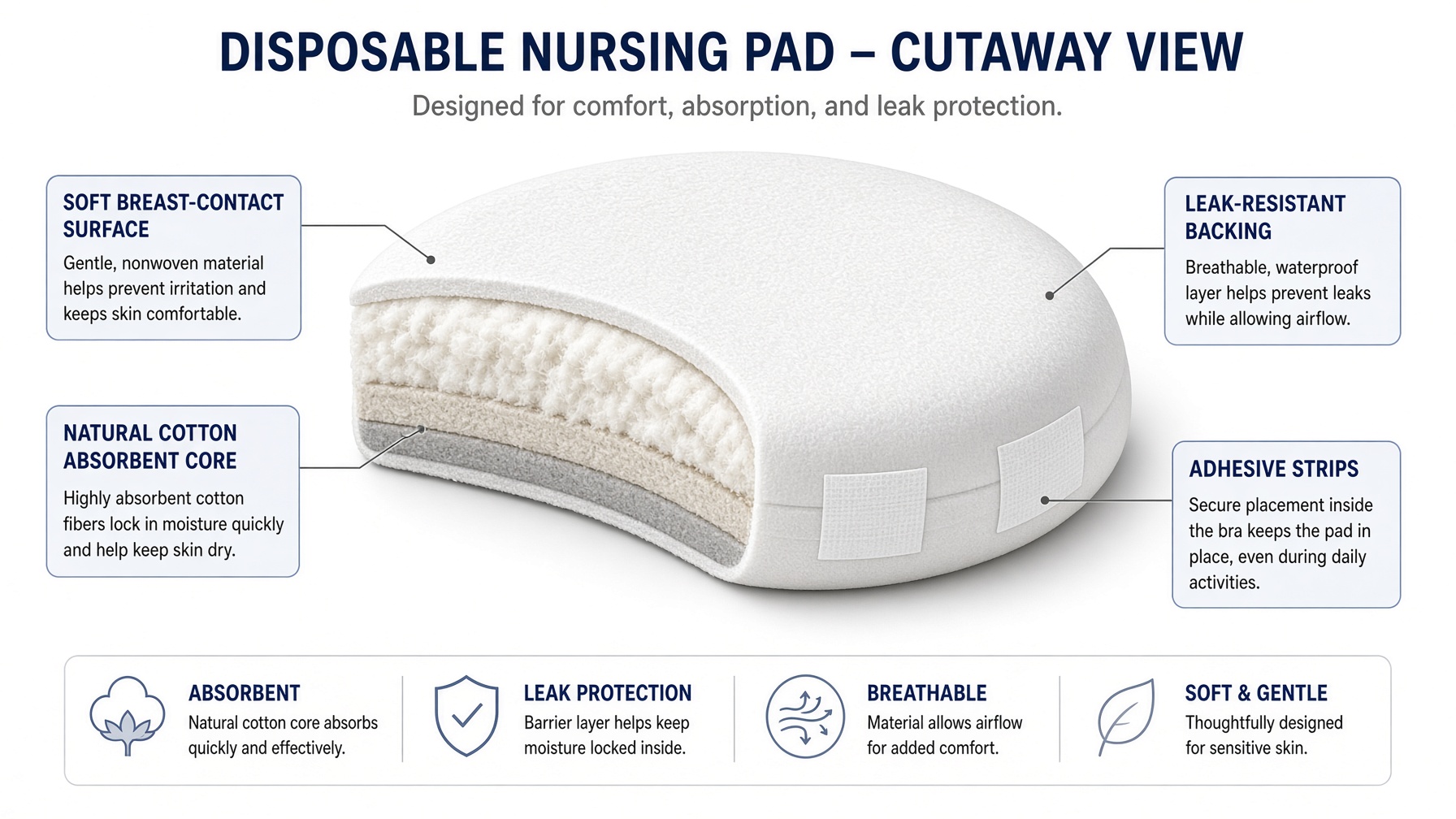
Disposable nursing pads typically combine absorbent and leak-control layers in a ready-to-use format.
Reusable Nursing Pads: Wash, Dry, Repeat
Reusable nursing pads are generally made from washable textiles and are intended to be used repeatedly.
Their clearest advantage is reusability. Instead of throwing away a pad after each use, parents can wash and rotate a set throughout the breastfeeding period. This can reduce the number of single-use pads discarded over time.
Reusable pads may also appeal to people who prefer the feel of washable fabric against their skin. However, they require more planning. A sufficient number must be available while used pads are being washed and fully dried, and extra clean pairs may be needed when leaving home.
Absorbency can also vary substantially depending on the pad’s fabric, thickness, construction, and number of layers. An older clinical study indexed by the National Library of Medicine’s PubMed database found measurable differences in leakage control and breast dryness among breast-pad designs, illustrating that performance depends on construction rather than simply whether a pad is disposable or reusable.
Absorbency and Moisture Management Matter
Regardless of which style you choose, a nursing pad needs to handle your actual leakage level.
A pad that becomes saturated quickly may allow milk to reach clothing or leave moisture against the skin. Someone experiencing heavier leakage may therefore need higher absorbency or more frequent changes than someone experiencing occasional drops.
Wet pads should be replaced rather than left in place for long periods. This makes having spare pads important with either system: extra disposables in a diaper bag or enough reusable pairs to maintain a clean rotation.
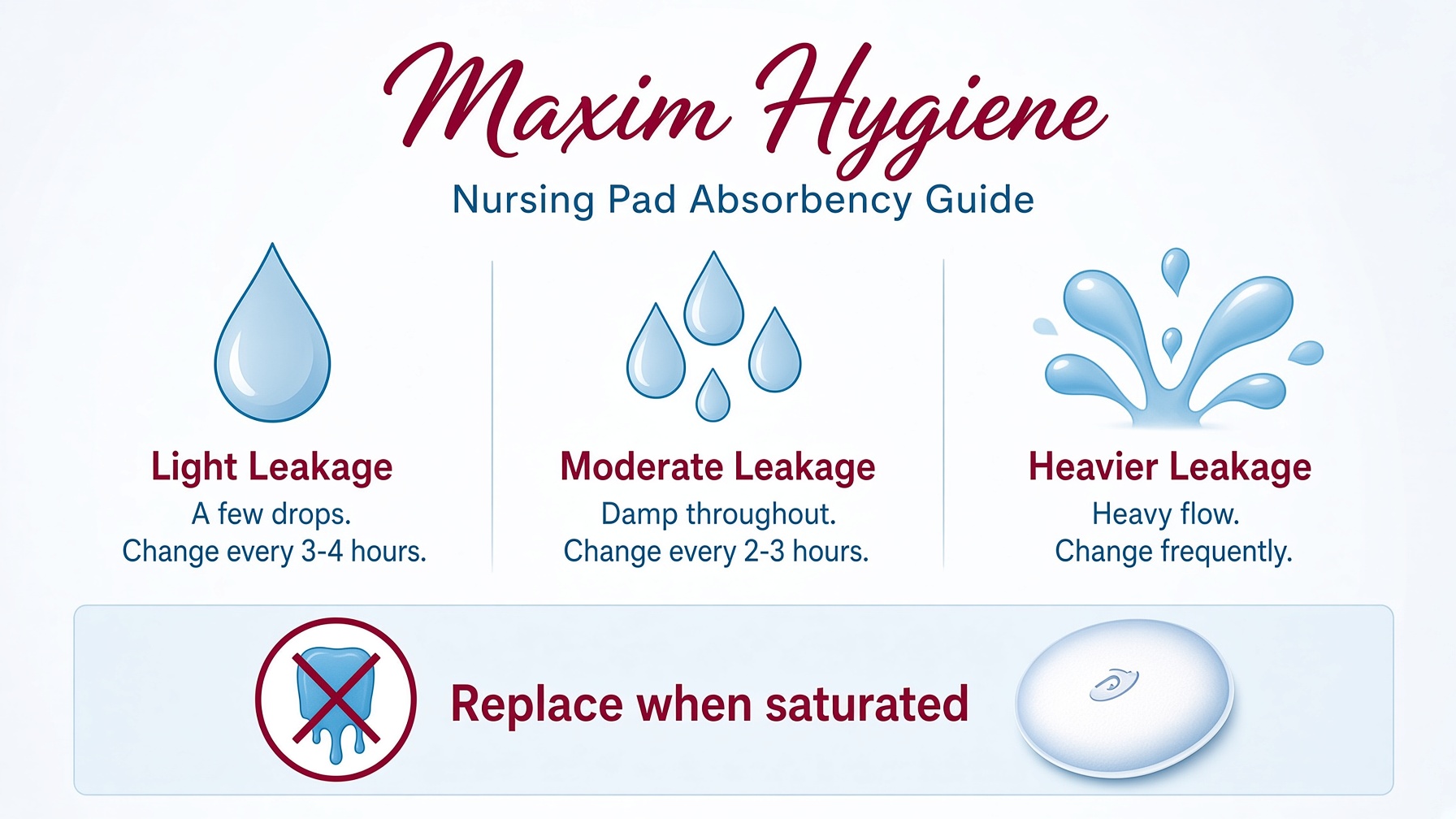
Absorbency needs can change, so nursing pads should be replaced whenever they become wet or saturated.
Disposable vs. Reusable: How to Decide
Instead of looking for a universal winner, consider your daily routine.
Disposable pads may make more sense if you prioritize convenience, travel frequently, return to work, do not want additional laundry, or need an easy backup option.
Reusable pads may suit you if you are comfortable washing and drying them regularly, prefer washable fabrics, and want to reduce reliance on single-use products.
Many parents do not need to choose exclusively. A mixed approach can be practical: reusable pads at home and disposable nursing pads for travel, nighttime backup, work, or situations where storing wet reusable pads would be inconvenient.
Cost should also be viewed over time. Disposable products involve repeated purchases, while reusable pads typically require a larger initial supply but can be washed many times. Actual value depends on leakage frequency, how long pads are needed, and personal washing habits.
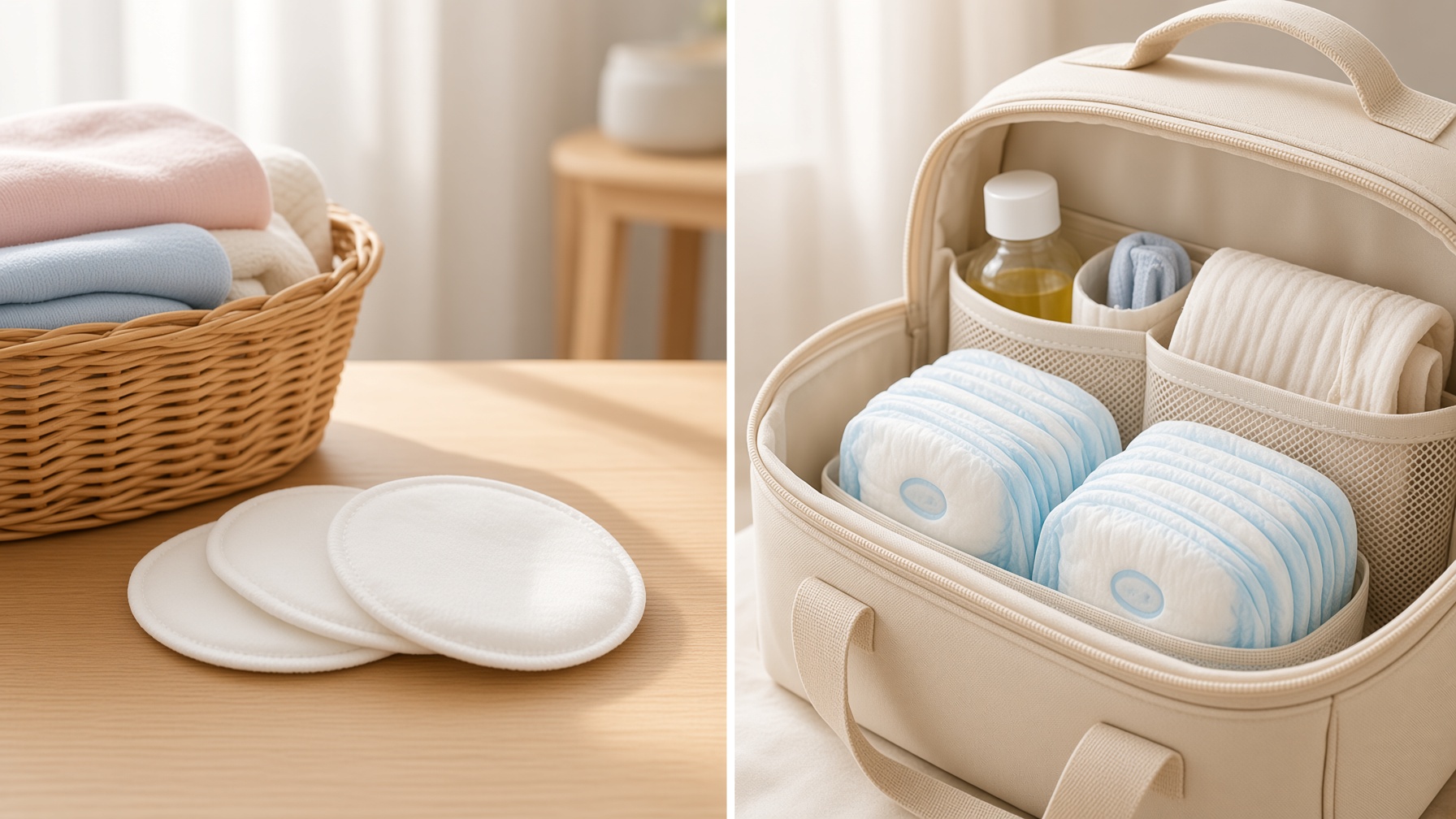
Daily routine often matters more than product category when choosing nursing pads.
The Bottom Line
The disposable vs. reusable nursing pads decision comes down to absorbency, comfort, maintenance, portability, cost, and personal preference.
Disposable pads offer ready-to-use convenience and easy replacement, while reusable pads provide a washable option that can reduce dependence on single-use products. Neither approach is automatically right for every breastfeeding parent.
Whichever option you choose, focus on a comfortable fit, sufficient absorbency, clean replacements, and changing wet pads when needed. You may also find that combining disposable and reusable nursing pads gives you greater flexibility as your breastfeeding routine—and leakage level—changes over time.