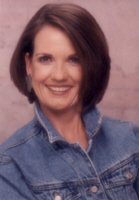
This month’s Fierce Woman is Monika Woolsey. The Maxim Hygiene team had the pleasure of meeting Ms. Woolsey when we visited Anaheim, CA for Natural Product’s Expo West. Since then, we’ve learned of her incredible efforts and outreach towards women with Polycystic Ovary Syndrome (PCOS) through her inCYST network.
inCYST is a network of professionals trained in the treatment of PCOS who are excited to be able to help women with the syndrome! They provide educational programs and resources for women with PCOS, the leading cause of infertility in the United States. In doing so, they hope to offer proven-effective and natural solutions to problems associated with PCOS: infertility, depression, acne, hair loss, weight gain, eating disorders, and more.
Monika, by leading her group of inCYSTers, has done an incredible job of encouraging women who may feel burdened by PCOS. In fact, she even interviewed Maxim Hygiene’s Julia about feminine hygiene safety and how using Maxim Hygiene’s Organic and Natural products are a healthier solution for women.
Now, the tables have turned as the Maxim Hygiene team has sought to interview Monika about her incredible achievements and words of wisdom to those with PCOS. Read Monika’s inspirational interview below to learn more about what makes her (also a women’s health writer) a Fierce Woman. While you’re at it, take some time to visit the inCYST homepage, Like them on Facebook, Follow them on Twitter, and read their newsletter.
What is your background and how did you get involved with PCOS?
I am a registered dietitian with a master’s degree in exercise physiology. My master’s program was very heavy in neuroendocrinology studies. After graduating, I worked in an eating disorder treatment center for 3 1/2 years, developing the experience that earned me the opportunity to write the American Dietetic Association’s first-ever professional clinical manual on the topic of eating disorders. When it was published, I started to receive inquiries from women who kept telling me “I used to have an eating disorder, now I have PCOS. Can you help me?” I’d never really heard of it before but started to investigate, and saw that the research was scattered, very biased toward medication and medical procedures, with little appreciation for the lifestyle and nutritional influences on the symptoms. I started to be asked by colleagues to share what I knew and what I was doing, and that is what inCYST is, a collection of the services and resources for women with PCOS.
What exactly is inCYST and why did you develop it?
Most of the information about PCOS was being generated either by pharmaceutical companies who saw profit potential or by Internet marketers who wanted to sell supplements. There was no middle of the road place where all information was evaluated and considered. I absolutely believe medications can be an important part of PCOS treatment, but I also feel the power of a solid nutritional plan is often ignored. I wanted to create a clearinghouse of information that was evidence-based and provided equal voice to all people who may be trying to help: allopathic physicians, naturopathic physicians, acupuncturists, dietitians, herbalists, etc. We each see the syndrome in a different way, and we each contribute an important perspective to the health of the women who turn to us for help. I wanted all of us to have a place to reach out in a genuinely useful fashion.
What does your work with PCOS and inCYST entail?
- I train professionals using a webinar series that engages the expertise of people I find who have pertinent knowledge.
- Trained professionals are marketed by inCYST for two years, and I do that using our Blogtalk radio show, Twitter, our Facebook fan page, our blog, and helping anyone out there who has a special project they’d like to market. We’re currently working on a PCOS day in Nashua, NH for the fall.
- I am currently working on launching a research foundation, in response to women who wanted one, that will be devoted to funding studies that drug and food corporations are unlikely to support. Namely, nutrition, complementary, psychological interventions that you can’t patent and profit from, but which have value to a woman with a hormone disorder.
What has been your most valuable lesson in working with women with PCOS and with starting inCYST?
Listen, listen, listen! Too many people out there are talking AT women with PCOS, not really listening to what they are saying they want and need. I spend a good hour every morning studying our website statistics to see who visited, from where, and why. Everything I learn is incorporated into everything we do from that point forward. It transfers into my personal life too, people want to know they’re being heard, they don’t want to be taught.
What has been the biggest obstacle or struggle you personally have faced?
When I first started my business, about 15 years ago, the book I had a contract to write and was told would take only 3 years to write, actually took 6 years to get to press. Books work on royalties, so having to honor that contract for 3 extra years meaning continuing to work on it when I’d planned to do other things, was a significant financial catastrophe that I work on repairing to this day.
However…I think it has helped me to develop compassion for a woman faced with something as significant as infertility. There were days when I’d tell my best friend that I felt like I was pulling myself on my stomach, upMt.Everest, with one arm only. It took a lot just to get out of bed and face the day. I was so stressed I would be standing in line at the grocery store and just start to cry without reason. I don’t talk about this much, but given the focus of this interview, I want to be sure that women who follow inCYST know it did not come without doubts, stress, effort, diligence, self-nurturing, and faith in the fact that I was a good person no matter what the world was flinging at me.
I learned from my experience that no matter what happens, the sun still comes up, you can still do something positive, you can smile at a stranger. And I am much less critical of myself than I used to be when I was younger.
What are some of the biggest obstacles and challenges facing women with PCOS?
Women with PCOS are dealing with a disjointed health care system. They go to a specialist who takes care of a specific aspect of the syndrome but may not have the desire or patience to work with it globally. Physicians are busy and don’t always communicate with each other, so women juggling multiple problems are getting lots of (often conflicting) advice from their caregivers. As far as nutrition goes, all due respect to medical doctors, they get very little nutrition education in their schooling and they don’t always give the best advice. Much of our work as inCYSTers is doing a detailed history, sorting through what will work, undoing what may be counterproductive, and if there’s anything left to add, adding that on.
A diagnosis of infertility has been found to be as stressful as a diagnosis of terminal cancer or HIV. Many of the caregivers treating PCOS are not savvy about the binge eating aspect of the syndrome and how this stress can drive that kind of eating. It’s hard for women to trust any advice they get if they perceive, in any way, that they’re not completely understood.
Up to 70% of women with PCOS are actually lean. They have a really hard time getting a diagnosis because PCOS is so strongly associated with obesity. Many of these women are engaging in disordered eating and exercise behaviors because they have gotten bad information, it can develop into a full-blown eating disorder if it’s not caught. Not many eating disorder specialists screen for PCOS, especially not in normal and low-weight women, so the syndrome can wreak havoc for years.
Obese women with PCOS can be judged and blamed for their problem. If you could see the uncomfortable shifting in an audience of physicians when I say, “If a woman has taken time off of work and sat patiently in your office while you were running 2 hours behind, and all she got was ‘eat less and exercise more’ from you…you failed her!”, you’d know why it’s so important to help these women. A significant percentage of caregivers either don’t know how or have judgments about these women that interferes with their ability to be supportive and compassionate.
What are some common misconceptions about PCOS?
- That it’s caused by obesity. Obesity does not cause it, even though its presence can worsen symptoms.
- That it only occurs in obese women. Up to 70% of all women with PCOS are lean.
- That it is caused by insulin resistance. Insulin resistance is extremely strongly correlated with PCOS, and treating insulin resistance is very helpful to a high percentage of women, but it doesn’t help every woman. There are some interesting reasons emerging for why the insulin resistance exists in the first place. When we stop being distracted by the symptom and focus on the cause of the problem, that is when we will start to help these women.
- That it’s just about eating less and exercising more. PCOS is negatively affected by any kind of extreme, even rigid dieting and overexercising. Learning to live a more balanced lifestyle is the better goal.
What is the best advice you have for women who have recently been diagnosed with PCOS?
Don’t panic. Take your time getting information. Equally as important as a smart physician is one who listens and considers your emotional needs. Use your PCOS as an invitation to take the very best care of yourself. It’s not a death sentence, and it’s not a reason to beat up on yourself. One of our fans recently shared with us that women with PCOS who are managing their diagnosis with lifestyle are some of the healthiest women IN THE ENTIRE POPULATION…why not be one of them?
What is the most important message you wish to convey to our readers?
You are not broken, and you do not need to be fixed. One of the positive aspects of PCOS is that it tends to affect women with highly creative personalities. But they drop their creative pursuits and focus on their diagnosis. The answer lies in being a whole being who eats well, sleeps enough, manages stress, and makes time for those creative expressions. You’re going to have to say “no” more often in order to prioritize those things, but we don’t just want you to conceive. We want you to have children who can also conceive, and for you to live long enough to meet your grandchildren.
What has been your biggest triumph?
Recently, in 36 hours, I was asked twice where money could be donated to my research foundation. I didn’t have one, but I realized that we must be helping a lot of people if they were willing, in this economy, to give me money and trust that I would do good with it. So I am listening to the requests and doing my best to honor the faith in what we do.
Maxim Hygiene defines a Fierce Woman as “a glorious female creature whose idea of beauty is hinged upon the idea that she can change the world with each choice, each moment, and each breath of her life.” Who in your life would you describe as a fierce woman and why?
Every woman with PCOS who makes even the smallest choice to do something positive for her own health each day is a fierce woman. I am reminded daily of what they live through 24/7, and that much of what they have to overcome in order to regain their health is what the rest of us takes for granted. I would not be the Fierce Woman you asked for this interview if the women who inspired me were not constantly sharing their honest thoughts and dreams. Without them, I would not be fueled to do what I do. Together, we make the fiercest of teams!