
Hydrocolloid acne patches work by absorbing moisture from certain surface-level blemishes while creating a protective barrier over the skin. Although they are now common in skincare routines, hydrocolloid technology originally came from wound-care dressings.
When that same material is made into a small adhesive patch for a blemish, it can perform a similar function: collect fluid from a superficial pimple, protect the area from outside contact, and reduce the temptation to touch or pick the skin.
Understanding what hydrocolloid actually does—and what it does not do—can help people use acne patches more effectively.
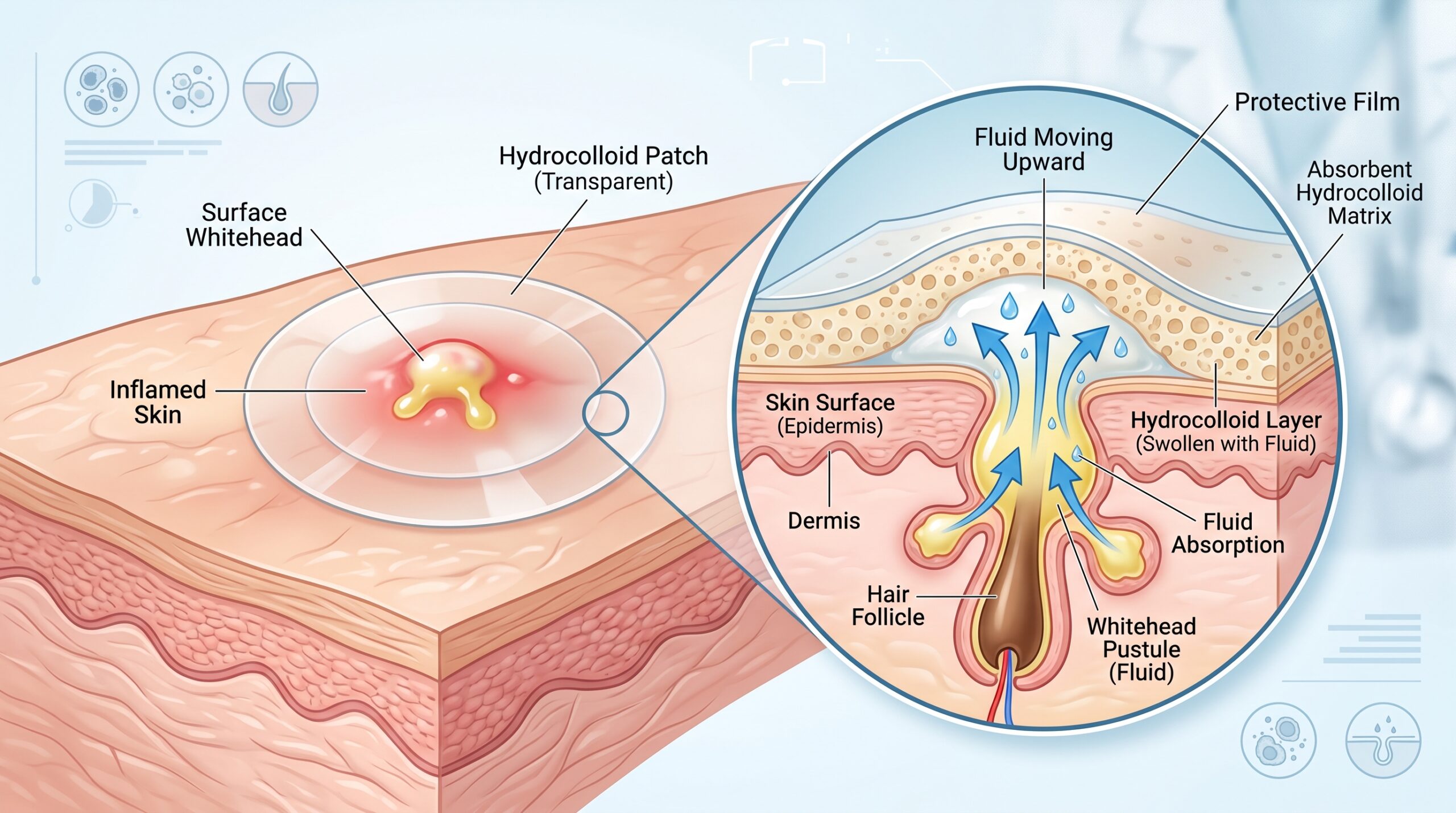
Hydrocolloid patches absorb moisture from superficial blemishes while creating a protective covering over the skin.
What Is Hydrocolloid in Acne Patches?
A hydrocolloid is a moisture-responsive material commonly incorporated into wound dressings. Traditional hydrocolloid dressings contain water-attracting materials that interact with wound fluid and form a soft gel.
A recent NIH-indexed review of hydrocolloids in dermatology explains that hydrocolloid dressings absorb exudate while creating a gel-like protective layer and maintaining a moist environment. Their use has expanded beyond conventional wound care into dermatological applications, including acne.
For acne patches, manufacturers make this technology much thinner and smaller so it can adhere directly over an individual blemish.
How Does a Hydrocolloid Patch Absorb Pimple Fluid?
The process is largely physical.
When a hydrocolloid patch is placed over a blemish that contains accessible moisture or exudate, the absorbent material begins drawing that fluid into the patch. As moisture interacts with the hydrocolloid, the material swells and forms a gel.
This is also why many acne patches develop a cloudy or whitish area after several hours of use. The visible change is primarily evidence that the material has absorbed moisture—not that it has literally “pulled the acne out by the root.”
Hydrocolloid dressings are commonly used on shallow wounds with relatively low levels of fluid. They absorb moisture while helping maintain a protected environment at the skin surface. because the material can absorb fluid while maintaining moisture at the skin surface.
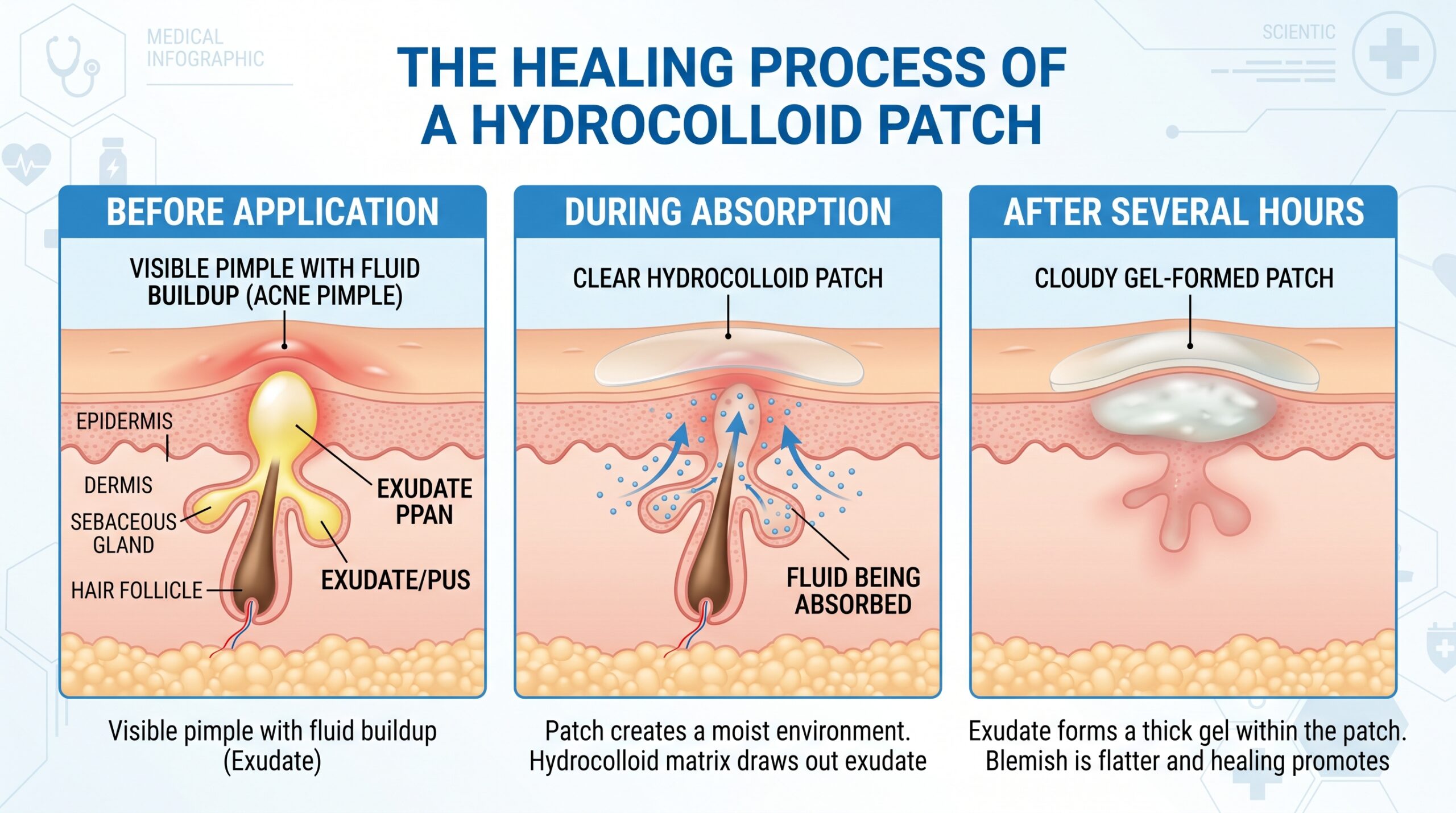
The cloudy appearance of a used hydrocolloid patch results from moisture interacting with the absorbent material.
Which Pimples Work Best With Hydrocolloid Acne Patches?
Hydrocolloid patches make the most mechanical sense when fluid is available close to the surface of the skin. This can include superficial inflammatory pimples and blemishes that have developed a visible head or begun releasing fluid.
There is some clinical evidence supporting their use on acne lesions. In a small randomized, double-blind study indexed by PubMed, researchers comparing an acne hydrocolloid dressing with skin tape reported greater improvements in measures including redness, oiliness, pigmentation, and sebum levels in the hydrocolloid group during the seven-day study.
However, hydrocolloid patches should not be expected to solve every acne problem. Deep cysts and nodules sit farther beneath the skin and may contain little accessible surface fluid for the patch to absorb. Blackheads and closed comedones also develop through clogged pores rather than a superficial fluid-filled wound.
In those situations, established acne treatments or professional dermatological care may be more appropriate.
The Protective Barrier Matters Too
Fluid absorption is only part of the reason a pimple patch can be useful.
Once attached, the patch creates a physical barrier between the blemish and fingers, makeup tools, clothing, and other sources of friction. This is especially valuable for people who habitually touch or pick at breakouts.
The American Academy of Dermatology’s acne-care guidance advises against picking, popping, or squeezing acne because doing so can make blemishes take longer to clear and increase the risk of scarring and post-inflammatory dark spots.
A patch does not guarantee that scarring will be prevented, but physically covering a blemish can make unnecessary touching more difficult.
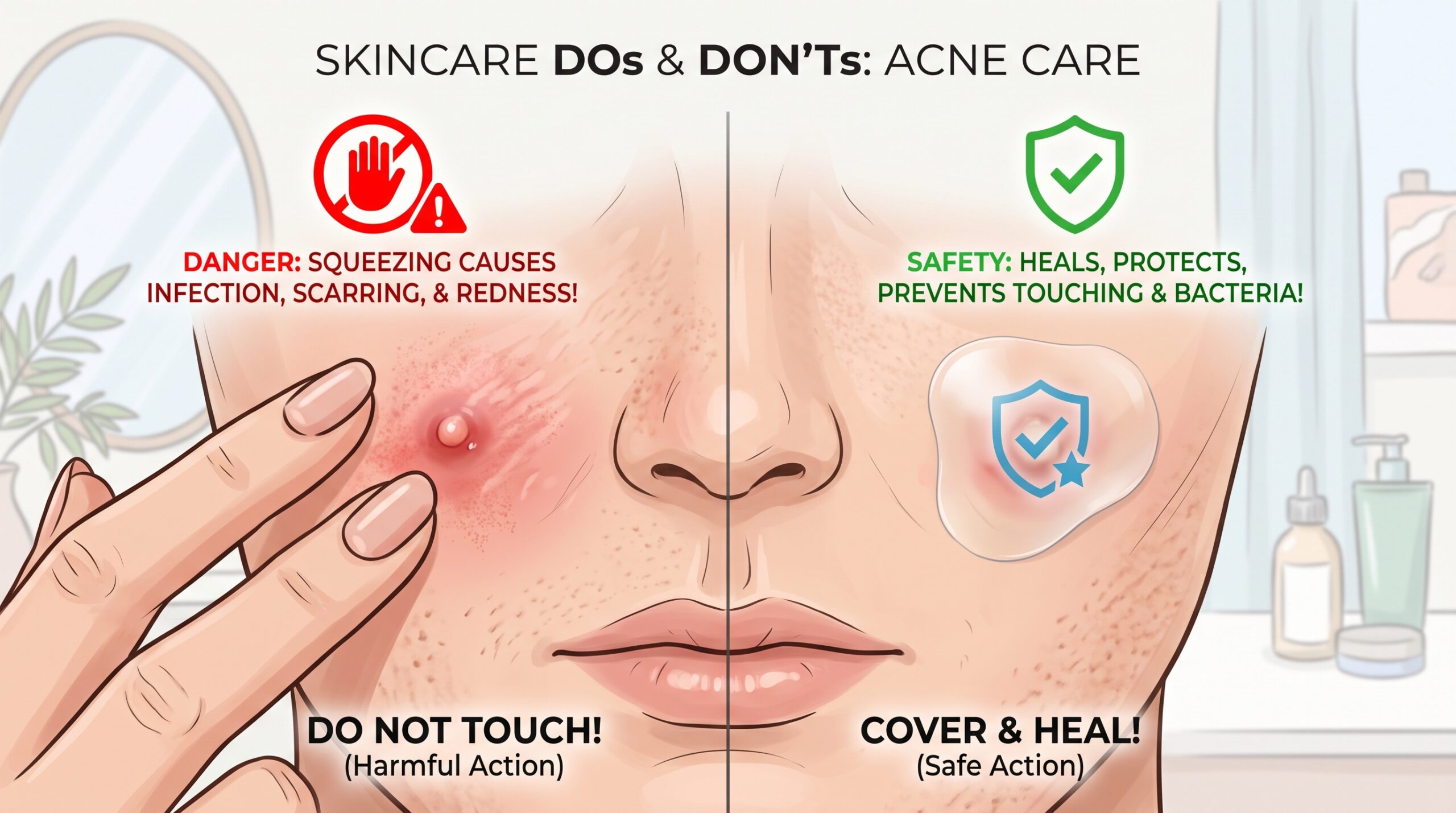
Covering a blemish can provide a simple physical reminder to avoid touching or picking the skin.
How to Use Hydrocolloid Acne Patches Effectively
Application technique matters because hydrocolloid patches need close contact with the skin.
Start by gently cleansing the area and drying it thoroughly. Applying a patch over damp skin, moisturizer, facial oil, or heavy skincare products can weaken adhesion and reduce direct contact with the blemish.
Choose a patch large enough to cover the entire affected spot rather than placing its edge across the center of the pimple. Leave it in place according to the product’s directions, then remove it gently rather than pulling aggressively at irritated skin.
For example, SpotSucker® Clear Acne Patches from Maxim use hydrocolloid material in two diameters—9 mm and 12 mm—allowing the patch size to be matched more closely to the blemish being covered. The patches are clear for discreet wear and, according to the product page, also incorporate tea tree and safflower oils.
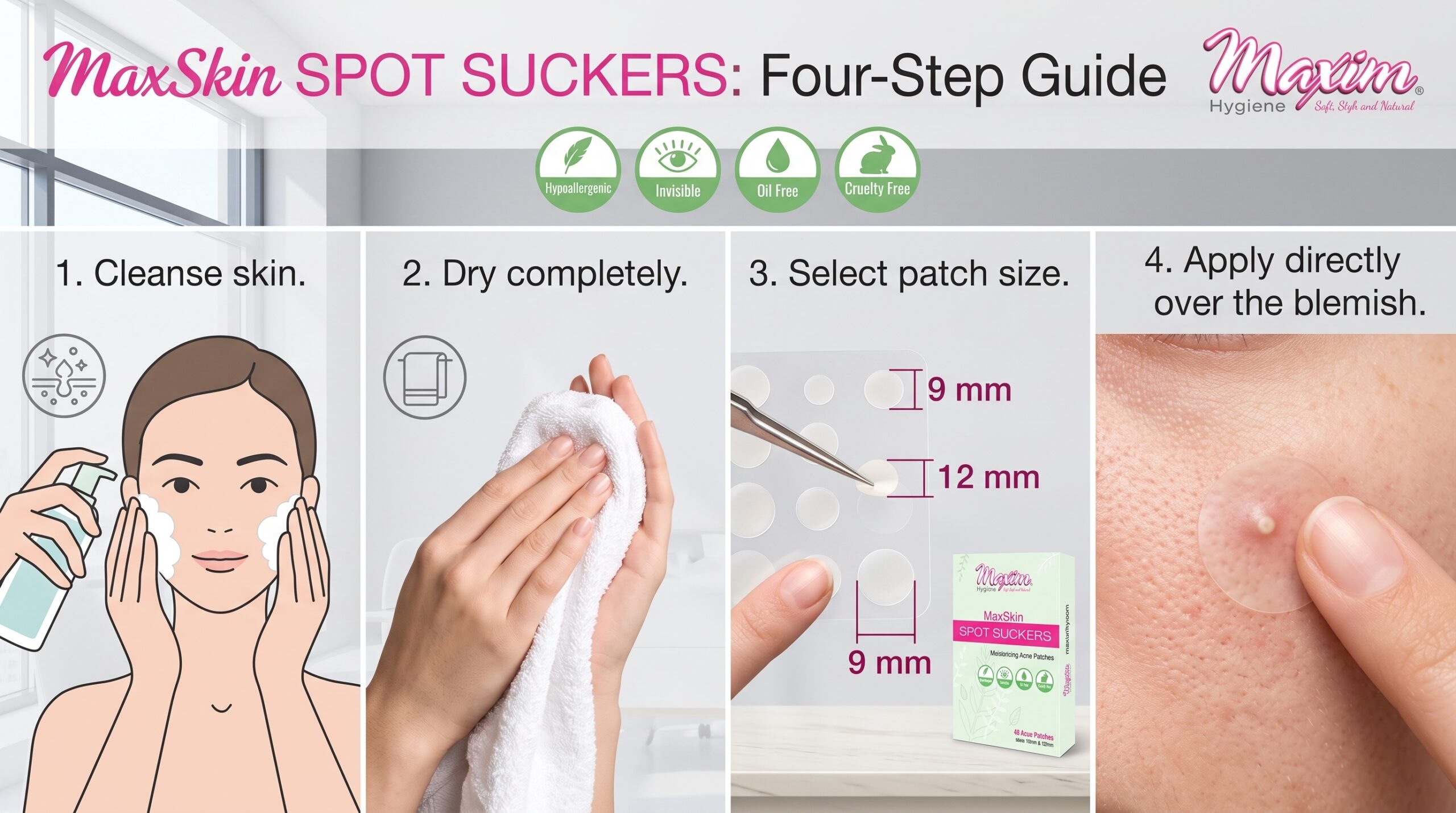
Clean, completely dry skin gives a hydrocolloid patch the best opportunity to adhere properly.
What Hydrocolloid Acne Patches Can and Cannot Do
Hydrocolloid acne patches are best understood as targeted skincare tools rather than universal acne treatments. They can absorb accessible moisture, protect vulnerable skin, and discourage picking, but they do not address every process responsible for acne formation.
Persistent, widespread, painful, cystic, or scarring acne deserves a broader treatment strategy and may warrant evaluation by a dermatologist.
For occasional surface-level blemishes, however, the science behind hydrocolloid is straightforward: absorb excess fluid, maintain a protected environment, and keep hands away from healing skin. That combination explains why a technology originally associated with wound care has found such a practical place in everyday acne management.