
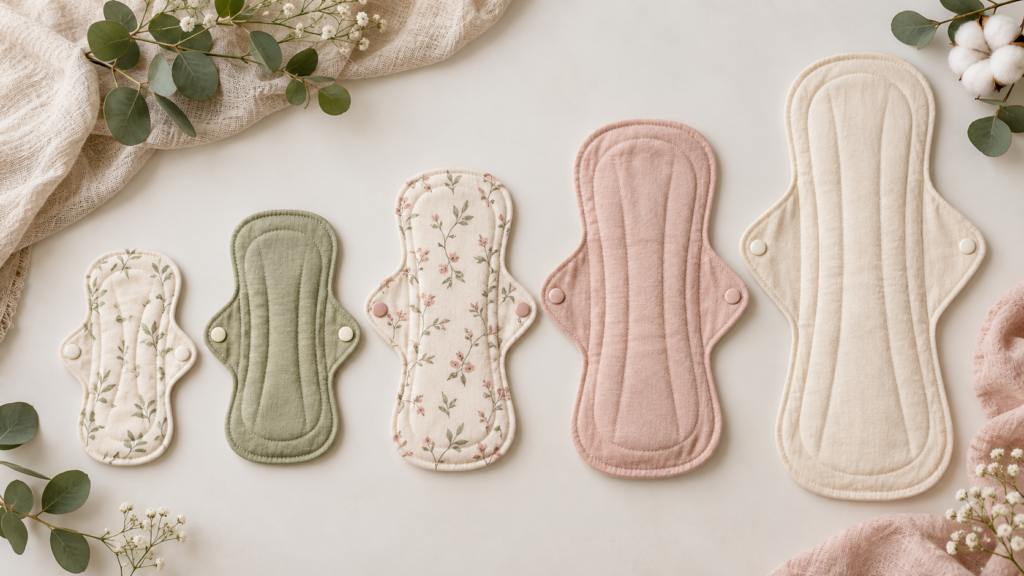
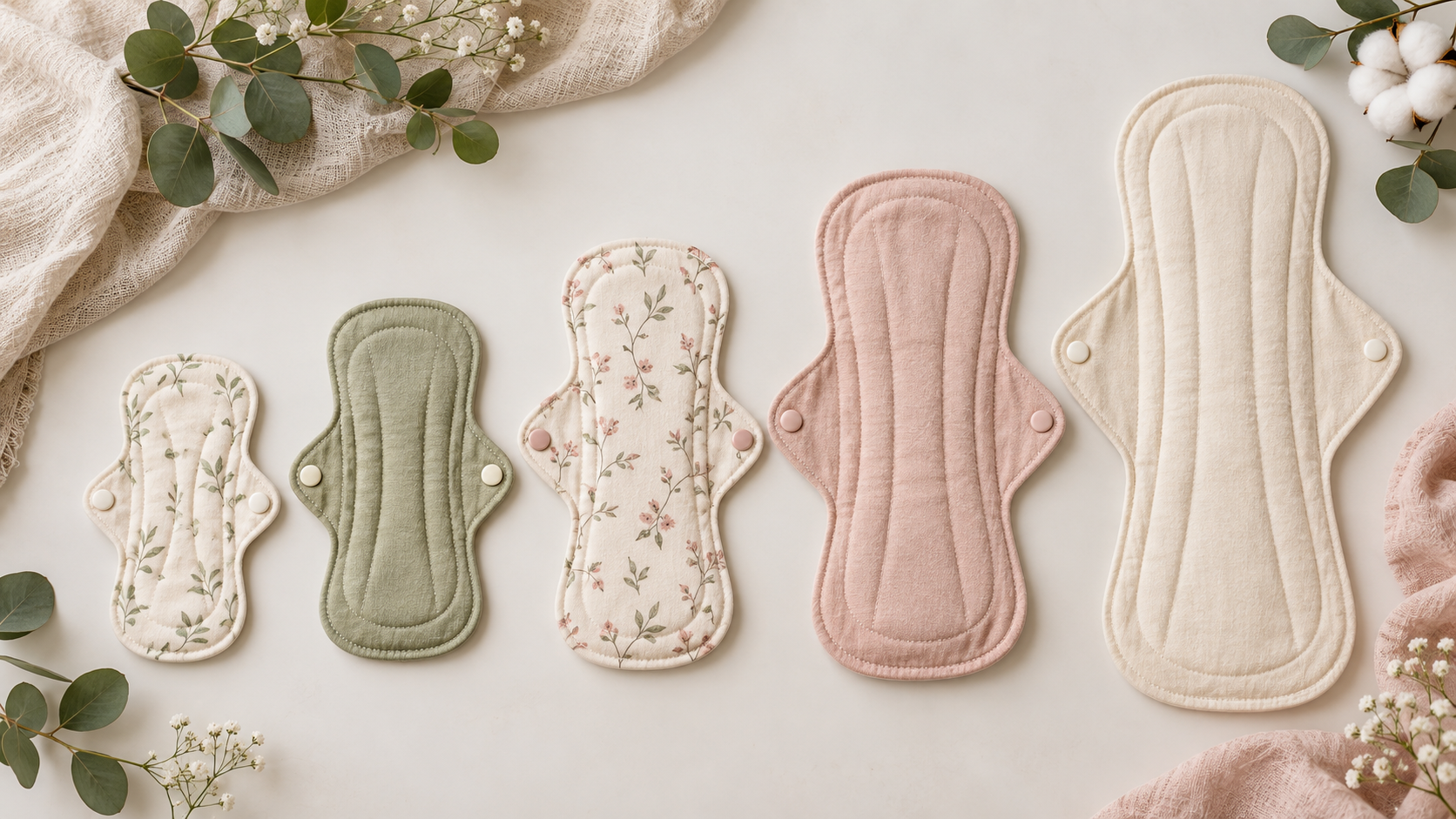
If you are learning how to choose reusable pads, begin with your flow rather than simply selecting the largest option available. Flow can change throughout the menstrual cycle, while comfort, activity level, underwear style, sleeping position, and desired coverage can all influence which pad works best.
That is especially important when choosing reusable menstrual products. Because washable pads can be used repeatedly, building a small collection of different lengths and absorbency levels can make it easier to adjust protection as your flow changes.
The American College of Obstetricians and Gynecologists advises choosing pads according to body size, amount of menstrual flow, and personal comfort. Pantyliners can be useful during lighter days near the end of a period. The best starting point is enough absorbency and coverage for the day without unnecessary bulk.
How to Choose Reusable Pads by Flow
Absorbency describes how much menstrual fluid a product is designed to manage, while pad length primarily affects coverage. The two characteristics often work together, but they are not interchangeable.
A shorter reusable pantyliner may provide sufficient protection for light spotting or daily discharge. During active menstrual flow, a full-size reusable pad provides more absorbent area. On heavier days or overnight, greater front-to-back coverage may help accommodate both increased flow and changes in body position.
The FDA explains that menstrual pads and liners absorb menstrual flow outside the body and that people may use different menstrual products during different stages of their flow. Review the agency’s menstrual product options and safe-use guidance for additional background.
Reusable Pad Selection Guide
| Situation | Practical starting point | What to prioritize |
|---|---|---|
| Daily freshness or discharge | Reusable pantyliner | Light absorbency, low bulk, comfortable fit |
| Beginning or end of period | Pantyliner or light pad | Light protection with enough coverage for spotting |
| Moderate daytime flow | Standard reusable menstrual pad | Absorbency, secure wings, comfortable length |
| Heavy-flow day | Higher-absorbency pad | Greater capacity and front-to-back coverage |
| Overnight | Longer reusable pad | Extended coverage and secure positioning |
| Backup with a cup or tampon | Pantyliner or light pad | Discreet secondary protection |
These categories are starting points rather than strict rules. Your bleeding pattern, garment fit, daily schedule, and the specific product’s stated capacity should ultimately guide your choice.
Understand Reusable Pad Sizes and Coverage
Knowing how to choose reusable pads also means separating length from absorbency. Length tells you how much of the underwear the pad covers; absorbency tells you how much fluid its core is designed to hold.
The Maxim Organic Cotton Reusable Winged Pads and Pantyliners are offered in lengths ranging from 17.5 cm to 39 cm, with options intended for light, moderate, heavy, and ultra flow. The 18 × 17.5 cm winged pantyliner is positioned for light absorbency.
Shorter options can work well when flow is light and minimal coverage is needed. Longer pads provide more surface area toward the front and back of the underwear, which may be useful during heavier flow, extended wear, sleep, or situations where movement makes leaks more likely.
Your body shape also matters. Two people with similar flow may prefer different reusable pad sizes because pads sit differently in their underwear. If you are unsure, measure a disposable pad that already fits you well and compare its length with the reusable product dimensions.
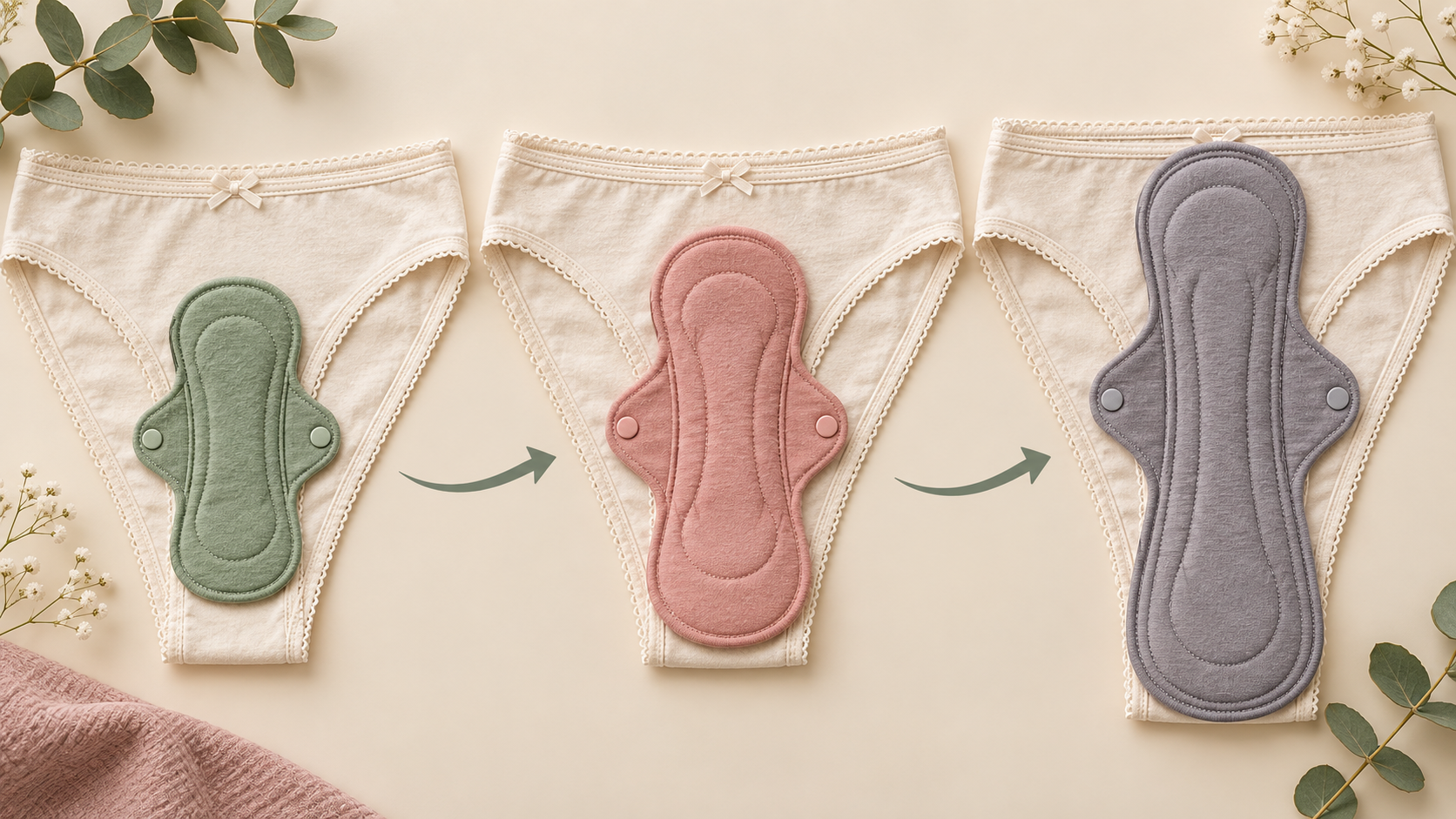
Why Reusable Pads With Wings and a Secure Fit Matter
Absorbency cannot provide dependable protection if a pad constantly shifts. Wings wrap around the underwear to help stabilize a pad during walking, exercise, work, or sleep. Reusable pads commonly replace disposable adhesive strips with snaps or clasps.
Maxim’s reusable pads use a clasp system designed to keep the pad attached to the underwear while allowing it to move with the body. For the best fit, the pad should sit flat rather than bunching, twisting, or sliding significantly from its intended position.
Underwear fit matters too. Very loose underwear may allow more movement, while a secure but comfortable fit can help keep reusable pads with wings positioned correctly. A wider gusset may pair better with a wider pad; very narrow underwear can cause the pad or wings to bunch.
Quick Fit Check
- The pad lies flat without curling at the front or back.
- The wings close comfortably without pulling the underwear inward.
- The absorbent area aligns with where your flow usually lands.
- The pad stays in place during a short walk, sitting, and standing.
- The length provides enough front-to-back coverage for the intended use.
Match Protection to Different Parts of Your Cycle
Many people do not need the same absorbency every day. A practical routine might begin with a reusable pantyliner during spotting, move to moderate or higher absorbency during peak flow, use greater coverage at night, and return to lighter protection as bleeding decreases.
This approach may make reusable period care more comfortable because you are not wearing more bulk than necessary. It can also make a small collection more useful: instead of buying several identical pads, choose complementary formats that cover different points in your cycle.
Which Reusable Pad Should I Choose Today?
- Light spotting or discharge: begin with a reusable pantyliner.
- Moderate daytime flow: choose a standard reusable menstrual pad with secure wings.
- Heavy flow: choose a higher-absorbency pad with more coverage and monitor how quickly it becomes saturated.
- Overnight: choose a longer pad that extends farther toward the front and back.
- Backup protection: use a pantyliner or light pad with your preferred internal product.
When deciding how to choose reusable pads for a changing cycle, record what you wore, how long it remained comfortable, and where any leaking occurred. After one or two cycles, those notes can make size and absorbency choices much clearer.
Reusable Pads for Heavy Flow and Overnight Use
Reusable pads for heavy flow should provide both sufficient capacity and coverage. A pad may be highly absorbent but still leak if it is too short for your sleeping position or if it shifts. Conversely, a long pad that lacks enough absorbent capacity may not meet your needs.
For overnight use, consider where leaks tend to happen. Back leaks may suggest a longer rear section, while front leaks may call for more forward coverage or a different sleeping position. Secure underwear and properly fastened wings can help reduce movement.
Change pads based on the product instructions and your flow rather than waiting for discomfort or leakage. The CDC’s menstrual hygiene recommendations advise changing sanitary pads every few hours regardless of how light the flow is, changing more frequently with heavier bleeding, washing hands before and after handling menstrual products, and avoiding scented hygiene products that may irritate skin.
Consider Materials Along With Absorbency
When learning how to choose reusable pads, consider materials alongside fit and absorbency. Reusable pads are worn directly against sensitive external skin for extended periods, so fabric feel, fragrance, breathability, and the construction of the waterproof layer can all affect comfort.
Maxim’s reusable design uses a GOTS-certified organic cotton cover, a cotton fabric absorbent core, and a polyurethane waterproofing layer. It is also unscented and fragrance-free. Readers who want to understand material claims more deeply can review Maxim’s guide to what organic cotton means in period care.
Material preference does not replace correct absorbency, regular changing, and proper washing. Instead, it should be considered alongside those factors when developing a comfortable period-care routine.
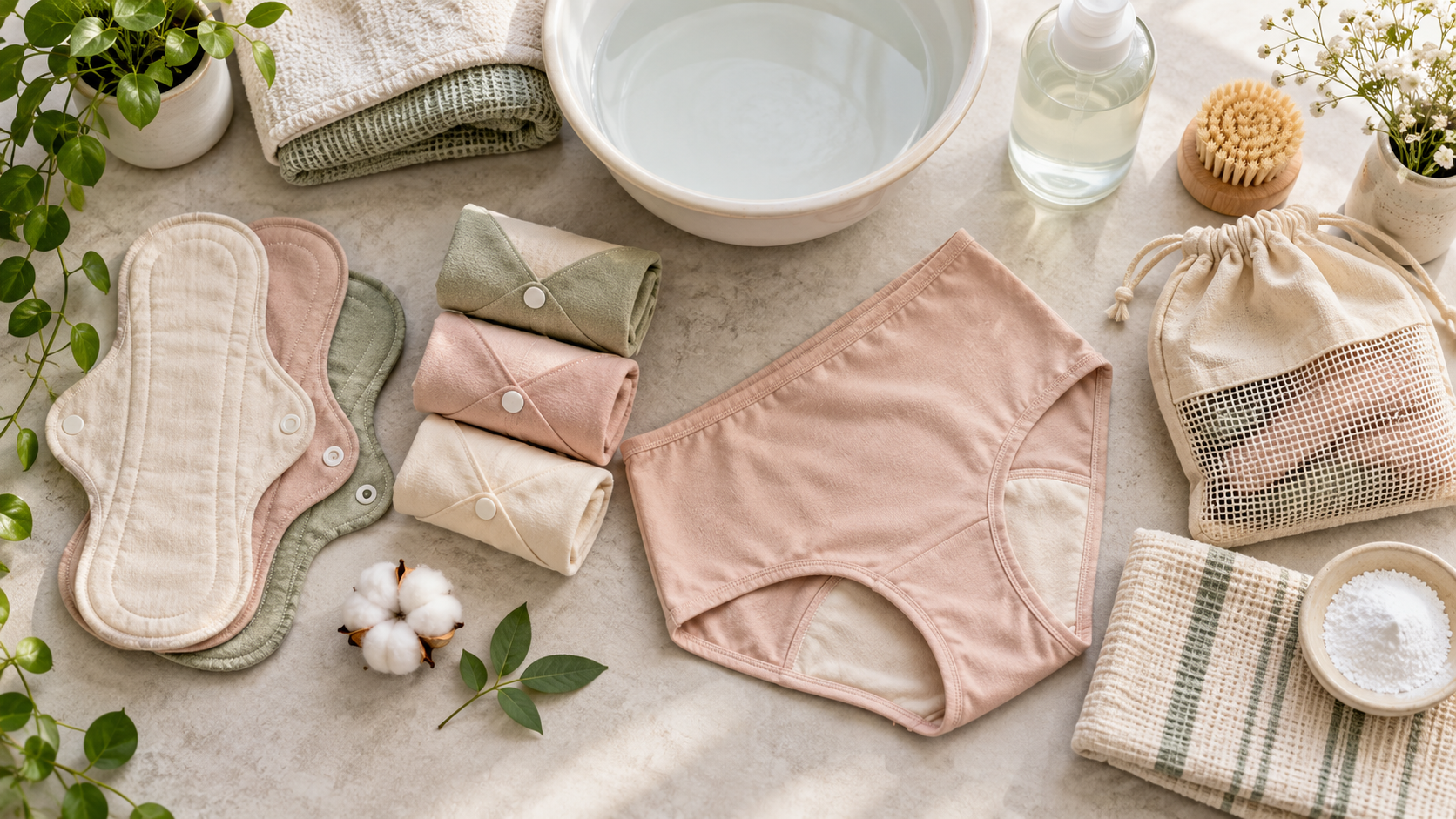
Plan for Washing and Drying
Knowing how to choose reusable pads also means planning for care. Reusable menstrual pads only remain practical if their washing routine fits your life. Before purchasing, check the manufacturer’s instructions, whether rinsing is recommended, and how long thicker absorbencies typically take to dry.
- Store used pads in a dedicated wet bag until they can be washed.
- Follow the product label for rinsing, water temperature, detergent, and drying.
- Avoid products that the manufacturer says may damage absorbent or waterproof layers.
- Allow pads to dry completely before storing them.
- Keep enough clean pads available to cover washing and drying time.
If drying space is limited, a larger rotation may be more useful than selecting only the thickest pads. Organic cotton reusable pads can feel soft against the skin, but their comfort and performance still depend on correct laundering and complete drying.
Build a Reusable Pad Routine Around Your Flow
There is no single reusable pad size that is ideal for every person or every day of a cycle. Start by observing when your flow is lightest and heaviest. Then consider whether leaks occur because you need greater absorbency, more front-to-back coverage, a more secure fit, or more frequent changes.
A combination of reusable pantyliners, daytime pads, and longer higher-coverage options can provide more flexibility than relying on one format alone. A starter collection might include two light liners, several moderate daytime pads, and one or two longer heavy-flow or overnight pads, adjusted to your laundry schedule.
The goal is not to choose the biggest pad available. It is to select enough protection for your current flow while maintaining comfort, secure positioning, appropriate hygiene, and confidence throughout the day or night.
Frequently Asked Questions
How do I know which reusable pad absorbency I need?
Use your present disposable pad or menstrual pattern as a starting point. Light spotting generally calls for a liner or light pad, while active moderate or heavy flow requires more capacity. Follow the reusable product’s absorbency description and change sooner if it becomes saturated or uncomfortable.
What is the difference between reusable pantyliners and reusable pads?
Reusable pantyliners are usually shorter and less absorbent. They are intended for discharge, spotting, very light days, or backup. Reusable menstrual pads generally contain a larger absorbent area for active flow.
Are longer reusable pads always more absorbent?
No. Length and absorbency are related but separate. A longer pad offers more coverage, while the core construction determines capacity. Check both measurements and absorbency descriptions.
What size reusable pad is best for sleeping?
A longer pad is a practical starting point because it provides greater front-to-back coverage. The best size depends on your flow, body shape, sleeping position, underwear fit, and where leaks typically occur.
How many reusable pads should a beginner buy?
Start with a small mix rather than many identical pads. Choose light, moderate, and longer overnight options, then adjust after learning which sizes and absorbencies you use most often. Your washing and drying schedule will determine the total number you need.
Choose Enough Protection—Not Unnecessary Bulk
Learning how to choose reusable pads comes down to five questions: What is your flow today? How much absorbency do you need? Where do you need coverage? Does the pad stay securely in place? Can you wash and dry it according to the care instructions?
Answer those questions for each stage of your cycle, and you can build a reusable pad collection that is practical, comfortable, and flexible instead of relying on one size for every situation.
This article provides general educational information and is not a substitute for individualized medical advice.