Choosing tampons for sensitive skin involves more than selecting Regular or Super absorbency. Fragrance, fiber composition, dryness, applicator design, and fit may all affect comfort. No single material can guarantee that irritation will never occur, but clear product information can help you remove avoidable variables.
Burning, itching, or discomfort can have several causes, including friction, dryness, contact dermatitis, infection, or another health condition. Use this guide to compare product features and learn when symptoms deserve medical attention.


Reading tampon materials and product claims can support more informed, comfort-focused choices.
Tampons for Sensitive Skin Should Be Fragrance-Free
Added scent does not improve a tampon’s ability to absorb menstrual flow. For anyone concerned about irritation, eliminating unnecessary fragrance is a practical first step. The American College of Obstetricians and Gynecologists recommends deodorant-free pads and tampons as part of gentle vulvovaginal care.
Fragrance is also a common contact-dermatitis trigger. The American Academy of Dermatology advises fragrance-sensitive people to choose products labeled “fragrance-free.” A product labeled “unscented” may still contain masking fragrance, so read the wording carefully.
How to Compare Tampons for Sensitive Skin
Material transparency matters when comparing tampons for sensitive skin. Specific information is more useful than broad terms such as “soft” or “natural.” Check the absorbent fibers, fragrance statement, absorbency, applicator, and instructions.
| What to check | Why it may matter |
|---|---|
| Fragrance-free formulation | Removes an unnecessary potential irritant |
| Clearly identified absorbent fibers | Shows what remains in contact with the body |
| Certified organic cotton | Provides a specific sourcing claim instead of vague “natural” wording |
| Appropriate absorbency | A higher absorbency than needed may feel dry during removal |
| Smooth applicator design | May make insertion more comfortable for people who prefer applicators |
| Clear material information | Makes it easier to compare products and track reactions |
The FDA states that authorized tampons may be made from cotton, rayon, or a blend. It reviews tampon materials, applicators, absorbency, strength, integrity, and microbiological safety before products can legally be marketed in the United States.
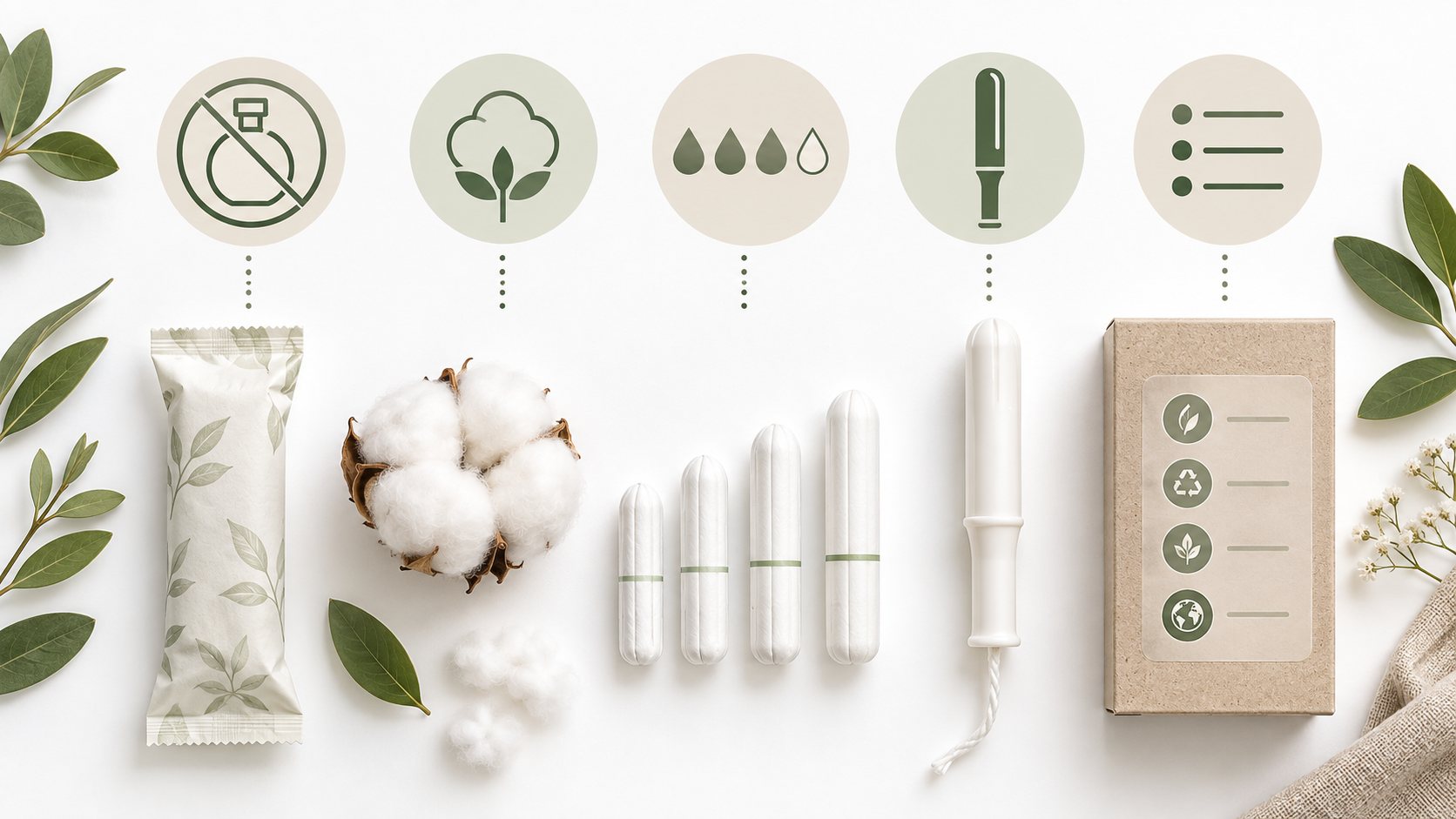
Compare several product details instead of relying on one marketing claim.
Does Organic Cotton Matter in Tampons for Sensitive Skin?
Organic cotton tampons can appeal to shoppers who value material transparency and want an absorbent core made from certified cotton rather than rayon or mixed fibers. Certification gives a specific, verifiable meaning to an organic claim. It should not be treated as medical treatment or proof that a person cannot react to a product.
One option is Maxim Organic Cotton Tampons with a Plastic Applicator. Maxim describes the core as certified organic cotton and fragrance-free, paired with a BPA-free smooth plastic applicator and multiple absorbency choices. Learn more about plastic applicator tampon design and materials.
For a broader look at certification, see the guide to organic cotton in period care. The key is to compare precise material claims rather than assume “natural” means hypoallergenic or irritation-free.
Choose the Right Absorbency for Tampons for Sensitive Skin
For tampons for sensitive skin, material choice is only part of comfort. A tampon that absorbs more than your flow requires may feel dry or create extra friction during removal. Select the lowest absorbency that reliably manages your flow, and adjust as your flow changes during your period.
The FDA recommends changing tampons every four to eight hours, never wearing one longer than eight hours, and using the lowest absorbency needed. These practices also reduce the risk of toxic shock syndrome, a rare but serious condition associated with tampon use.
Applicator Comfort in Tampons for Sensitive Skin
When selecting tampons for sensitive skin, applicator preference is personal. A smooth, rounded plastic applicator may reduce friction for some users, while others prefer cardboard or applicator-free tampons. A BPA-free label can answer a material question about a plastic applicator, but it does not predict individual comfort.
Insertion should not routinely hurt. Read the instructions, relax the pelvic muscles, and try a lower absorbency when flow is light. If insertion remains painful, stop and consult a healthcare professional rather than forcing the tampon.
Track Reactions to Tampons for Sensitive Skin
Reactions to tampons for sensitive skin can vary. Temporary dryness or friction is different from persistent itching, burning, swelling, rash, unusual discharge, or recurring pain. Contact dermatitis can cause tenderness and irritated skin after exposure to a trigger, while infections and other conditions may cause similar symptoms.
If symptoms repeat during your period, record the product, material, absorbency, wear time, and when symptoms begin. Change one variable at a time—such as removing fragrance or lowering absorbency—so patterns are easier to identify.
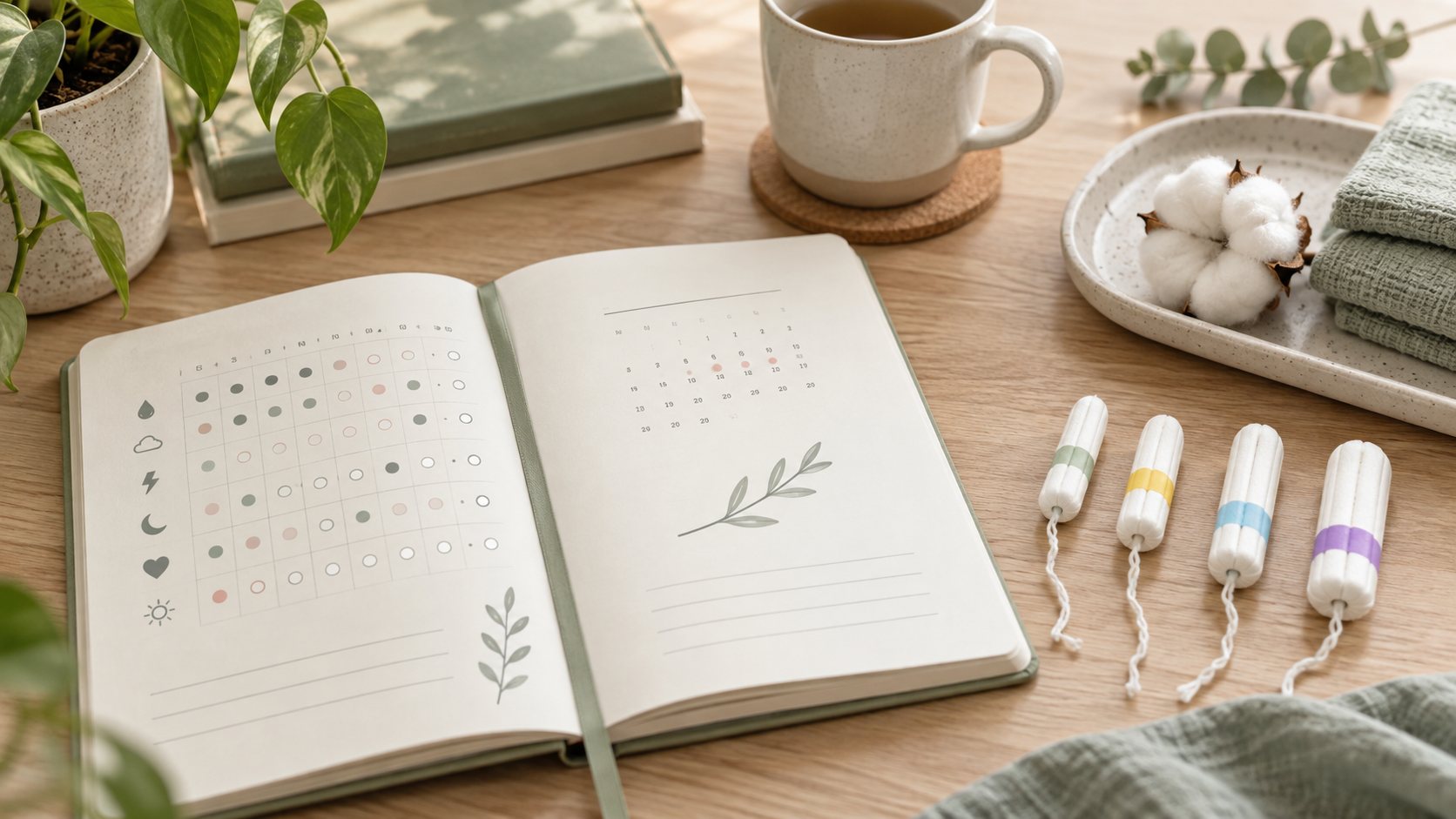
Tracking products, absorbency levels, and recurring symptoms can reveal useful patterns.
When to Seek Medical Advice
Persistent or significant symptoms should be discussed with a gynecologist or another healthcare professional. ACOG advises contacting a clinician for vulvar itching, burning, pain, or visible skin changes. Stop using tampons and contact a healthcare professional if you experience pain, unusual discharge, or a suspected allergic reaction.
Seek immediate medical attention for possible toxic shock syndrome symptoms, including sudden fever, vomiting, diarrhea, dizziness, fainting, or a sunburn-like rash during or soon after your period. Remove the tampon while arranging care.
Tampons for Sensitive Skin Checklist
- Choose fragrance-free tampons rather than deodorized options.
- Read the fiber and applicator material information.
- Look for credible certification when organic cotton is claimed.
- Use the lowest absorbency that meets your flow needs.
- Choose an applicator style that feels comfortable to you.
- Change each tampon every four to eight hours and never exceed eight hours.
- Stop use and seek guidance when symptoms persist or become significant.
Frequently Asked Questions
Are organic cotton tampons better for sensitive skin?
They offer clear fiber sourcing and may suit shoppers who prefer a certified cotton core. However, organic cotton is not a medical treatment, and no tampon material can guarantee freedom from irritation.
Is fragrance-free the same as unscented?
Not always. “Fragrance-free” indicates that fragrance ingredients were not added for scent, while “unscented” products may contain fragrance that masks another odor.
Can high absorbency cause discomfort?
A tampon with more absorbency than your flow needs can feel dry during removal. Follow FDA guidance and choose the lowest absorbency that manages your flow.
A Practical Approach to Sensitive Period Care
There is no universal best option among tampons for sensitive skin. Start with fragrance-free products, transparent fiber information, an appropriate absorbency, and an applicator style you find comfortable. Certified organic cotton can be a logical preference for shoppers who want a clearly identified cotton core.
Period care should feel manageable, not routinely painful or irritating. Thoughtful product selection can remove avoidable variables, while persistent discomfort is a reason to seek medical guidance rather than tolerate it.