Choosing the right pad absorbency can feel confusing when you are deciding between light, regular, and super protection. The goal is to match the pad to your menstrual flow rather than simply choosing the highest absorbency available.
The best choice is not necessarily the highest absorbency available. Menstrual flow can change from one day to another, and the right pad should balance reliable protection with comfort, fit, and the way you plan to spend your day.
According to the U.S. Office on Women’s Health, menstrual flow varies between individuals and can even be lighter or heavier from month to month. That makes understanding your own pattern more useful than relying on a single pad type throughout your entire period. Office on Women’s Health menstrual-cycle guidance
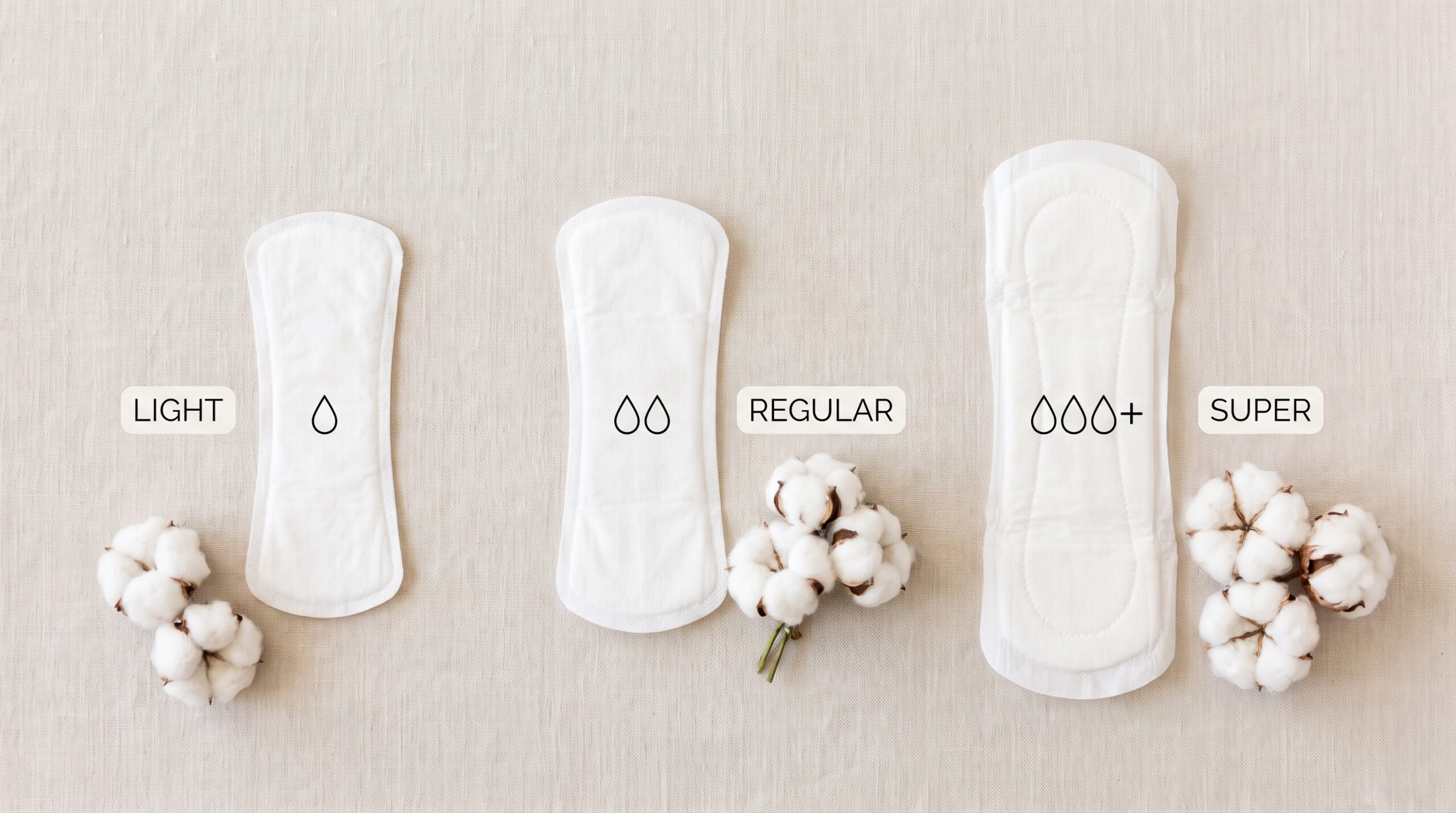
Matching pad absorbency to your actual flow can improve both protection and everyday comfort.
What Does Pad Absorbency Actually Mean?
Absorbency describes how much menstrual fluid a product is designed to manage before it becomes saturated. However, shoppers should remember that terms such as light, regular, and super are useful product categories rather than universal measurements that perform identically across every brand.
Research evaluating menstrual products has found substantial differences in capacity among products, reinforcing why real-world fit and individual flow matter alongside the label.
A good approach is to choose enough absorbency to manage your flow comfortably without automatically choosing the largest pad every day.
Light, Regular, or Super: Where Should You Start?
| Flow or Situation | Suggested Starting Point | Why It May Fit |
| Very light flow, spotting, beginning or end of a period | Light pad or pantyliner | Provides discreet protection without unnecessary bulk |
| Moderate daytime menstrual flow | Regular pad | Balances everyday coverage, absorbency, and comfort |
| Heavier-flow days | Super pad | Provides additional absorbent capacity and coverage |
| Overnight protection | Super/nighttime pad | Extra coverage may help accommodate longer wear and movement during sleep |
| Backup with another menstrual product | Light pad or pantyliner | Adds protection against occasional spotting or leaks |
These are starting points rather than rigid rules. Your preferred absorbency may change during the same cycle.
For example, Maxim’s 100% Certified Organic Cotton Ultra Thin Pads & Pantyliner are offered in light, regular, and super absorbency options, allowing the product format to change along with menstrual flow. Maxim also describes fluid-control channels and winged options designed to help keep pads positioned and direct fluid toward the absorbent area.
Light Absorbency: For the Lighter Parts of Your Cycle
Light protection is useful when menstrual flow is minimal, particularly at the beginning or end of a period. Pantyliner may also be appropriate for spotting, everyday vaginal discharge, or backup protection when another menstrual product is being used.
The FDA notes that menstrual pads and liners absorb menstrual fluid after it leaves the body and can also be used for other vaginal discharge when needed. The agency also recommends changing menstrual products regularly and following the individual product instructions. FDA menstrual product safety and use guidance
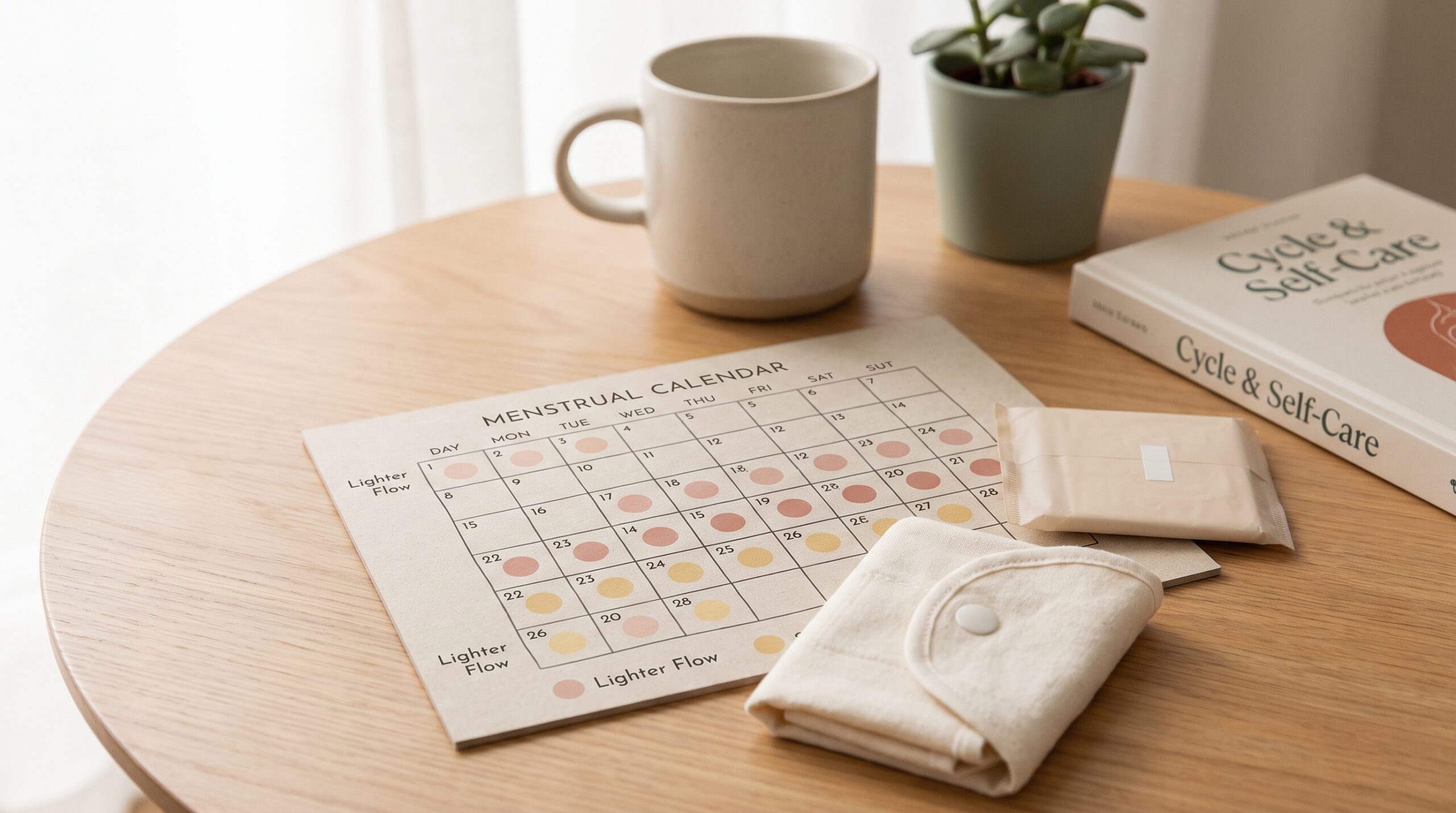
Light protection can be useful during spotting and the lighter beginning or end of a menstrual period.
Regular Absorbency: Everyday Protection for Moderate Flow
Regular absorbency is often a practical middle ground for moderate menstrual flow. It can provide more protection than a liner without requiring the additional coverage associated with heavier-flow products.
Fit matters here, too. A pad that moves, folds, or does not align well with the body can leak even when its absorbency is technically adequate. Wings can help hold a pad in place around underwear, while fluid-control channels are designed to direct moisture toward the central absorbent area.
Material preference may also influence comfort. Maxim describes its organic cotton pad and pantyliner range as using certified organic cotton and fragrance-free construction. Readers interested in understanding those material claims can also review Maxim’s guide to what organic cotton means in period care.
Super Absorbency: When Flow and Coverage Increase
Super absorbency is designed for heavier menstrual flow and can also be helpful when additional coverage is desired overnight.
The goal, however, should not be to use a high-absorbency product simply to avoid changing pads for unusually long periods. The Office on Women’s Health advises changing pads before they become soaked through or full and notes that many people change pads every few hours.
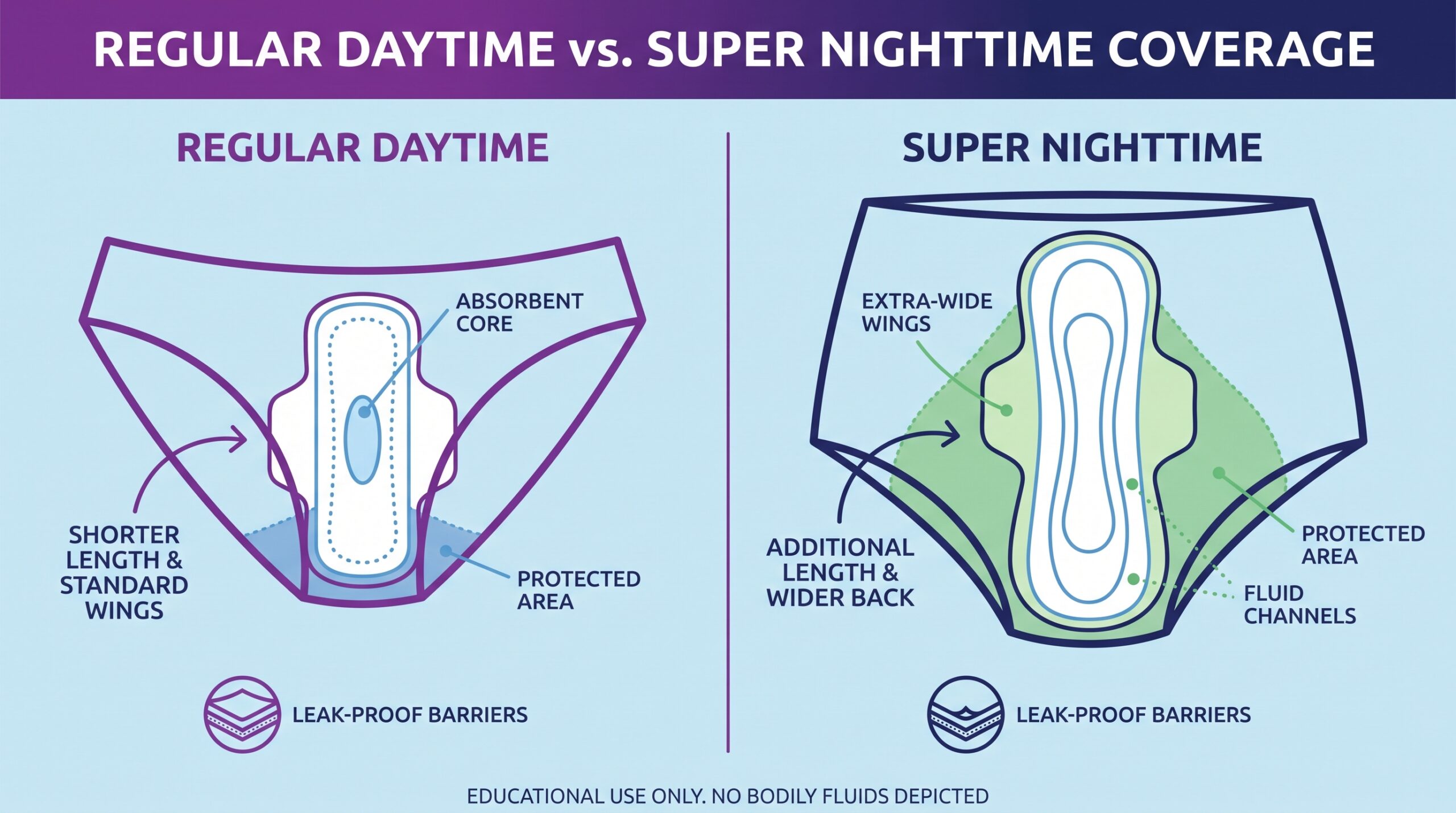
Heavier-flow and nighttime needs may call for greater absorbency as well as additional coverage.
Your Changing Pattern Can Tell You More Than the Label
Instead of deciding that you are permanently a “regular” or “super” pad user, pay attention to patterns across several cycles.
Notice when your flow becomes heavier, when leaking tends to occur, whether the pad is saturated or simply shifting out of position, and whether nighttime requires greater coverage. This information makes it easier to select different protection for different days rather than overcompensating with maximum absorbency throughout the entire cycle.
A practical period-care kit might therefore contain more than one absorbency. Maxim’s organic cotton ultra-thin pad and pantiliner range provides light, regular, and super choices within the same product family, making this type of flow-based routine easier to organize.
When Frequent Pad Changes May Mean More Than Choosing the Wrong Absorbency
Sometimes frequent saturation is not simply a product-selection issue.
The American College of Obstetricians and Gynecologists identifies soaking through one or more pads or tampons every hour for several hours in a row as a possible sign of heavy menstrual bleeding. Other warning signs can include bleeding lasting longer than seven days or needing multiple forms of protection to control the flow. ACOG guidance on heavy menstrual bleeding
If that pattern applies to you, increasing pad absorbency alone should not replace a conversation with a qualified healthcare professional.

Keeping more than one absorbency available can make it easier to adapt as menstrual flow changes throughout a cycle.