Learning how to use a menstrual cup for the first time can feel unfamiliar, especially if you are accustomed to pads or tampons.
The technique can take practice. A systematic review published in The Lancet Public Health found that menstrual cup users commonly went through a familiarization period over several menstrual cycles. In other words, difficulty during the first attempt does not necessarily mean you are doing something wrong.
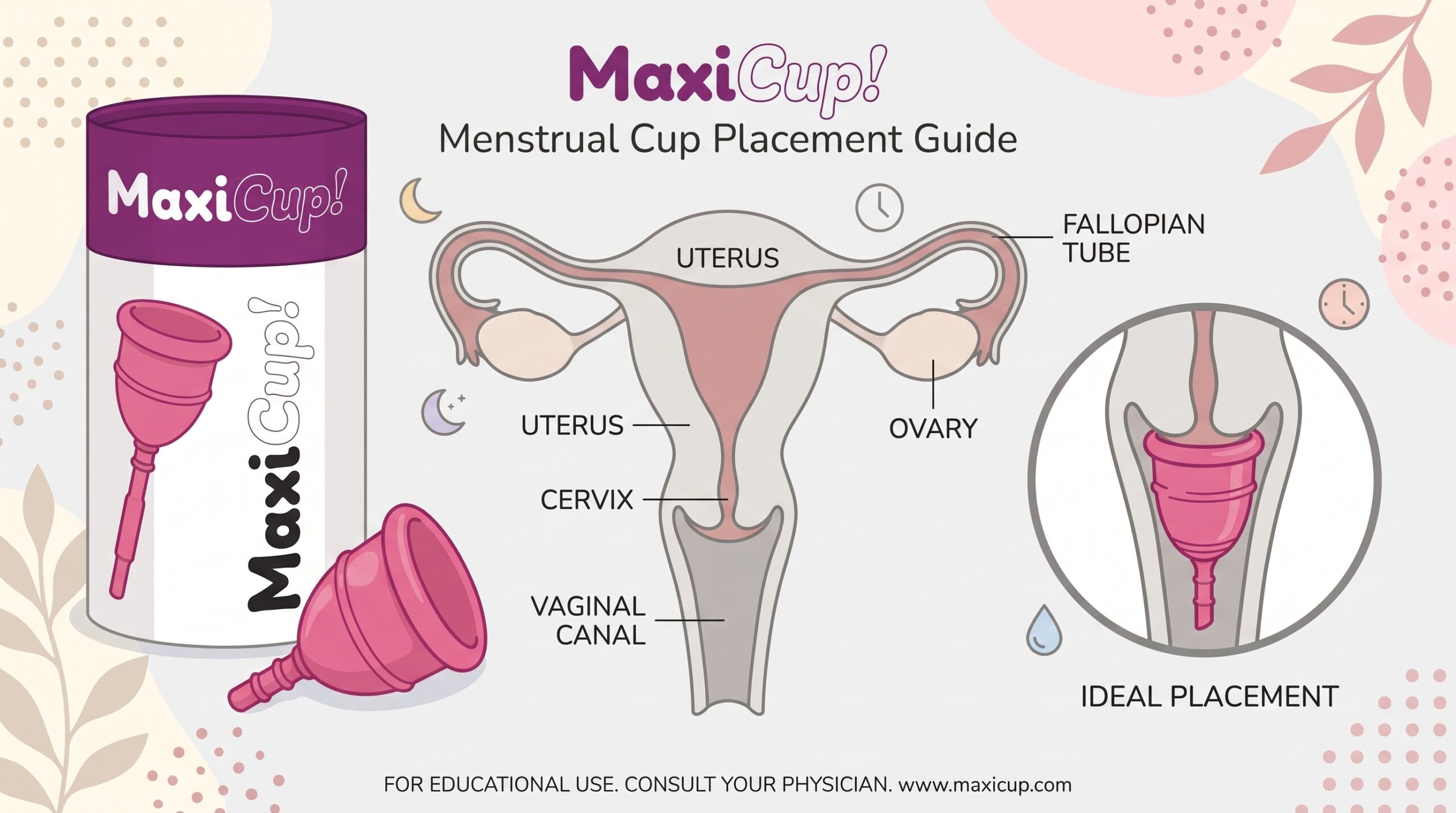
A menstrual cup collects menstrual fluid inside the vagina and relies on proper positioning to help prevent leaks.
How to Use a Menstrual Cup Step by Step
According to the U.S. Food and Drug Administration’s menstrual cup guidance, menstrual cups are flexible devices inserted into the vagina to collect menstrual fluid. They are available in different sizes, materials, shapes, and designs.
Reusable cups are typically removed, emptied, washed, and reinserted according to the manufacturer’s instructions. The FDA notes that some cups may be worn for up to 12 hours, but users should always follow the instructions provided with their particular product.
Step 1: Start With Clean Hands and a Clean Cup
Wash your hands thoroughly with soap and water before handling the cup. Clean or sterilize a reusable cup according to its instructions before first use.
Good menstrual hygiene is more than a matter of convenience. The World Health Organization’s menstrual health guidance emphasizes access to appropriate menstrual materials, clean water, sanitation, and accurate information as important parts of menstrual health.
Step 2: Fold the Cup Before Insertion
A menstrual cup must be folded so that it is narrow enough for comfortable insertion. One of the easiest beginner techniques is the C-fold.
Flatten the sides of the cup together, then fold the flattened cup in half lengthwise so the rim forms a C shape. Hold the folded rim securely so it does not open before insertion.
Different folds work better for different people, so the C-fold is a starting point rather than a universal rule.
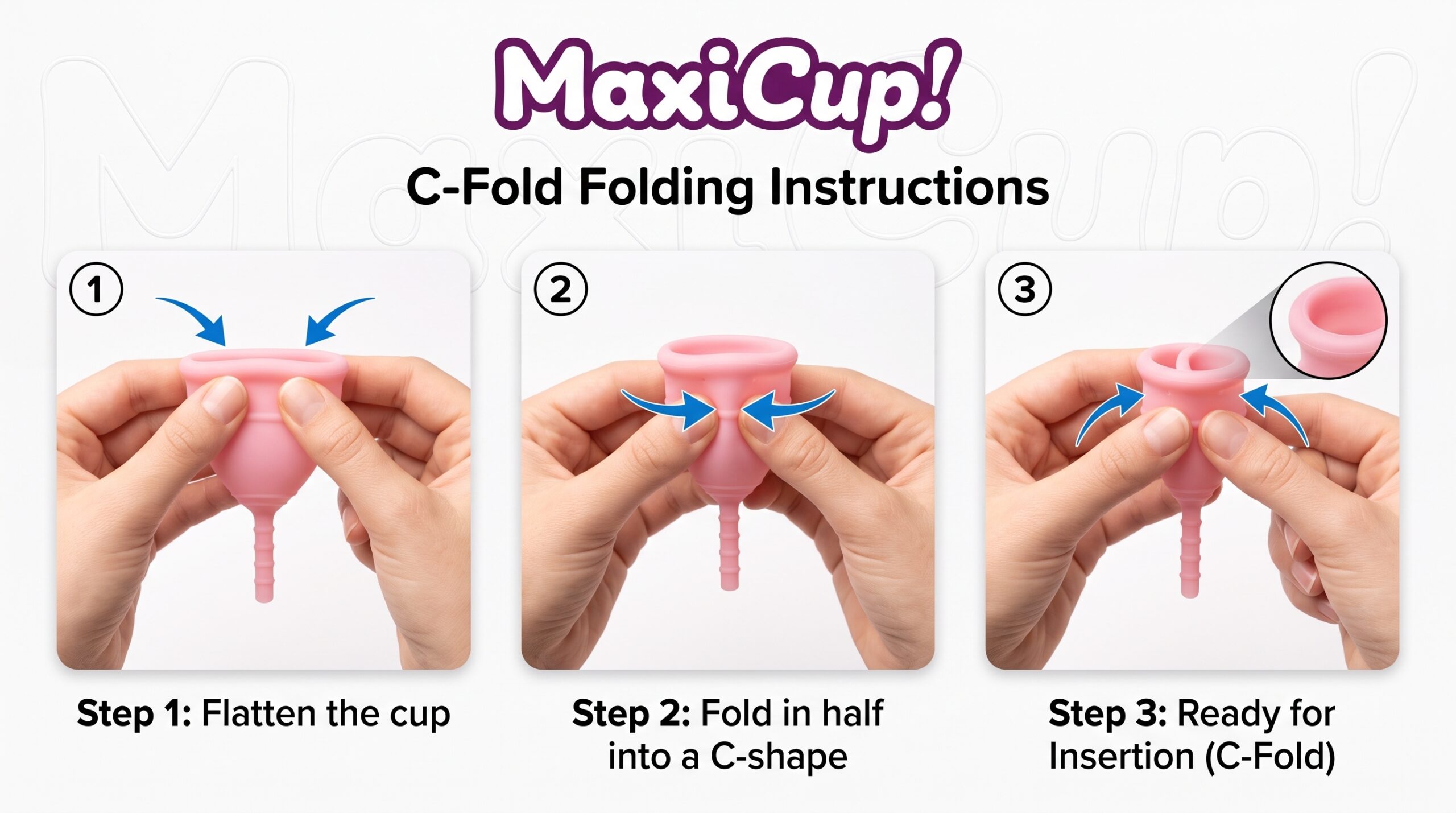
The C-fold narrows the menstrual cup rim and is a straightforward insertion technique for beginners.
Step 3: Find a Comfortable Position and Insert Slowly
Muscle tension can make insertion more difficult. Try sitting on the toilet, squatting, or standing with one leg elevated.
With the cup folded, gently guide it into the vagina. Rather than pushing straight upward, following the natural angle of the vaginal canal toward the tailbone may feel more comfortable.
The cup should sit completely inside the vagina. It does not need to sit as high as a tampon, and insertion should not require force. If you experience significant pain, stop and try again later rather than pushing through discomfort.
Step 4: Make Sure the Cup Has Opened and Sealed
After insertion, release the fold and allow the cup to open. A properly opened cup usually forms a seal against the vaginal walls.
Run a clean finger around the base of the cup. If the base feels rounded rather than noticeably folded or dented, it has probably opened. Depending on the cup design, gently rotating or repositioning it may help stubborn folds open.
A good seal matters because menstrual fluid can bypass a cup that remains partially folded.
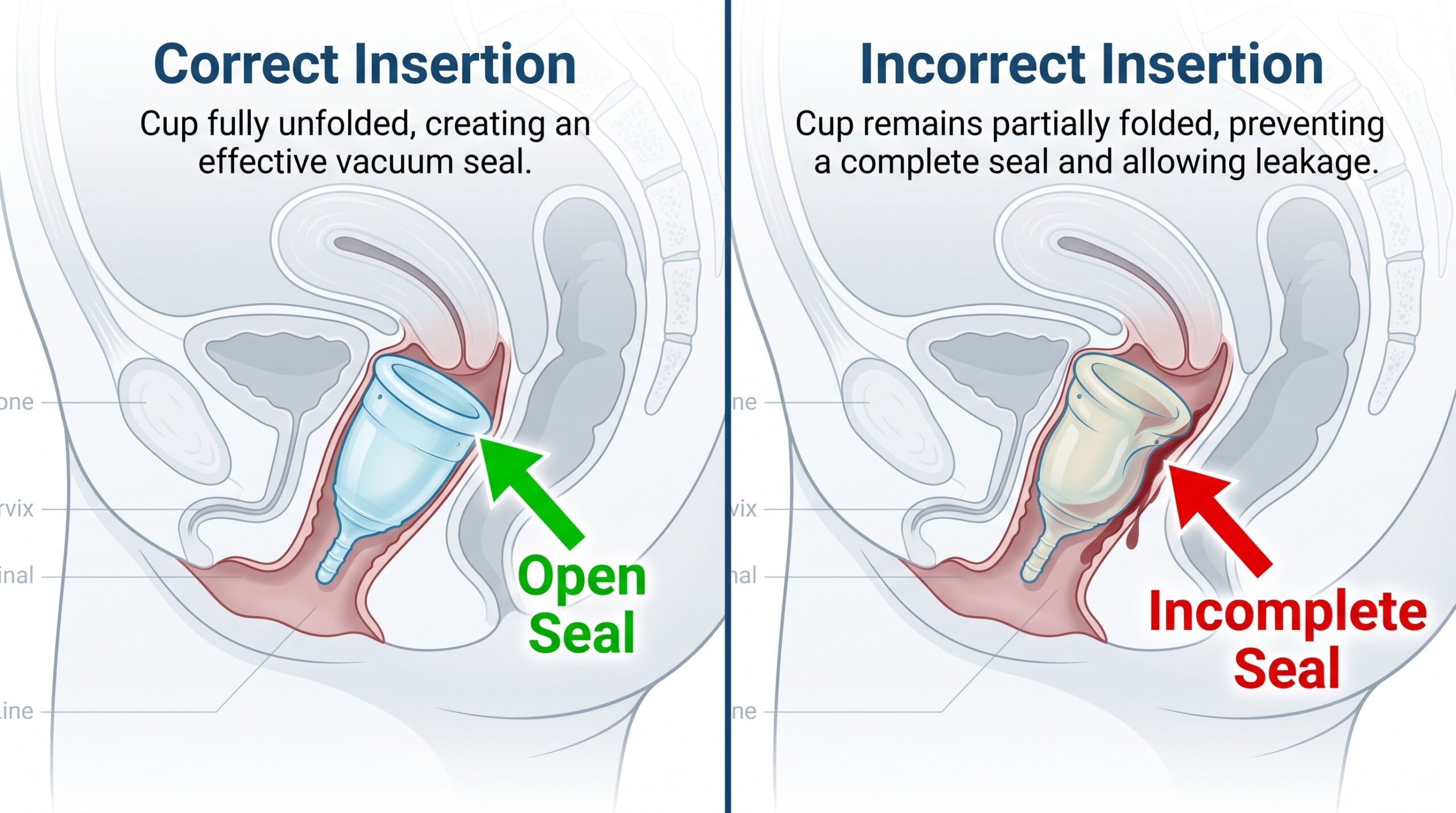
Persistent leaks can occur when the cup has not fully opened after insertion.
What If Your Menstrual Cup Keeps Leaking?
Leakage has several possible causes. The cup may not have opened completely, it may be incorrectly positioned, or it may be full and ready to empty. Cup size and shape can also affect fit.
First, check whether the cup has fully expanded. Next, consider how long it has been in place and whether your flow is heavier than usual. If the cup repeatedly leaks despite correct insertion, a different size or design may ultimately fit your anatomy better.
Research supports allowing time for adjustment: the Lancet systematic review found leakage with menstrual cups was similar to or lower than with pads or tampons in the limited studies directly comparing them, while also noting that users typically required a learning period.
How to Remove a Menstrual Cup Safely
Wash your hands first. Locate the base of the cup, then gently pinch or press the cup wall to break the seal before pulling downward. Avoid simply tugging forcefully on a stem or tube while suction remains.
Move slowly and keep the cup relatively upright to reduce spilling.
Some products use alternative emptying designs. For example, the MaxiCup® dis-chargeable menstrual cup with sterilizer container uses a drainage tube that the manufacturer instructs users to unbend to drain the collected fluid and release suction before fully removing the cup. The medium MaxiCup is made from medical-grade silicone and comes with a sterilizer container.
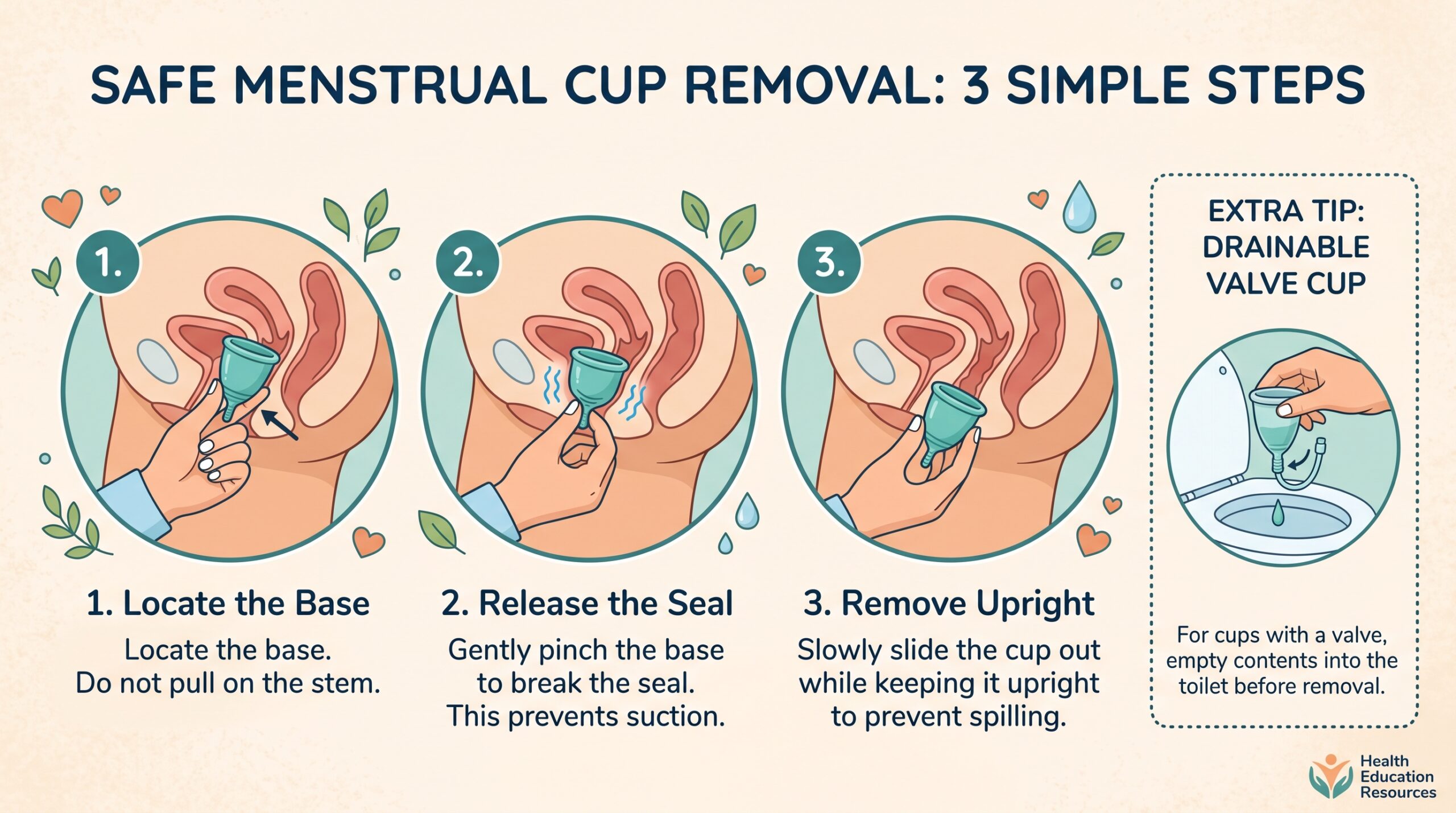
Breaking the seal before removal can make menstrual cup removal more comfortable and controlled.
Cleaning and Safe Use Matter
Follow the cleaning instructions supplied with your cup rather than assuming you maintain every product in the same way. The FDA recommends washing your hands before and after handling a menstrual cup and washing reusable cups according to their instructions before reinsertion. At the end of a menstrual cycle, reusable cups generally require more thorough cleaning or sterilization as directed by the manufacturer.
Do not exceed the manufacturer’s maximum recommended wear time. If you develop pain, itching, rash, swelling, fever, or unusual discomfort, discontinue use and contact a healthcare professional. People with an intrauterine device (IUD) should also discuss menstrual cup use with their gynecologist because removal or suction may potentially affect IUD strings or placement.
Give Yourself Time to Learn
Successfully using a menstrual cup is usually less about mastering one perfect technique and more about learning what works for your body. Folding method, insertion angle, cup position, flow level, and product fit can all affect the experience.
Practice at home when possible, follow the instructions supplied with your cup, and avoid forcing insertion or removal. After a few cycles, the sequence of folding, inserting, checking the seal, emptying, cleaning, and reinserting often becomes far more familiar.
A menstrual cup should ultimately be a menstrual-care option that works for you not a technique you have to struggle through.