Choosing intimate wipes for sensitive skin can be surprisingly complicated. Terms such as “gentle,” “natural,” “hypoallergenic,” and “dermatologically tested” may sound reassuring, but they do not tell the whole story. When a product will be used around the external intimate area, understanding the ingredient list matters more than relying on a single marketing claim. When a product will be used around the external intimate area, understanding the ingredient list matters more than relying on a single marketing claim.
The vulva is particularly susceptible to irritation, and products that feel perfectly comfortable elsewhere on the body may not be appropriate for everyone in this area. That does not mean intimate wipes are inherently problematic. It means consumers should understand what they are buying, how they intend to use it, and how their own skin responds.
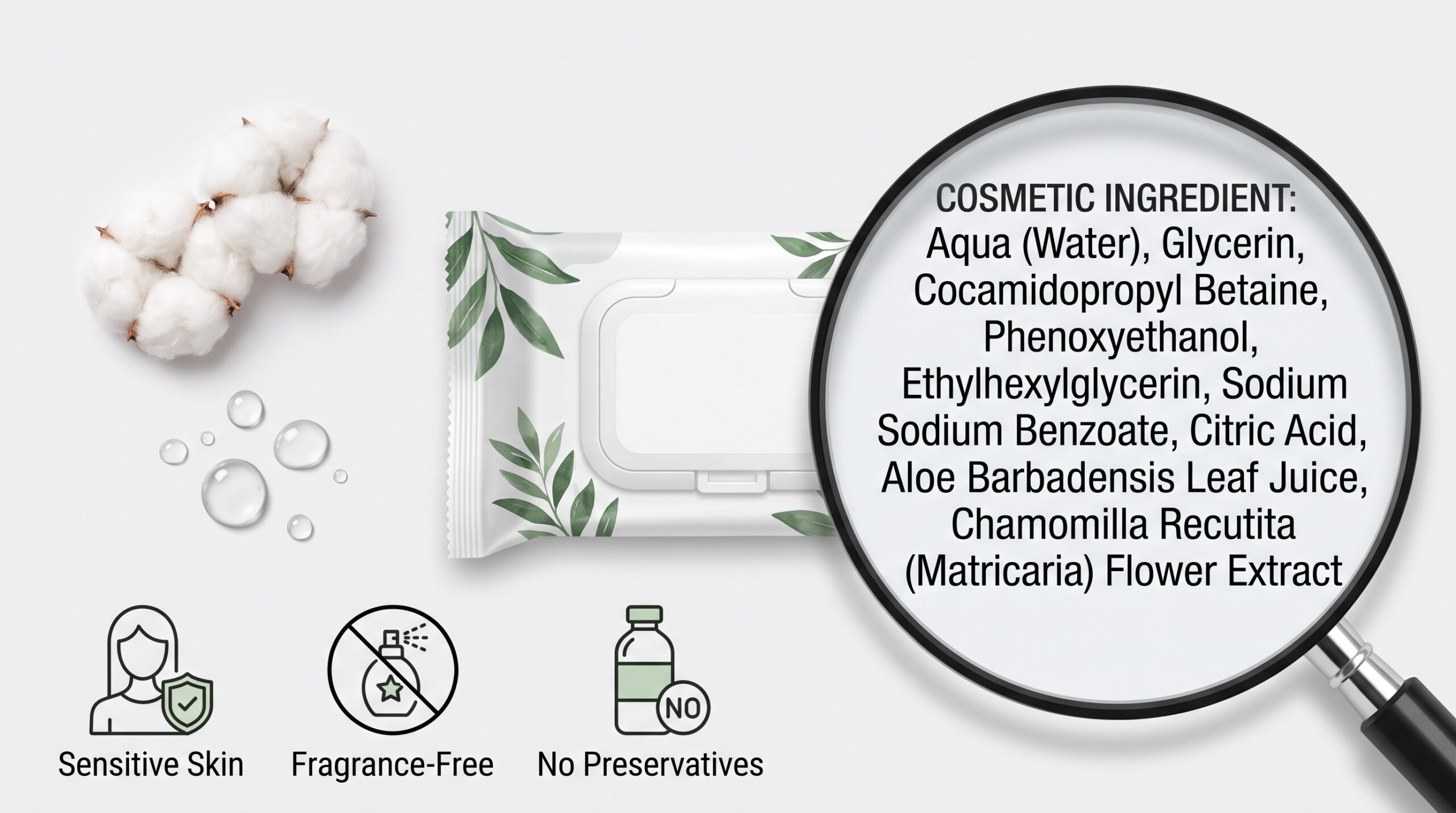
Choosing an intimate wipe starts with understanding both the wipe material and the formula applied to it.
How to Choose Intimate Wipes for Sensitive Skin
Choosing intimate wipes for sensitive skin involves more than looking for a “gentle” claim on the package. Consider the complete ingredient list, fragrance, preservatives, botanical extracts, wipe material, intended use, and your own history of skin sensitivity.
Good intimate hygiene begins with understanding anatomy. The vagina is an internal organ with its own microbial environment and natural cleansing processes. The vulva refers to the external genital area.
Products marketed for intimate cleansing should therefore not be assumed to be appropriate for internal vaginal use. The American College of Obstetricians and Gynecologists advises against douching and recommends simple, gentle vulvar care, particularly for people experiencing irritation. Its guidance on vulvovaginal health notes that perfumed products and other potential irritants can aggravate sensitive tissue.
For wipes, that distinction translates into a practical rule: follow the manufacturer’s directions and use products intended for intimate care externally only. Wipes are best considered an optional convenience for situations such as travel, menstruation, exercise, or freshening up when normal washing is not practical—not something the body requires for vaginal cleanliness.
Look Beyond “Sensitive Skin” Claims on Intimate Wipes
The U.S. Food and Drug Administration explains that terms such as “hypoallergenic” and “for sensitive skin” do not have a federal definition that guarantees a product will be non-irritating for every person. The FDA therefore encourages consumers to examine ingredient declarations rather than relying exclusively on marketing language. Its cosmetic allergen guidance identifies fragrances and preservatives among common classes of cosmetic allergens.
This is especially relevant for intimate wipes because a formula usually contains several functional ingredient groups: water, cleansing agents, humectants, preservatives, botanical extracts, and sometimes fragrance components.
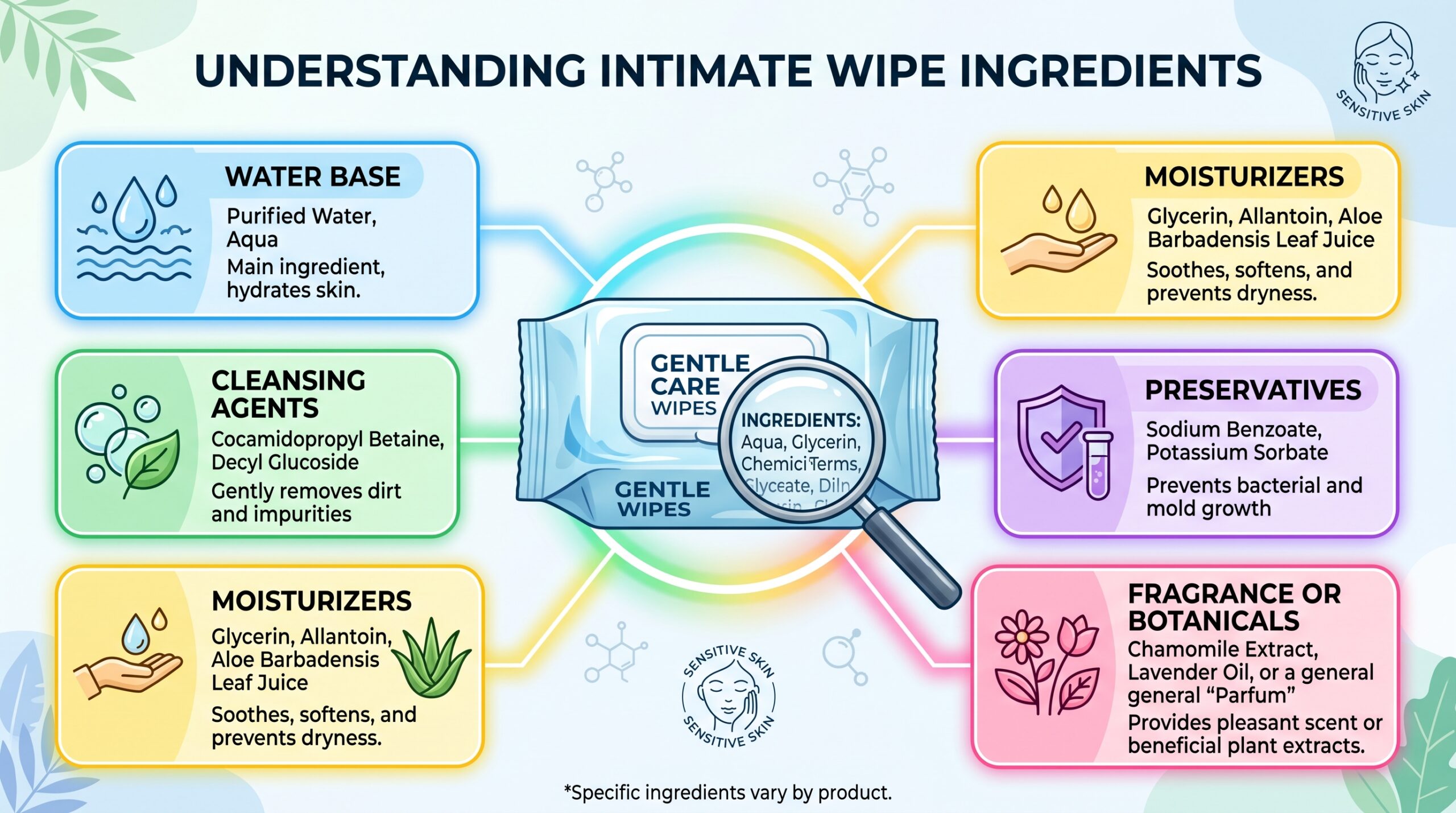
Ingredient categories reveal more about a wipe than front-of-package claims alone.
Pay Attention to Fragrance and Preservatives
Fragrance deserves particular attention for people with reactive skin. A published study examining feminine hygiene wipes found potential contact allergens across the products evaluated, with fragrance ingredients among the most common findings. The research reinforces an important lesson: products described as natural or gentle can still contain ingredients capable of causing reactions in susceptible individuals. See the NIH-indexed study on allergens in feminine hygiene wipes for the research findings.
Preservatives deserve consideration as well, but their presence is not automatically a negative sign. Water-based wipes require appropriate preservation to limit microbial growth during their usable life. The relevant question is whether an individual has a known sensitivity to a particular preservative.
Similarly, “alcohol-free” can be useful information for shoppers specifically avoiding drying alcohols, but no single absence claim determines whether a complete formulation will suit sensitive skin.
Are Botanical Ingredients Better for Sensitive Skin?
Plant-derived ingredients can contribute useful sensory and skin-conditioning properties, but “botanical” and “allergen-free” are not interchangeable terms. Some individuals can react to essential oils, plant extracts, or naturally occurring fragrance compounds.
For example, the current ingredient information for Maxim Organic Cotton Intimate Wipes lists organic cotton along with olive oil, calendula, lemon balm, and chamomile extracts. The formula is also listed as alcohol-, paraben-, and chlorine-free. However, the ingredient declaration includes fragrance as well as geraniol, hexyl cinnamal, and linalool.
That makes the product a useful example of why label reading matters. A consumer may value its certified organic cotton towelette, botanical extracts, or alcohol-free formulation while still needing to consider personal fragrance sensitivity.
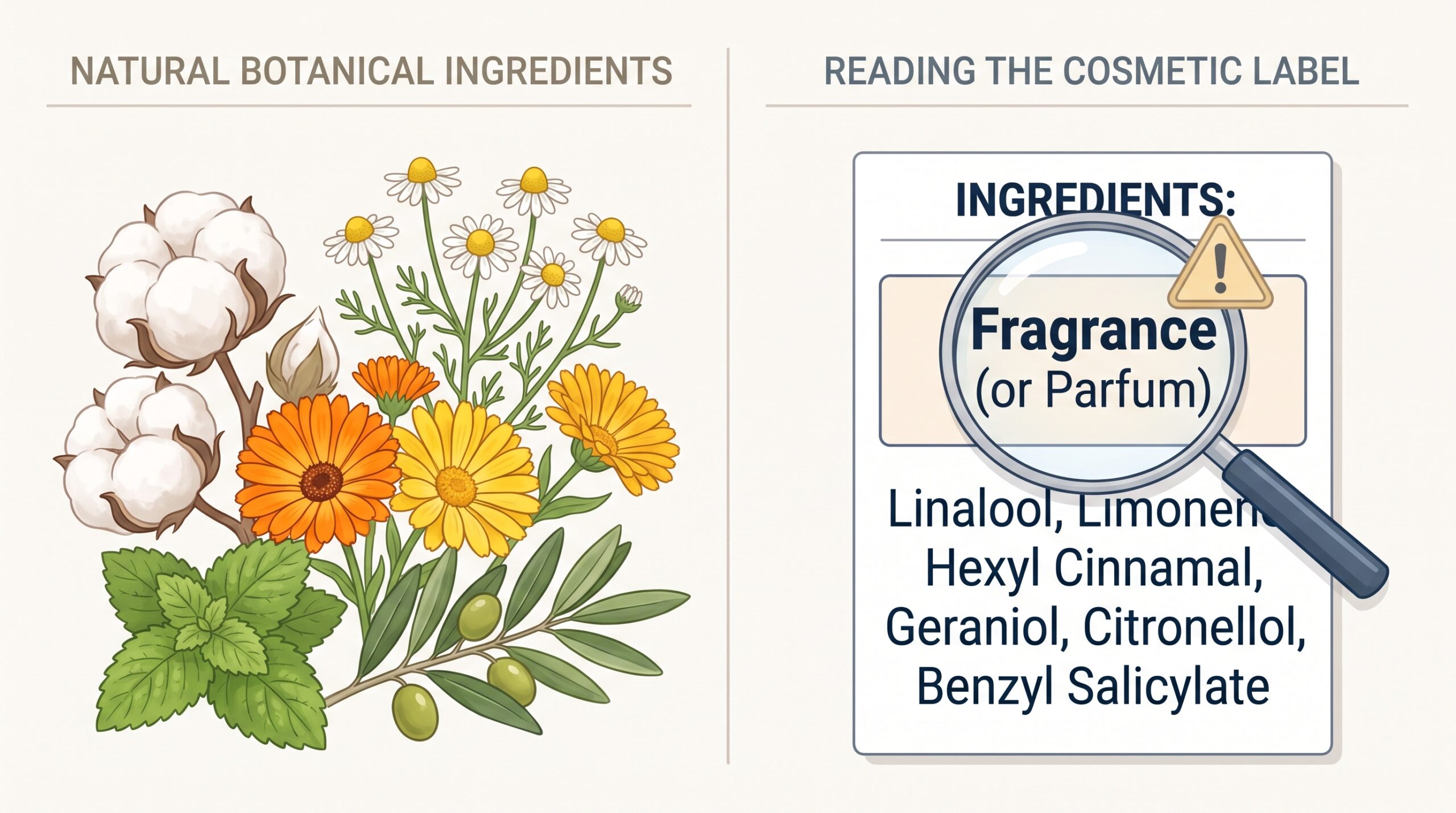
Natural extracts and fragrance sensitivity can coexist, which is why the complete ingredient list matters.
Why the Intimate Wipe Material Matters Too
Consumers often focus entirely on the liquid formula, but the physical wipe itself also contacts the skin. Texture, softness, moisture level, and repeated friction can influence comfort.
A softer material may help reduce unnecessary mechanical rubbing, especially when the correct technique is to wipe gently rather than scrub. Maxim’s wipes, for example, use a certified organic cotton towelette rather than simply using cotton as a marketing reference. Current product information also describes the tissue as biodegradable.
Material choice, however, should still be evaluated alongside the formula. Organic cotton does not neutralize an ingredient to which a particular person is sensitive, just as a carefully formulated liquid cannot compensate for aggressive rubbing.
Intimate Wipes for Sensitive Skin: Shopping Checklist
When comparing intimate wipes, examine the full ingredient list. Look for a simple water-based formula, identify the cleansing agents and preservatives, note whether fragrance is present, and consider any known personal allergies. Evaluate the wipe material itself and make sure the directions specify appropriate external use.
Most importantly, pay attention to your own skin. Burning, persistent itching, swelling, rash, or recurring irritation should not simply be covered up with additional cleansing products. Stop using a product that appears to worsen symptoms and seek guidance from a qualified healthcare professional when symptoms persist.
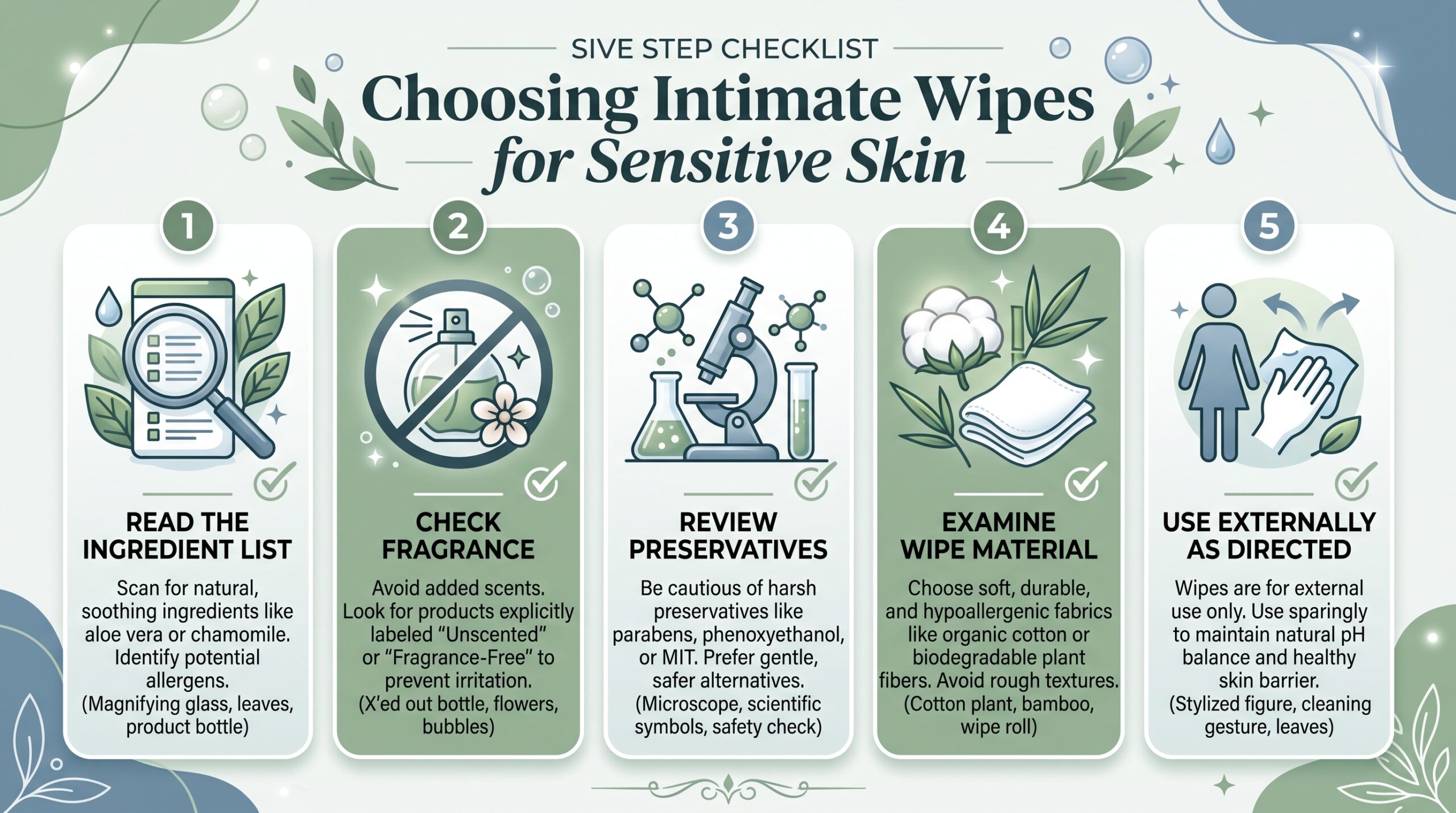
A short label-reading checklist can help consumers make more informed intimate-care choices.
Informed Choices Matter More Than Marketing Labels
There is no universal intimate wipe that will work perfectly for every sensitive-skin consumer. “Organic,” “natural,” and “hypoallergenic” can provide useful information, but none should replace careful ingredient evaluation.
For most people, gentle external hygiene and avoiding unnecessary irritation remain the foundation of intimate care. When wipes provide useful convenience, choosing them thoughtfully—based on their material, complete formulation, intended use, and individual skin tolerance—is a more reliable strategy than judging a product by one claim on the package.