Tampons may look simple, but there is more than one way to insert them. While many U.S. consumers are familiar with plastic or cardboard applicators, non-applicator tampons eliminate the applicator entirely. Instead, the tampon itself is inserted gently with a finger.
Sometimes called digital tampons—with “digital” referring to the fingers rather than electronics—these products offer the same basic function as other single-use tampons: they are placed inside the vagina during menstruation, where they absorb menstrual flow. According to the U.S. Food and Drug Administration’s tampon guidance, tampons are typically made from cotton, rayon, or a combination of the two and expand as they absorb menstrual fluid.
Understanding how applicator-free tampons work can make the format much less intimidating, especially for someone encountering one for the first time.
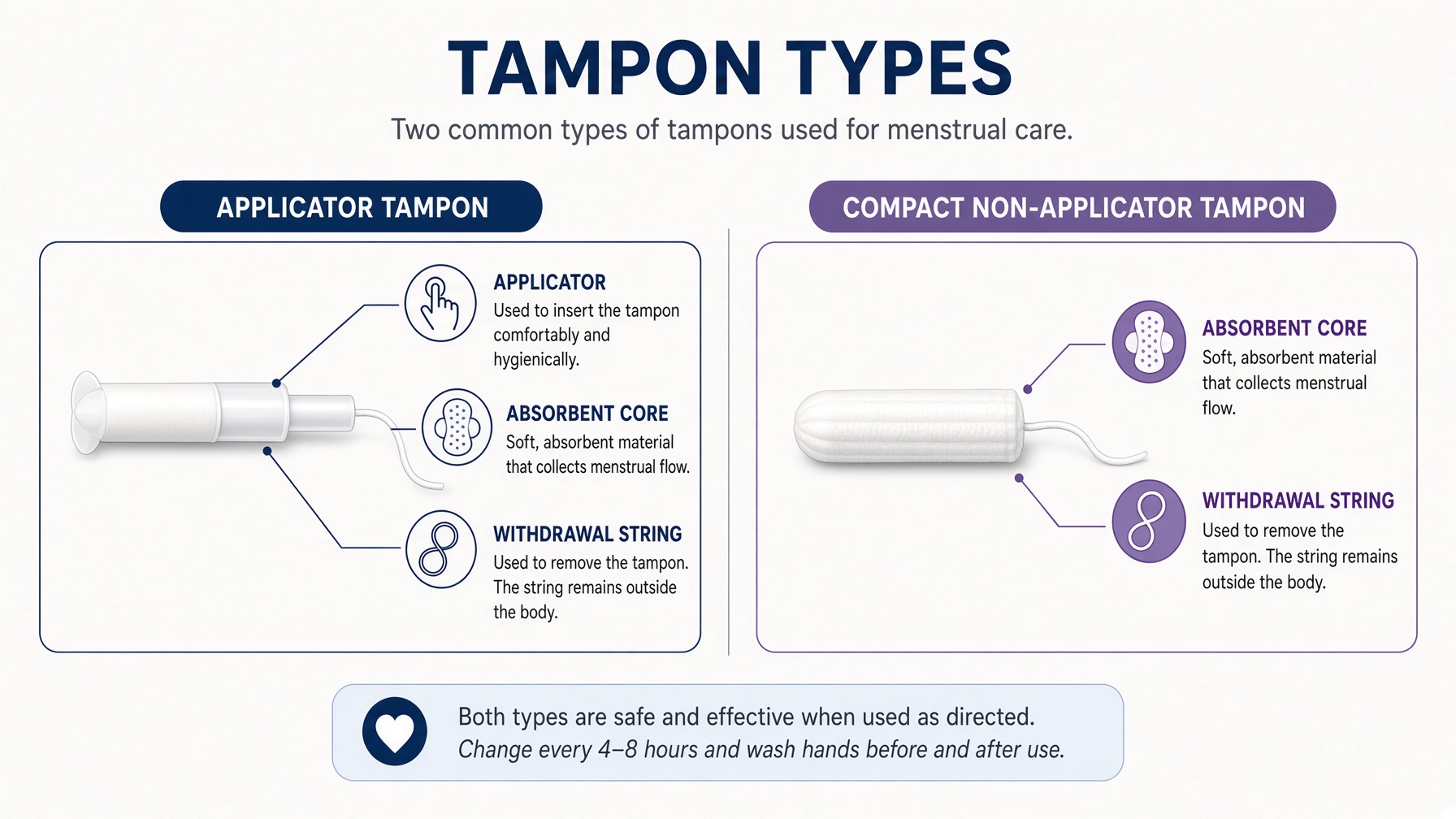
Non-applicator tampons perform the same basic absorption function without a separate insertion device.
How Do Non-Applicator Tampons Work?
The absorbent portion of a non-applicator tampon works much like the absorbent core of an applicator tampon. The main difference is how it reaches the correct position.
With an applicator product, a cardboard or plastic tube helps guide the tampon into place. With a non-applicator tampon, the user controls insertion directly with a fingertip. Maxim’s educational materials describe non-applicator or digital tampons as products inserted with the user’s finger rather than an applicator.
Once correctly positioned, the tampon absorbs menstrual fluid internally and expands. A withdrawal string remains outside the body for removal. The FDA notes that a properly inserted tampon is held in place as it expands to fit the body.
Because no separate applicator is required, the overall product can also be more compact. This is one reason some people appreciate non-applicator formats for handbags, pockets, travel kits, or emergency period supplies.
How to Use a Non-Applicator Tampon
Always begin with the instructions supplied with the specific tampon, because design details can vary between manufacturers. The FDA specifically recommends reading and following product labeling even if you have used tampons before.
A typical process looks like this:
- Wash and dry your hands. Clean hands help reduce the transfer of bacteria during insertion.
- Unwrap the tampon and check the withdrawal string. Make sure the product appears intact and the string is accessible.
- Choose a comfortable position. Sitting on the toilet, standing with one leg raised, or slightly squatting may make insertion easier.
- Relax the pelvic muscles. Tension can make insertion feel more difficult.
- Gently guide the tampon inward with a finger. Follow the manufacturer’s directions and do not force it. It should sit comfortably inside the vaginal canal with the withdrawal string remaining outside.
- Wash your hands again after insertion. When it is time to remove the tampon, gently pull the withdrawal string according to the package instructions.
If insertion causes significant pain or persistent discomfort, stop rather than forcing the tampon. The FDA advises contacting a healthcare provider when tampon use is associated with unusual pain or other concerning symptoms.
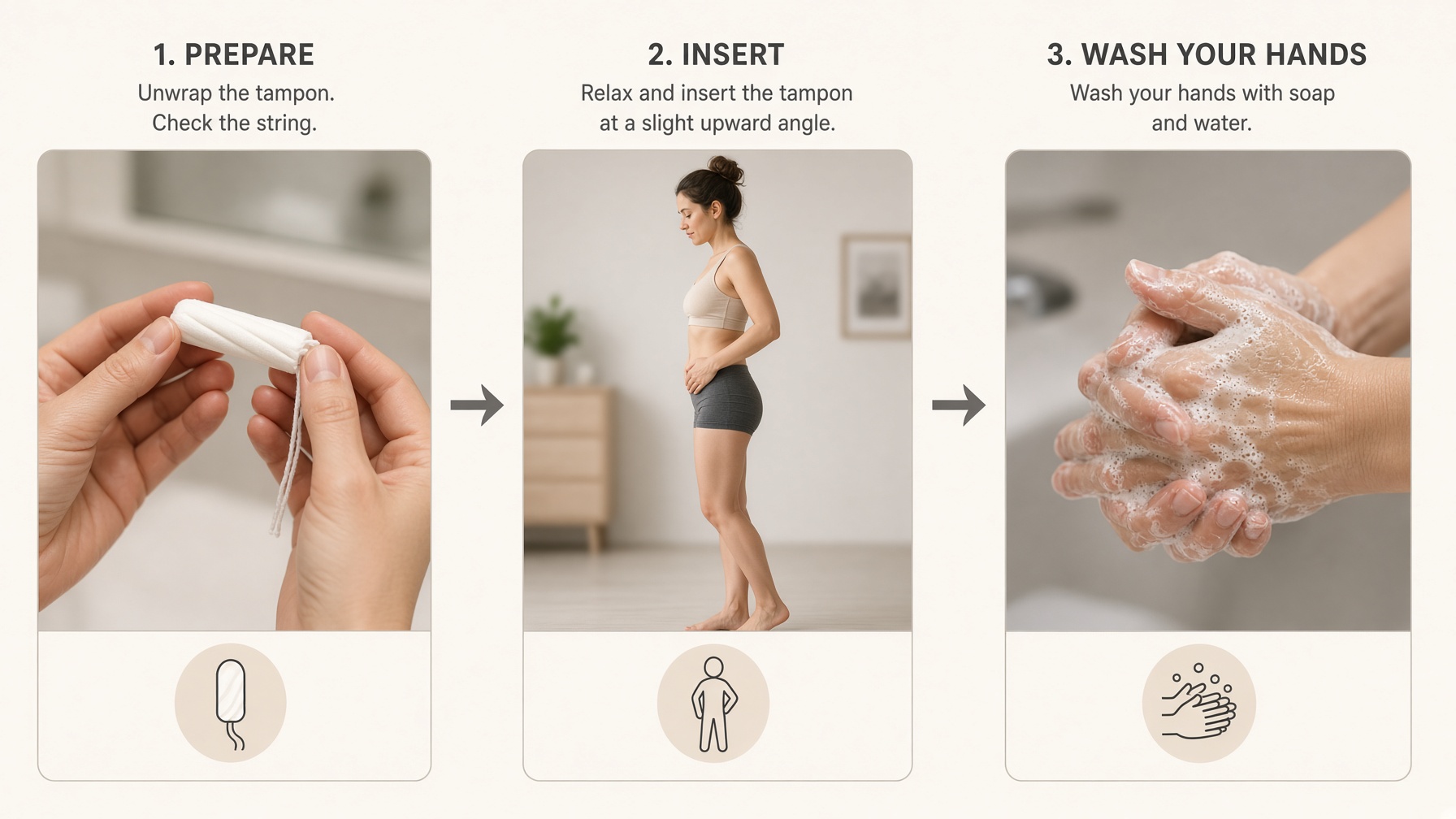
Proper preparation and relaxed insertion can make applicator-free tampons easier to use.
Why Do Some People Prefer Applicator-Free Tampons?
Preference is personal. There is no single tampon format that is automatically best for everyone.
One attraction is direct control during insertion. Because there is no tube between the hand and tampon, some experienced users feel they can position the tampon more precisely. Others simply appreciate carrying a smaller product.
Applicator-free designs also remove one disposable component from the product. Someone trying to reduce the amount of packaging or applicator material associated with their period routine may therefore find the format appealing. However, environmental impact depends on the entire product lifecycle—including raw materials, manufacturing, packaging, transportation, and disposal—so “applicator-free” should not automatically be interpreted as “zero impact.”
Material preference can matter as well. For example, Maxim offers 100% certified organic cotton non-applicator tampons, providing an applicator-free option for consumers specifically seeking an organic-cotton absorbent product. Maxim’s current product listings describe its non-applicator range as certified organic cotton and available in multiple absorbency levels.
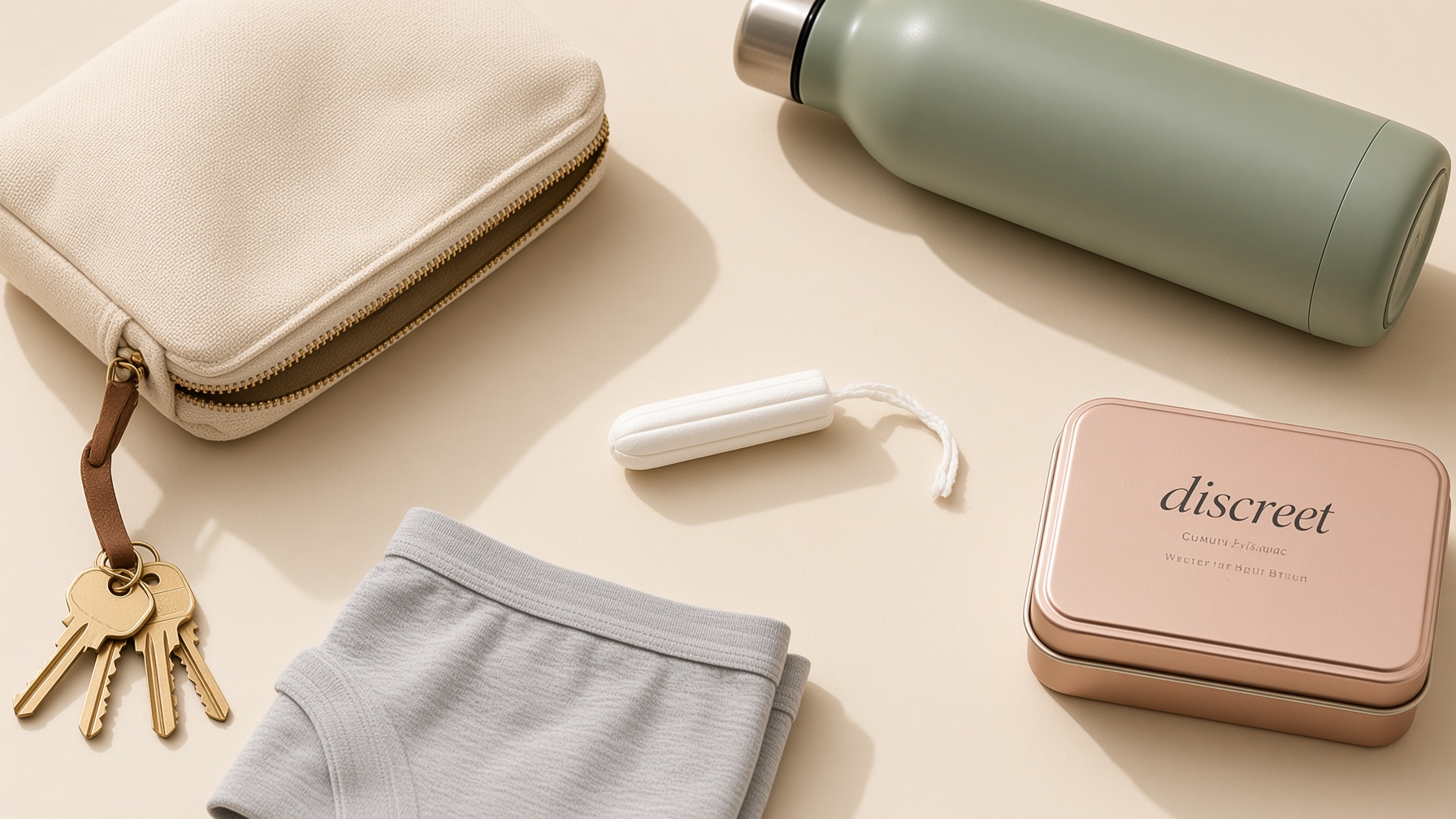
The compact format is one practical reason some users choose applicator-free tampons.
Absorbency Still Matters
Applicator choice and absorbency are separate decisions. Whether a tampon has an applicator or not, consumers should choose an absorbency appropriate for their menstrual flow.
Federal tampon-labeling regulations establish standardized absorbency categories. Under 21 CFR §801.430, Regular corresponds to 6–9 grams of absorbency, Super to more than 9–12 grams, and Super Plus to more than 12–15 grams. The regulation also requires information designed to help consumers select the minimum absorbency needed to control their flow.
That means higher absorbency should not be treated as automatically better. Flow may also vary from one day of a period to another, making different absorbency levels useful at different times.
Safe Tampon Habits Apply to Every Format
Removing the applicator does not change the fundamental safety guidance for tampon use.
The FDA recommends using tampons only during menstruation, changing each tampon every four to eight hours, never leaving one tampon in place for longer than eight hours, and choosing the lowest absorbency necessary.
These recommendations help reduce risks including toxic shock syndrome (TSS), a rare but serious condition associated with tampon use. Federal regulations require tampon labeling to explain TSS warning signs and risk-reduction practices. The National Library of Medicine’s MedlinePlus guidance on toxic shock syndrome identifies symptoms that can include high fever, rash, vomiting, diarrhea, dizziness, and low blood pressure and advises immediate medical attention when TSS is suspected.
Organic cotton or an applicator-free design does not remove the need to follow these safety practices.
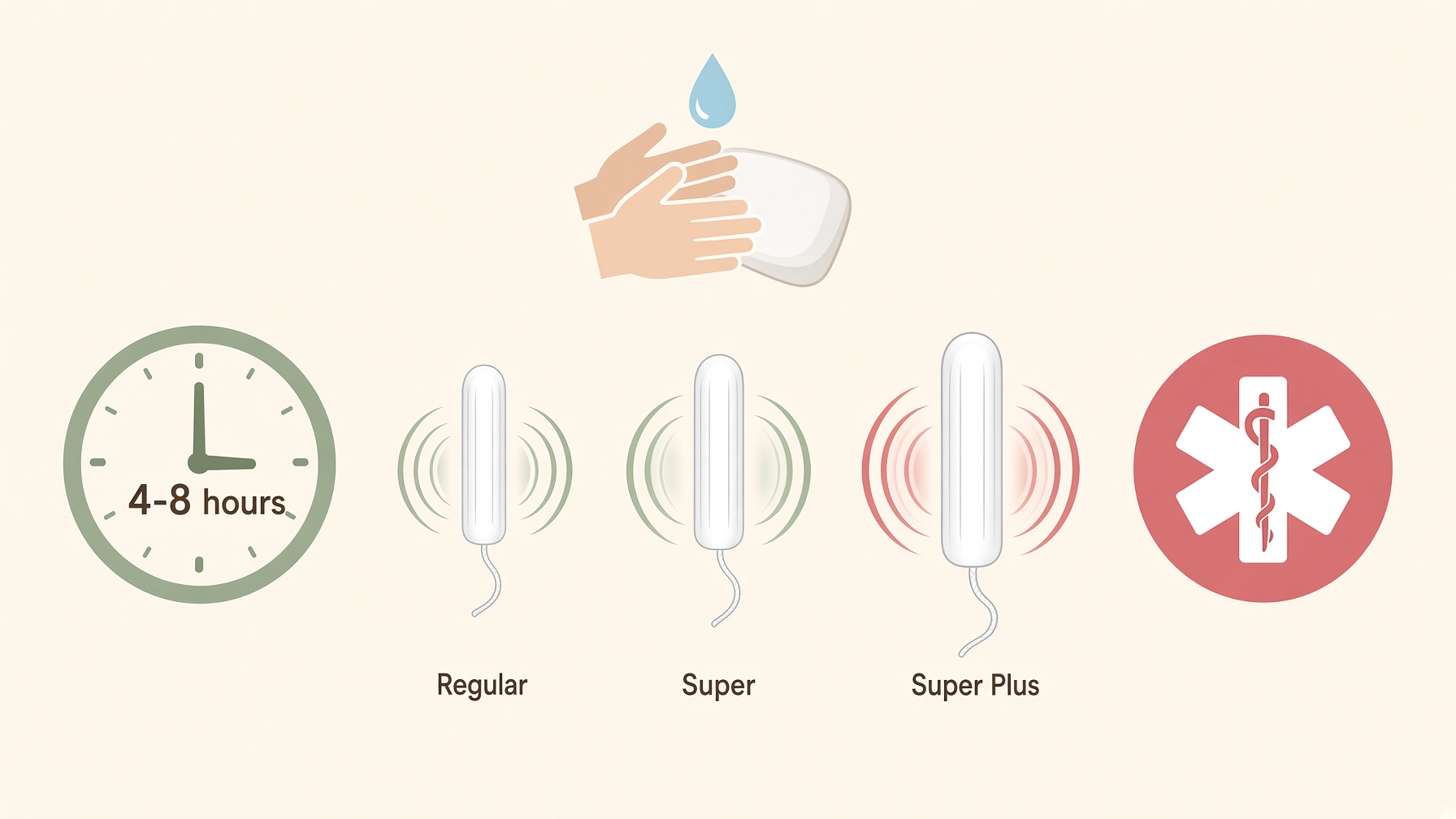
Safe tampon use depends on appropriate absorbency, regular changes, good hygiene, and awareness of warning signs.
The Bottom Line
Non-applicator tampons are not fundamentally different from other tampons in what they do; the difference is primarily how they are inserted. By removing the separate applicator, they provide a compact format that some users value for direct insertion, portability, and reduced product components.
For anyone considering the switch, the most important factors are comfort, correct insertion technique, appropriate absorbency, and safe wear time. Start by following the manufacturer’s instructions, choose the lowest absorbency that manages your flow, and never leave a tampon in for more than eight hours.
The best menstrual product is ultimately the one that fits your body, flow, routine, and personal preferences while being used correctly and safely.