For many people, period care is treated as a routine purchase—until irritation, itching, rubbing, or discomfort turns it into a health and comfort issue. The skin around the vulva is especially sensitive, and common triggers such as fragrance, moisture, friction, and certain hygiene products can contribute to irritation. The American College of Obstetricians and Gynecologists advises avoiding perfumes, deodorants, and unnecessary products around the vulva, especially when irritation is present. That makes the materials in pads and pantiliners worth understanding—not just from a sustainability perspective, but from a skin-comfort perspective as well.
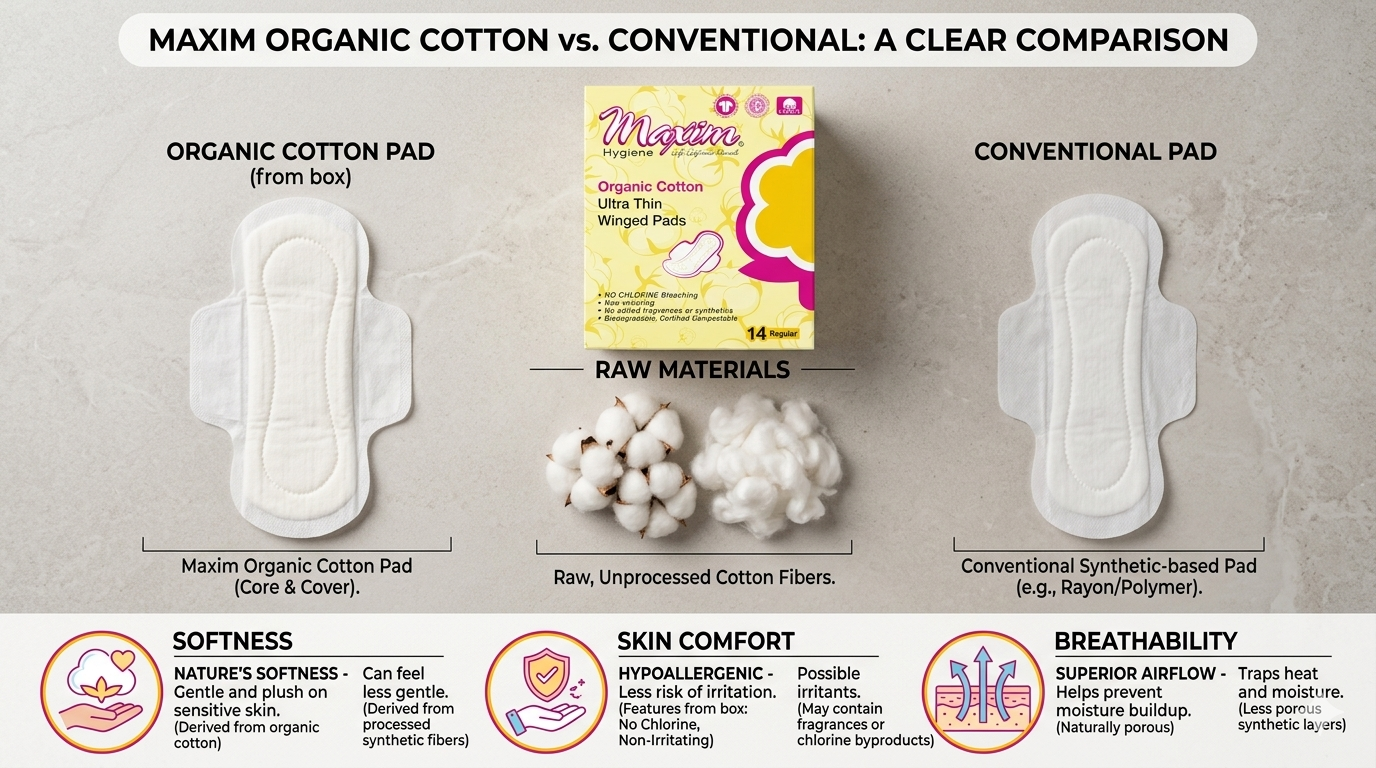
Understanding pad materials can help sensitive-skin shoppers make more comfortable period-care choices.
Why Pad Materials Matter for Sensitive Skin
Conventional disposable pads often use a mix of materials, which may include synthetic topsheets, absorbent polymers, adhesives, fragrances, or plastic-based back layers. These materials are designed for absorbency and leak protection, but they may not feel equally comfortable for everyone. For people prone to chafing, heat buildup, or irritation, the surface that touches the skin can make a noticeable difference.
Organic cotton pads are designed around a simpler material philosophy: use soft, plant-based cotton where it matters most. Cotton is naturally breathable and familiar to the skin, which is why many sensitive-skin shoppers look for cotton-based menstrual products when conventional pads feel too warm, plasticky, or irritating.
This does not mean every irritation problem is caused by a pad. Vulvar burning, itching, or discomfort can have many causes, including infections, dermatitis, hormonal changes, or reactions to hygiene products. But if symptoms seem to appear or worsen during pad use, product materials are a reasonable place to evaluate.
Organic Cotton vs. Conventional Pads: The Practical Difference
The main distinction is not simply “natural versus synthetic.” It is about skin contact, airflow, additives, and transparency.
A conventional pad may prioritize high absorbency and a dry-feel surface through synthetic layers. For some users, that works well. For others, the same dry-feel layer can feel abrasive, trap warmth, or create friction during movement. Organic cotton pads aim to provide a softer, more breathable experience by using cotton-based materials against the body.
Certification also matters. The Global Organic Textile Standard explains that GOTS-certified textiles must meet recognized requirements from raw material harvesting through responsible manufacturing and labeling. While menstrual pads are not identical to clothing, certification language helps consumers understand whether “organic” is backed by a recognized textile standard or used loosely as a marketing claim.
For shoppers who care about both skin comfort and environmental responsibility, the U.S. Environmental Protection Agency’s overview of organic farming explains that organic farming avoids most synthetic fertilizers and pesticides while following specific production practices. This broader farming context helps explain why organic cotton is often valued beyond the finished product itself.
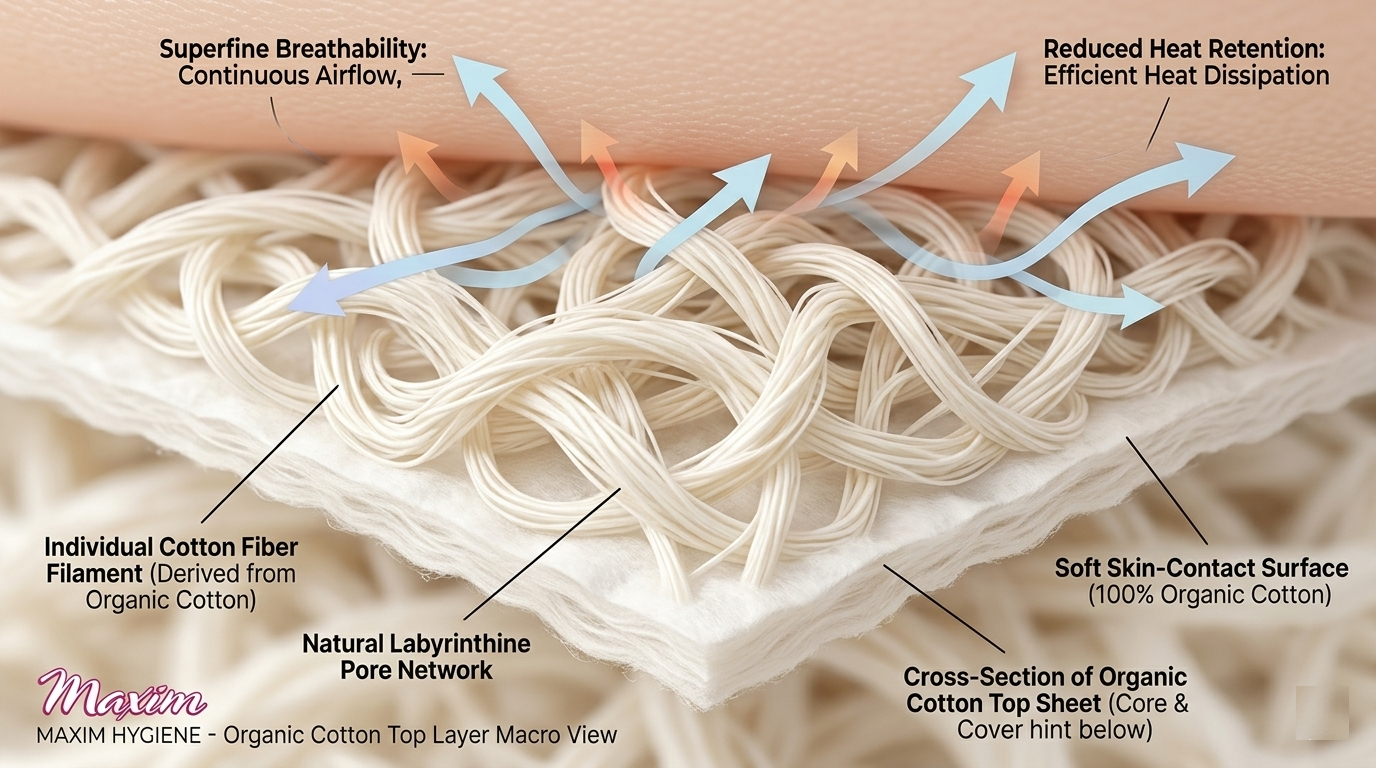
Breathable cotton-based layers can help reduce the warm, trapped feeling some users experience with synthetic pads.
Irritation Triggers to Watch For
Sensitive-skin shoppers should look beyond absorbency labels and consider the full wearing experience. The most common comfort issues often come from four sources: friction, moisture, heat, and additives.
Friction happens when a pad rubs against delicate skin during walking, exercising, or sleeping. Moisture becomes a problem when the pad surface stays damp or does not feel breathable. Heat buildup can make the area feel uncomfortable, especially during long wear. Additives such as fragrance or deodorizing agents may also be irritating for some users.
The Mayo Clinic’s vaginitis prevention guidance recommends avoiding scented tampons, pads, douches, and scented soaps because these can act as irritants. In addition, clinical research available through NIH PubMed Central on sanitary pad dermatitis has documented cases of itching, burning, and vulvar irritation associated with pad use in some individuals.
This is why many people with sensitive skin prefer unscented, chlorine-free, cotton-based products. Menstrual products come into close contact with delicate skin for hours at a time, so material selection, breathability, and clear labeling are important parts of making a more informed choice.
Where Organic Cotton Pads Fit Into a Healthier Routine
Choosing organic cotton pads is best understood as one part of a broader skin-care routine. A pad cannot treat a medical condition, but it can reduce unnecessary exposure to materials or features that may bother sensitive skin.
A practical example is the Maxim Organic Cotton Ultra Thin Pads and Pantiliners collection, which offers 100% certified organic cotton ultra-thin pads and pantiliners in options such as winged, contour, light, regular, and super absorbencies. Because the product line includes both pads and pantiliners, it can support different needs: daily freshness, light spotting, moderate period flow, or backup protection with tampons or cups.
The key benefit is not that one product is right for everyone. It is that sensitive-skin shoppers gain more control when they can choose period care with clearer material claims, cotton-based comfort, and absorbency options that match their actual flow.
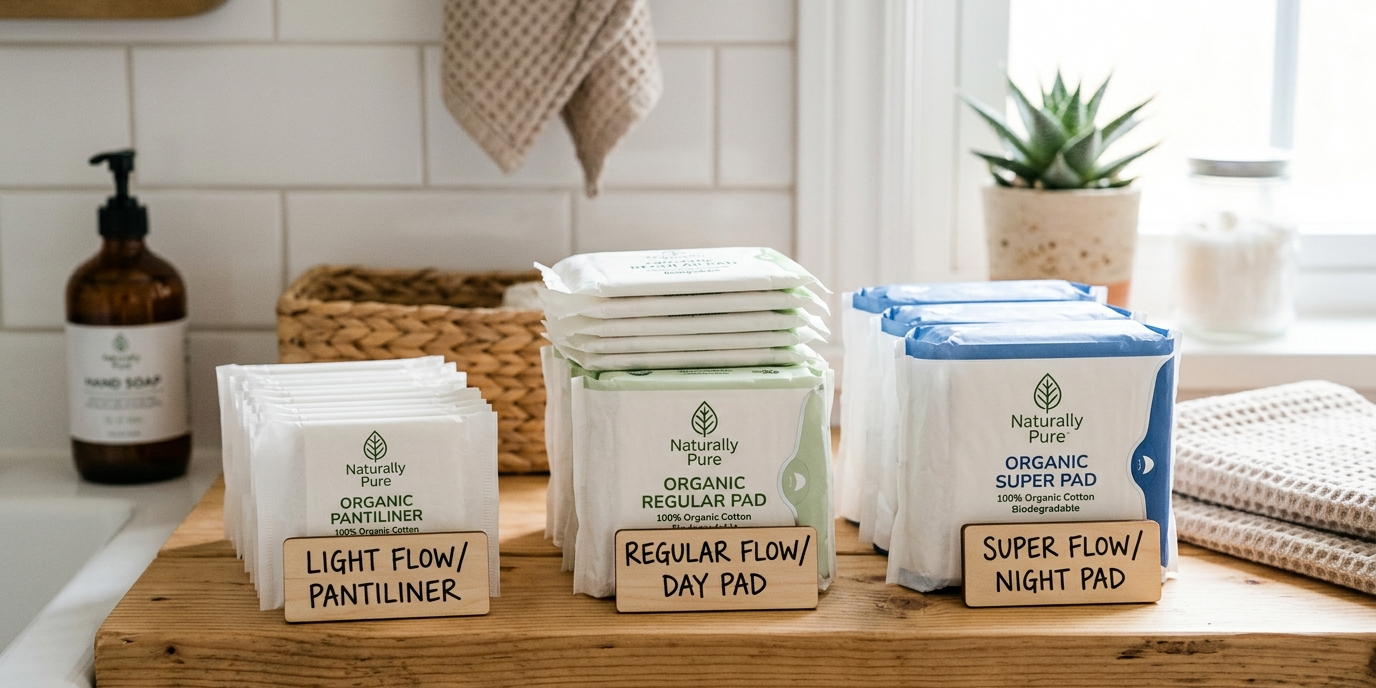
Matching absorbency to your flow helps improve comfort and reduces unnecessary bulk.
How to Choose the Right Product for Your Skin
Start with your main discomfort. If the issue is rubbing, look for soft topsheets and a shape that stays in place. If the issue is warmth, consider breathable cotton-based pads and change them regularly. If the issue is itching or burning, avoid fragrance, deodorizing ingredients, and harsh soaps around the vulva.
Next, match absorbency to the day. A super-absorbency pad may be useful for heavier flow, but it can feel unnecessary or bulky on lighter days. Pantiliners or light pads may be more comfortable for spotting, discharge, or backup protection. For moderate flow, regular ultra-thin pads often provide a balance of discretion and coverage.
Finally, treat recurring irritation as a health signal. If discomfort continues after switching products, or if symptoms include unusual discharge, odor, sores, swelling, or persistent pain, it is important to consult a qualified healthcare professional. Product choice can support comfort, but it should not replace medical evaluation when symptoms persist.
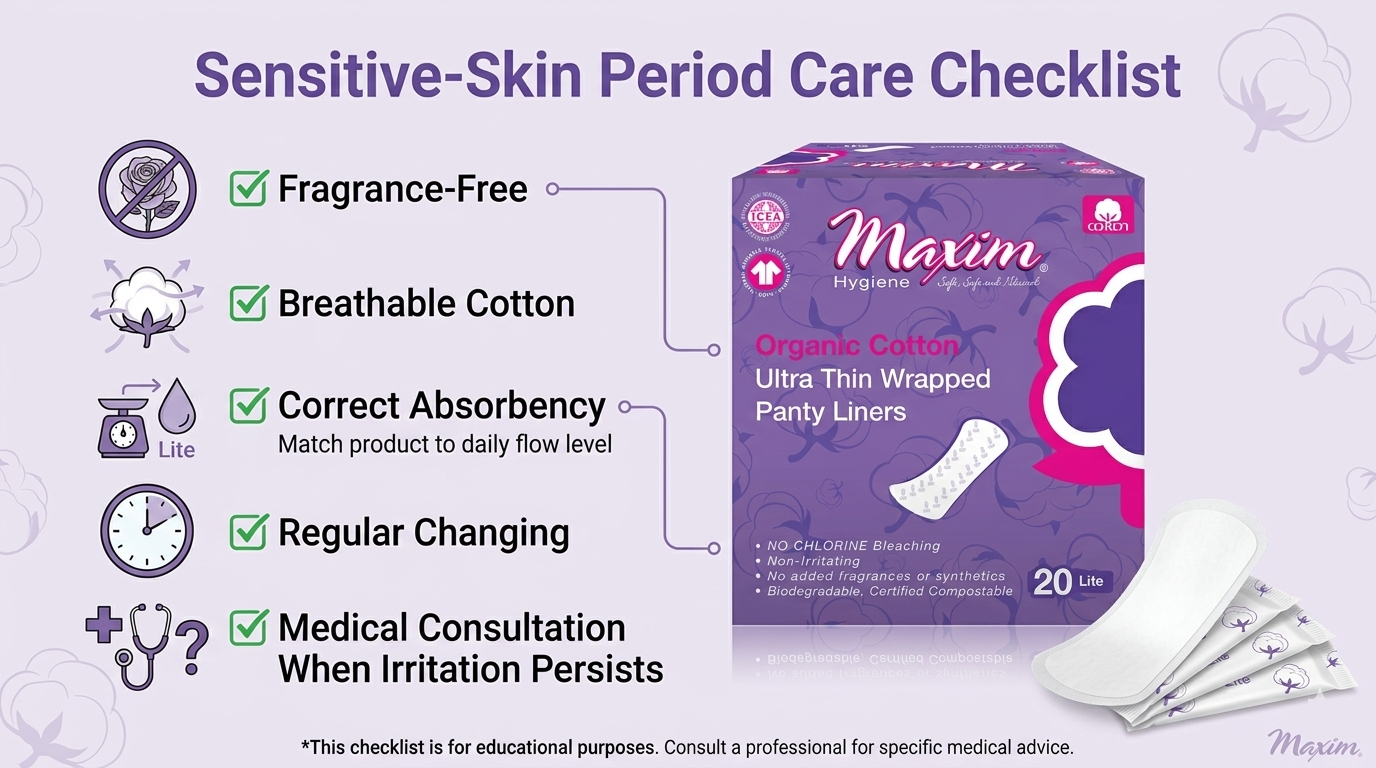
A simple checklist can help identify whether your period products are supporting or stressing sensitive skin.
The Bottom Line
Organic cotton pads are not just a lifestyle preference. For people who experience discomfort with conventional pads, they offer a practical way to simplify skin contact, improve breathability, and avoid features such as fragrance or overly synthetic surfaces. The best choice is the one that fits your flow, stays comfortable during real movement, and supports healthy vulvar care habits.
For sensitive-skin shoppers, the smartest period-care decision is not based on fear or marketing claims. It is based on material awareness, credible standards, and careful attention to how your body responds.