Choosing a menstrual pad often comes down to absorbency and fit, but people with sensitive skin may need to consider another factor: what stays in contact with the skin for hours at a time. Fragrance, moisture, friction, and certain materials can all influence comfort during a period.
That does not mean one type of pad is universally “best” for sensitive skin. Skin reactions have many possible causes, and individual responses vary. However, understanding product labels and recognizing common sources of irritation can make it easier to choose period protection thoughtfully.
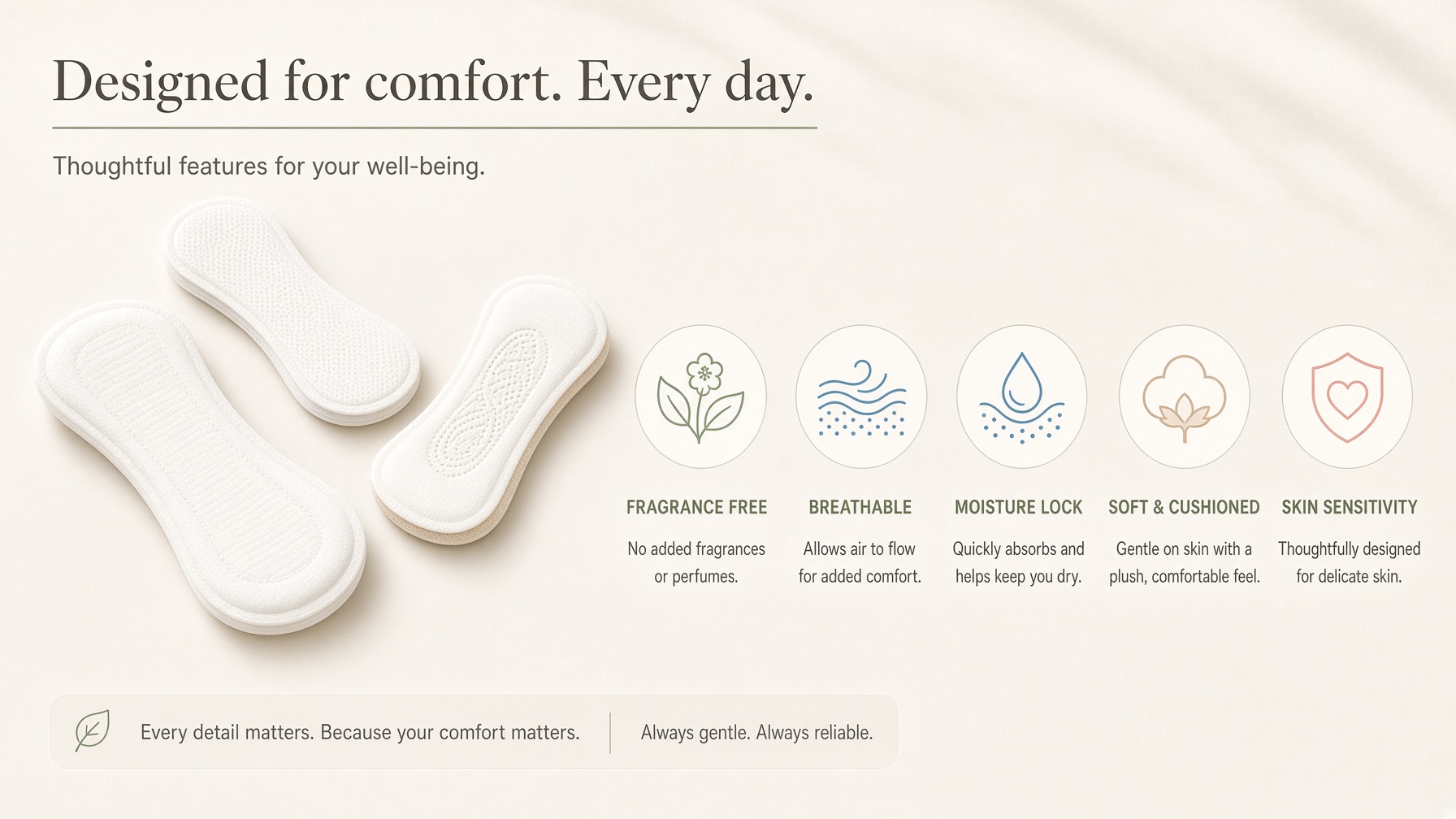
Choosing a pad for sensitive skin involves more than comparing absorbency levels.
Why the Vulvar Area Can Be Sensitive to Irritation
Menstrual pads sit against the external genital area, where heat, perspiration, menstrual fluid, movement, and prolonged contact can create conditions that feel different from those on drier areas of the body. Irritant or allergic contact dermatitis may cause symptoms such as itching, burning, redness, or discomfort, although similar symptoms can also have other medical causes.
The American College of Obstetricians and Gynecologists’ vulvovaginal health guidance recommends avoiding perfumed products around the vulva and advises using gentle, fragrance-free cleansing practices.
This is one reason fragrance is worth considering when shopping for period products, particularly for someone who has previously noticed irritation associated with scented personal-care products.
Fragrance-Free Pads: Why the Label Matters
Fragrance may be added to personal-care products to create a fresh scent or mask odors. For people who are sensitive to fragrance ingredients, however, avoiding unnecessary scented products can reduce one potential source of exposure.
Fragrance is not the only consideration. Research indexed by the National Institutes of Health has identified fragrances and other potential contact allergens across feminine hygiene products, reinforcing the importance of looking beyond marketing terms and evaluating available ingredient and material information.
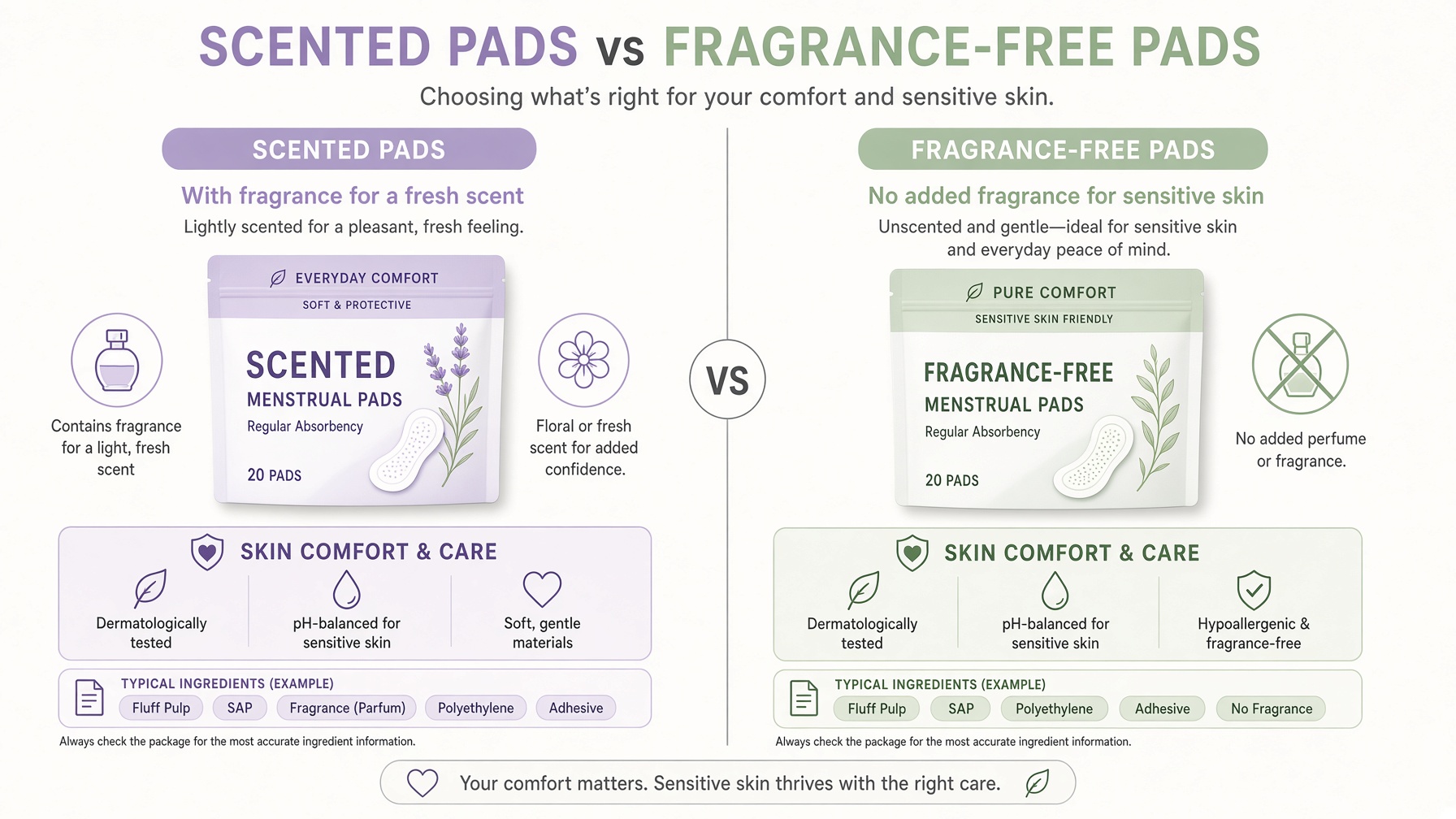
Fragrance-free labeling can help shoppers eliminate one common category of unnecessary additives.
Look Beyond the Word “Hypoallergenic”
A “hypoallergenic” description can be useful as a starting point, but it should not be treated as a guarantee that a product will work for every person. Individuals can react differently to adhesives, fragrances, preservatives, surface materials, or other components.
Product construction matters enough that the U.S. Food and Drug Administration recommends that menstrual-pad device descriptions identify core and cover materials and, where applicable, additives and fragrance components. FDA guidance also identifies adverse tissue reaction as a risk that manufacturers should address when evaluating certain menstrual pads.
For consumers, the practical lesson is simple: favor specific information over vague claims. “Fragrance-free,” material details, absorbent-core composition, and construction information tell you more than a package that only promises comfort.
Moisture, Friction, and Fit Matter Too
Not every uncomfortable period is an ingredient problem. A pad that shifts, bunches, remains overly moist, or rubs against the skin can also become uncomfortable.
Fit therefore deserves attention. A pad should remain secure enough to reduce unnecessary movement while providing the absorbency needed for that stage of the menstrual cycle. Using far more bulk than necessary may not improve comfort, while a pad with insufficient capacity may require very frequent changes or allow moisture to remain where it is not wanted.
Breathable construction may also contribute to a more comfortable wearing experience by allowing airflow around the area, although no material or design can guarantee that irritation will never occur.
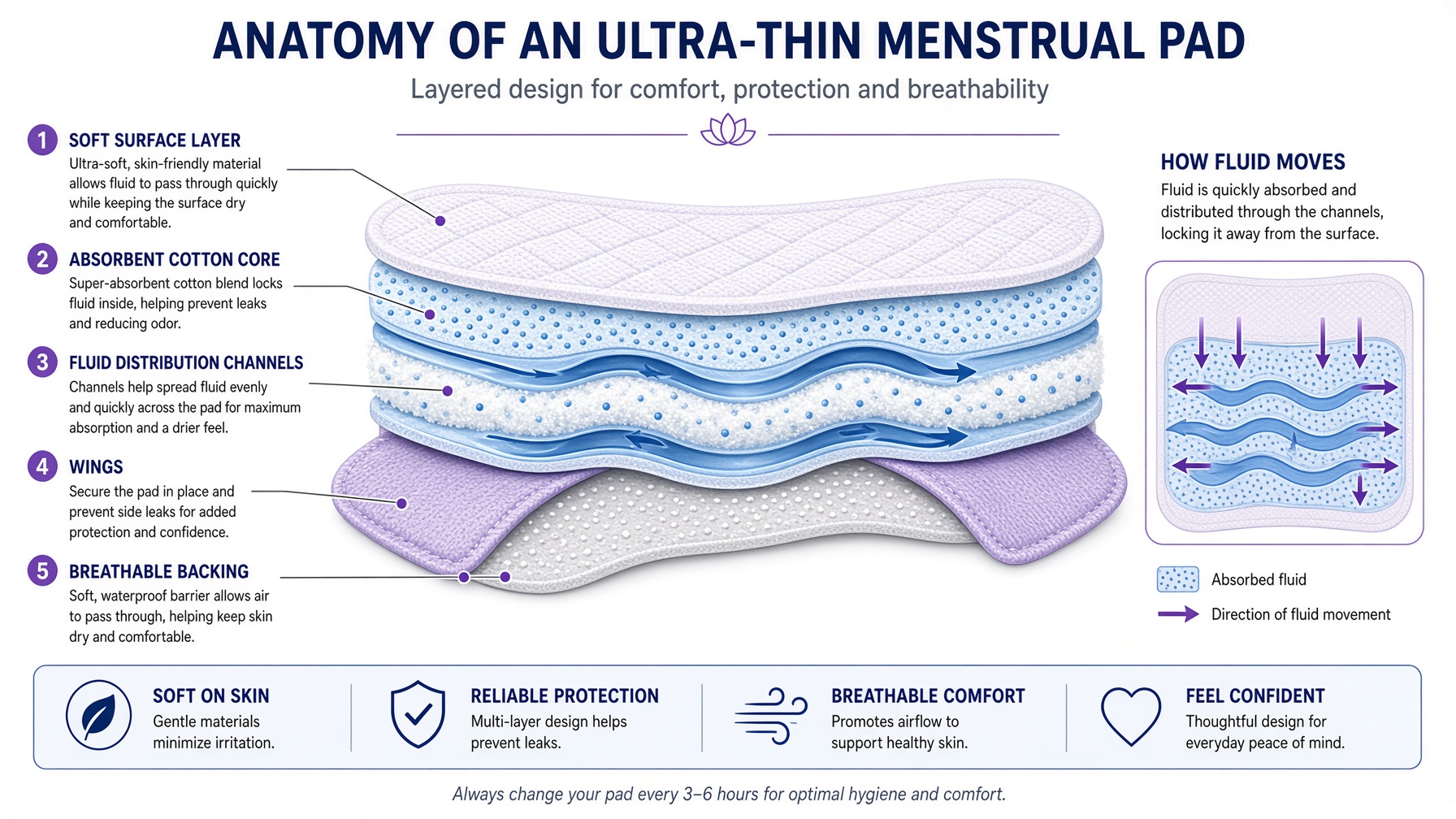
Pad materials, fit, moisture management, and movement can all affect everyday wearing comfort.
Cotton Is a Material Choice, Not a Medical Guarantee
Cotton-based menstrual products appeal to many consumers because of their familiar textile feel and material composition. Still, “cotton” can describe different parts of a product. One pad might have a cotton surface, while another may use cotton within its absorbent core.
Reading the full product description is therefore more useful than relying on a single word on the front of the package.
For example, Maxim’s natural cotton ultra-thin pads and liners are positioned as fragrance-free and breathable and use natural cotton in their absorbent construction. Those characteristics illustrate the kinds of details a sensitive-skin shopper can compare when evaluating period products—not a guarantee that any individual product will prevent irritation.
A Simple Checklist for Choosing Pads for Sensitive Skin
When comparing products, check whether the pad is fragrance-free, review any available material information, choose an absorbency appropriate for your flow, and consider whether the shape and wings help keep the pad securely positioned. Changing pads as needed to manage moisture and paying attention to how your skin responds are equally important.
If a new product consistently causes burning, itching, swelling, rash, or significant discomfort, discontinue it rather than continuing to “test” whether your skin will adjust. Persistent or recurring vulvar symptoms should be discussed with a healthcare professional because contact irritation is only one of several possible explanations. ACOG likewise recommends medical evaluation when vulvar symptoms are concerning or persistent.
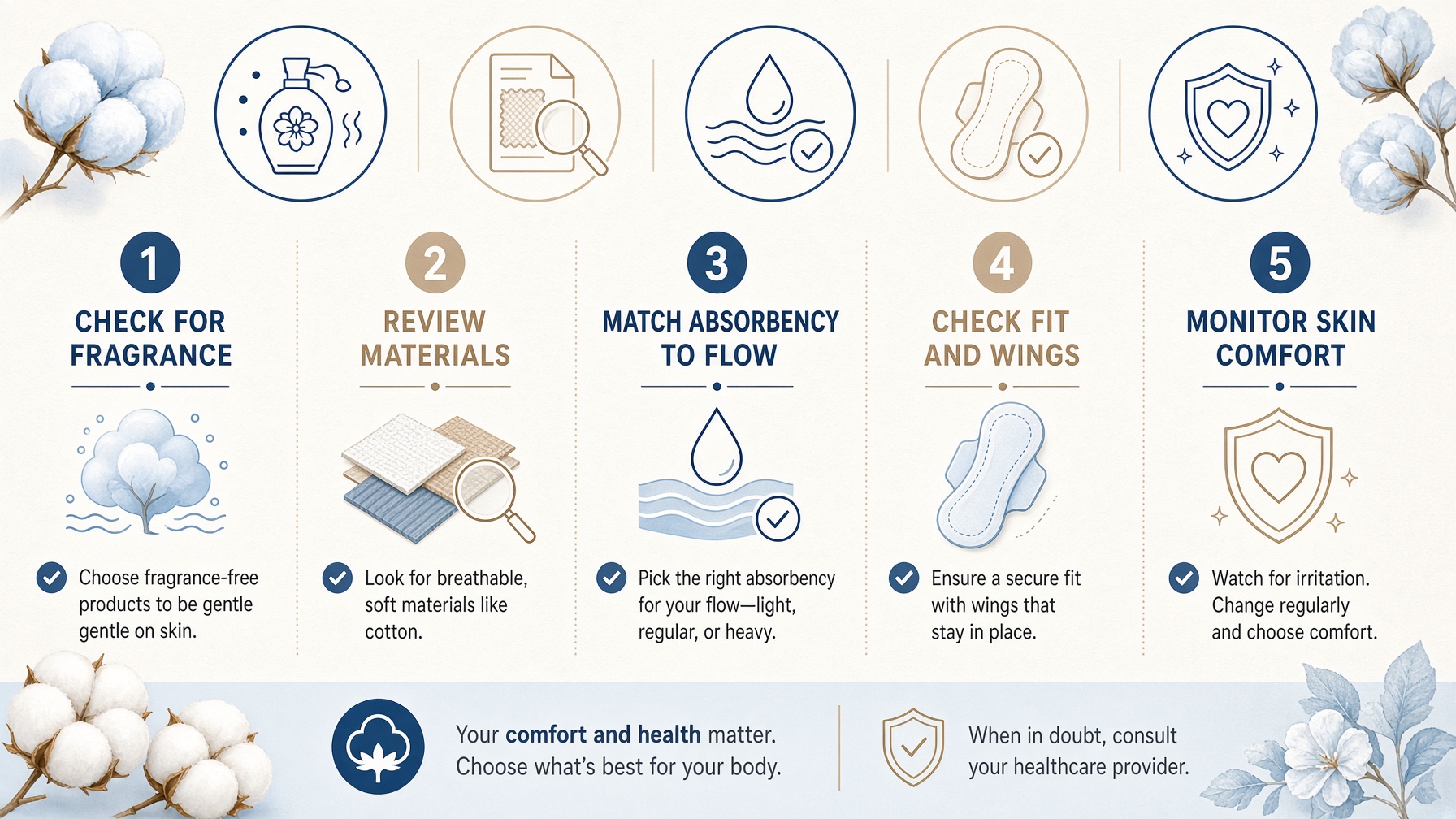
A few label and fit checks can make period-product comparisons more informed.
The Bottom Line
Sensitive-skin period care is less about finding a single “perfect” material and more about reducing avoidable irritants while selecting a product that fits, absorbs appropriately, and feels comfortable in use. Fragrance-free construction, clear material information, breathability, and thoughtful fit are useful criteria for comparing options.
Most importantly, listen to the response of your own skin. Period protection should support normal daily activity without persistent itching, burning, or discomfort—and recurring symptoms deserve proper medical evaluation rather than simply switching products repeatedly.