If your period has ever stolen your sleep, affected your confidence, or made you feel like a completely different person for a few days, this is for you.
Period symptoms do not stop at cramps. They can follow you into the night, into your mood, into your mirror, and into the way you show up at work, with friends, in relationships, and in your own skin.
And yet, we still do not talk about this enough.
Menstrual health is often reduced to bleeding and pain. But for many people, the period experience includes sleep disruption, fatigue, anxiety, bloating, breakouts, irritation, body discomfort, and a temporary dip in confidence. These symptoms are not “small inconveniences.” They can affect quality of life.
It is time to take period sleep struggles and menstrual esteem seriously.
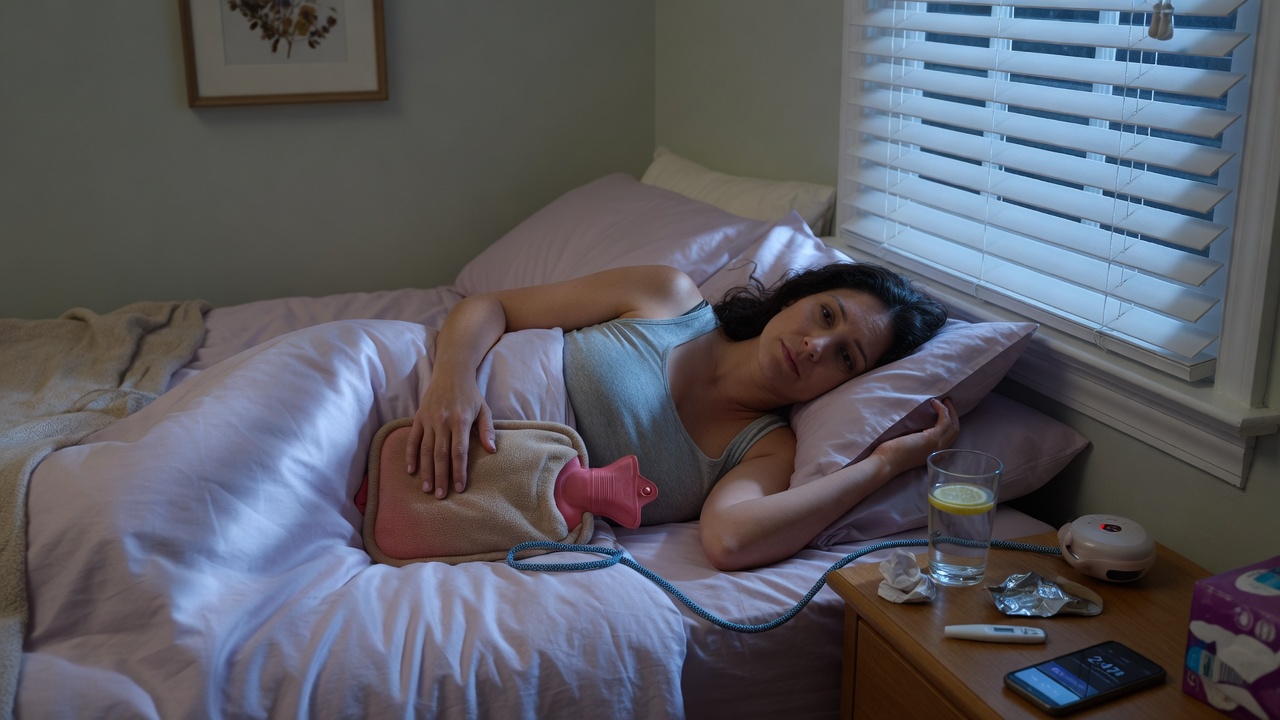
Period symptoms can disrupt sleep through cramps, mood changes, bloating, and discomfort.
Why Periods Can Disrupt Sleep
Have you ever felt exhausted but unable to fall asleep before your period? Or slept for hours and still woke up feeling foggy, heavy, and unrefreshed?
You are not imagining it. Sleep problems are recognized as a PMS symptom by the Office on Women’s Health, which lists sleeping too much or too little, tiredness, trouble concentrating, anxiety, mood swings, and appetite changes among common PMS symptoms.
Research also supports a connection between menstrual symptoms and sleep disruption. A 2023 review in BMC Women’s Health found that premenstrual syndrome and dysmenorrhea were associated with poorer sleep quality, daytime sleepiness, trouble falling or staying asleep, and shorter sleep duration.
In simple terms, your period can affect sleep in multiple ways:
Cramps can wake you up or make it hard to get comfortable.
Bloating can make certain sleep positions uncomfortable.
Mood changes can increase racing thoughts or anxiety.
Headaches can interfere with rest.
Heavier bleeding can cause worry about leaks.
Hormone shifts may affect temperature regulation, energy, and sleep quality.
Some people experience insomnia before or during their period. Others feel the opposite: heavy fatigue, long naps, and daytime sleepiness. Some experience both in different cycles.
The Hormone-Sleep Connection
Hormones play a major role in menstrual sleep struggles.
Progesterone may feel calming or sedating for some people during parts of the cycle. But when progesterone and estrogen levels shift before menstruation, sleep can become less stable. Sleep Foundation notes that insomnia can occur with PMS and PMDD, and that symptoms often occur in the lead-up to and beginning of menstruation.
This does not mean hormones are the only cause. Sleep can also be affected by stress, anemia, pain conditions, medications, caffeine, mental health, caregiving responsibilities, work schedules, and sleep environment. But when poor sleep arrives in a predictable premenstrual pattern, the cycle is worth paying attention to.
That pattern can be powerful information.
Why This Matters More Than “A Few Bad Nights”
Sleep is not just sleep. It affects nearly every part of daily functioning.
When rest is disrupted, anxiety can feel louder. Patience can shrink. Mood swings may feel harder to manage. Pain can feel more intense. Focus, productivity, and decision-making can decline. Even minor inconveniences can feel bigger when the body is tired and uncomfortable.
That is why menstrual sleep struggles should not be dismissed as “just a bad night.” If poor sleep happens month after month, it can affect mental health, work performance, relationships, self-care, and confidence.
The larger issue is not only biological. It is cultural. When women and menstruating people say their cycle affects sleep, energy, mood, and daily life, they are often expected to push through silently. But normal does not mean insignificant. Common does not mean unworthy of care.
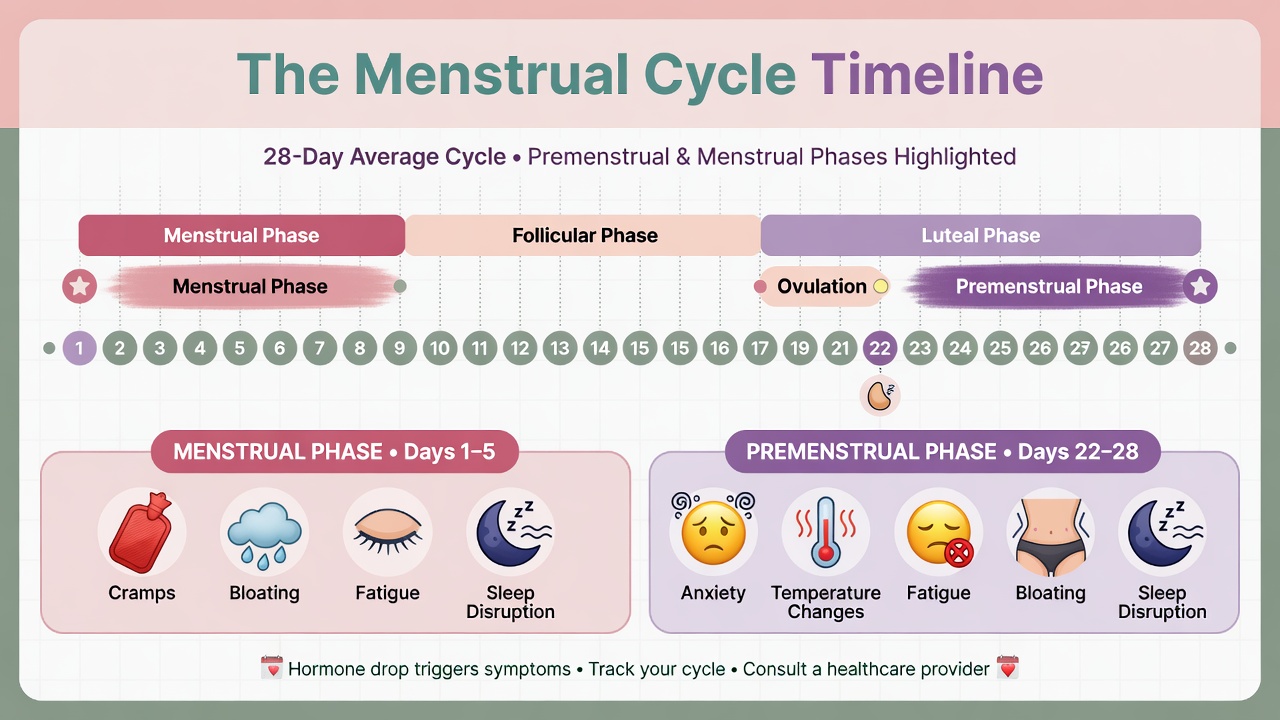
Menstrual sleep struggles often involve a combination of hormonal, physical, and emotional symptoms.
A Quick Self-Check for Period Sleep Problems
If your sleep changes around your cycle, tracking can help you understand what is happening. You do not need a complicated system. A simple note in your phone or planner is enough.
Track when sleep issues begin. Do they start three to seven days before bleeding? On the first day of your period? During heavier flow days?
Track what wakes you up. Is it cramps, anxiety, temperature changes, night sweats, headaches, bathroom trips, leaks, or general discomfort?
Track how you feel the next day. Are you foggy, anxious, irritable, more sensitive to pain, or unusually tired?
Patterns can help you prepare more compassionately. They can also help you explain symptoms clearly to a healthcare provider if sleep disruption becomes severe or interferes with daily life.
What Is Menstrual Esteem?
Now let’s talk about something quieter but just as real: confidence.
Many people feel less attractive, less social, or less like themselves during their period. Bloating, acne, breast tenderness, cramps, leaks, odor anxiety, skin irritation, fatigue, and mood changes can all affect how someone feels in their body.
This is sometimes described as low menstrual esteem: a drop in confidence, body comfort, or self-perception related to menstruation.
During a period, someone may:
Avoid social plans.
Feel uncomfortable in their clothes.
Cancel workouts.
Avoid intimacy.
Feel less attractive.
Worry about leaks or odor.
Feel disconnected from their body.
Pull back from photos, events, or visibility.
This is not vanity. It is the result of physical discomfort combined with cultural shame.
The Cultural Shame Behind Period Confidence
Periods are normal, but they are still treated as something to hide. Many people grow up hearing that menstruation is dirty, embarrassing, gross, or inappropriate to mention. Even period product language often emphasizes secrecy: discreet, invisible, odor-control, hidden protection.
Of course, privacy matters. No one should have to share personal health information if they do not want to. But there is a difference between privacy and shame.
When menstruation is framed as something that must be concealed at all costs, people learn that their bodies are inconvenient or embarrassing. That message can affect self-esteem, body image, intimacy, and confidence.
The big question is not, “Why do people feel less confident on their period?”
The bigger question is, “What have we taught people to believe about their bodies?”

Menstrual esteem means feeling worthy, comfortable, and supported throughout the cycle.
Better Period Support Means More Than Products
Real menstrual support must address both the physical and emotional experience.
The physical experience includes sleep, cramps, flow, leaks, irritation, bloating, fatigue, and skin sensitivity. The emotional experience includes confidence, shame, anxiety, body image, and the pressure to appear unaffected.
At Maxim Hygiene, period care is rooted in the belief that menstruation should feel like care, not a chemical experiment and not a confidence killer. For those who prefer pads, breathable and fragrance-free materials can help reduce unnecessary discomfort during a time when the body may already feel sensitive.
MaximHY’s organic cotton ultra-thin pads and pantyliners are described as unscented, fragrance-free, and breathable, with organic and natural cotton options designed for period comfort.
This does not mean pads can fix insomnia, PMS, or low menstrual esteem. But the right period products can support comfort, reduce irritation-related stress, and make it easier to rest. When your body feels calmer, your night often feels less chaotic.
Building a Period Sleep and Confidence Routine
A supportive routine does not need to be complicated. The goal is to reduce friction before symptoms peak.
Start by preparing your sleep space. Keep water, a heating pad, comfortable period products, and any healthcare-provider-approved pain relief nearby. Choose sleepwear and underwear that feel soft, breathable, and non-restrictive.
Create a wind-down ritual during the days when symptoms usually begin. Dim lights, reduce phone scrolling, stretch gently, take a warm shower, or use calming music. The point is to signal safety to your nervous system.
Support your body during the day, too. Hydration, balanced meals, gentle movement, and rest can all influence how you feel at night. If you tend to feel anxious before your period, journaling or writing a short “this is my cycle, not my failure” note can be surprisingly grounding.
Most importantly, stop treating your body like it is failing. Your body is moving through a hormonal, physical, and emotional process. It deserves support, not criticism.
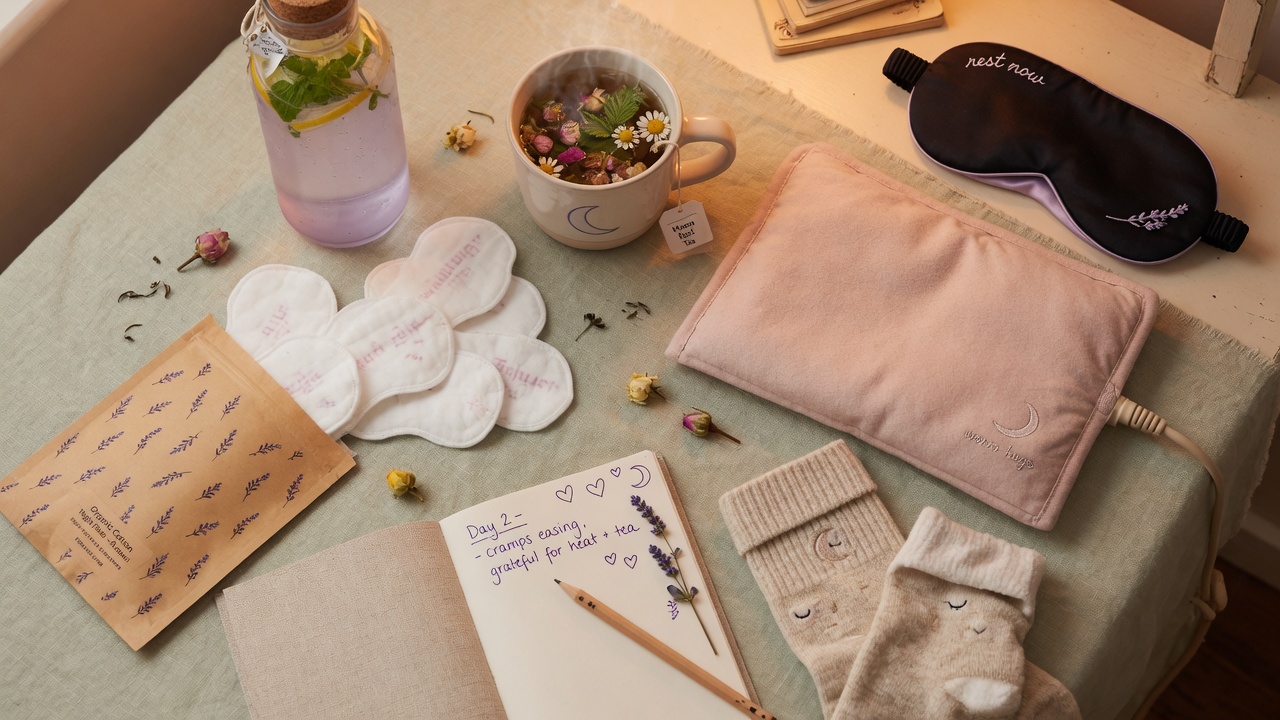
A thoughtful period sleep kit can reduce stress and make nighttime symptoms easier to manage.
When to Seek Medical Support
Some sleep changes around your period may be manageable with routine adjustments. But recurring sleep disruption that affects your daily life deserves attention.
Consider speaking with a healthcare provider if you experience severe insomnia, extreme fatigue, very heavy bleeding, intense cramps, worsening mood symptoms, symptoms of PMDD, dizziness, fainting, or signs of anemia. Mayo Clinic lists insomnia, fatigue, mood swings, poor concentration, social withdrawal, anxiety, and depressed mood among possible PMS symptoms, but severe or disabling symptoms should not be ignored.
The Office on Women’s Health also notes that PMDD is a more serious form of PMS that can cause severe irritability, depression, or anxiety before a period and may require treatment.
You do not need to wait until symptoms are unbearable to ask for help.
Let’s Talk About It
Period sleep struggles and menstrual esteem are connected. When your sleep is poor, your mood, body image, confidence, and pain tolerance can all suffer. When your confidence is low, your anxiety may rise. When anxiety rises, sleep can become harder. It becomes a cycle within the cycle.
The solution is not to pretend periods are always empowering or effortless. The solution is to tell the truth.
Periods can be normal and still difficult.
Symptoms can be common and still deserving of care.
Privacy can matter without creating shame.
Period products can be practical and still contribute to dignity.
Sleep struggles can be cyclical and still medically relevant.
So let’s ask better questions:
Should sleep disruption during periods be recognized as a real health concern, not “just bad nights”?
Do cultural attitudes around menstruation fuel body image struggles and anxiety?
What would change if we treated menstruation as normal instead of something to hide?
If this resonates, share it with someone who needs the reminder: you are not dramatic, you are not alone, and you are not too sensitive.
Your cycle affects your whole life. It deserves real support.
Disclaimer: This article is for informational purposes only and is not a substitute for professional medical advice. If period symptoms, sleep disruption, mood changes, or fatigue interfere with daily life, consult a qualified healthcare provider.