
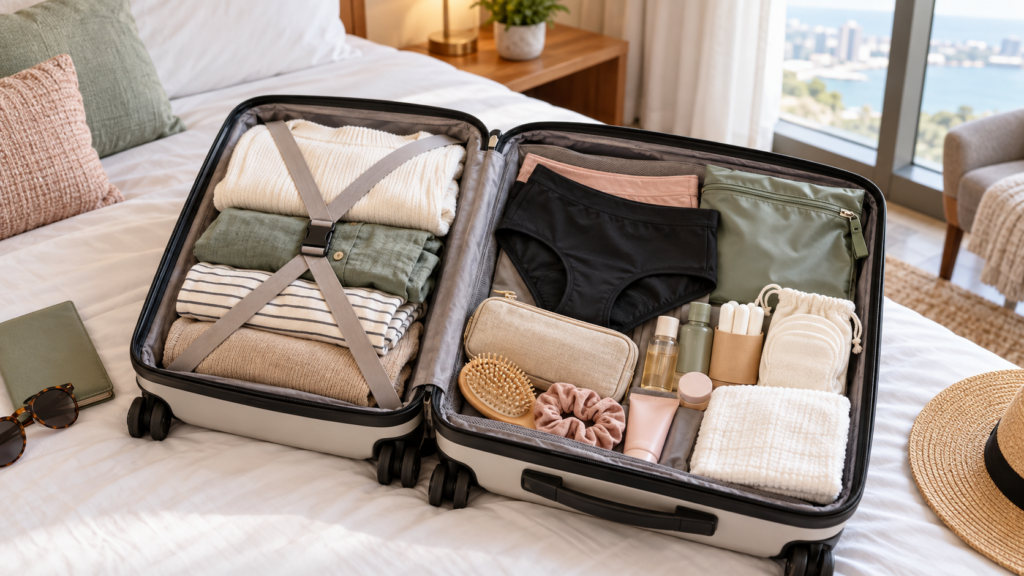
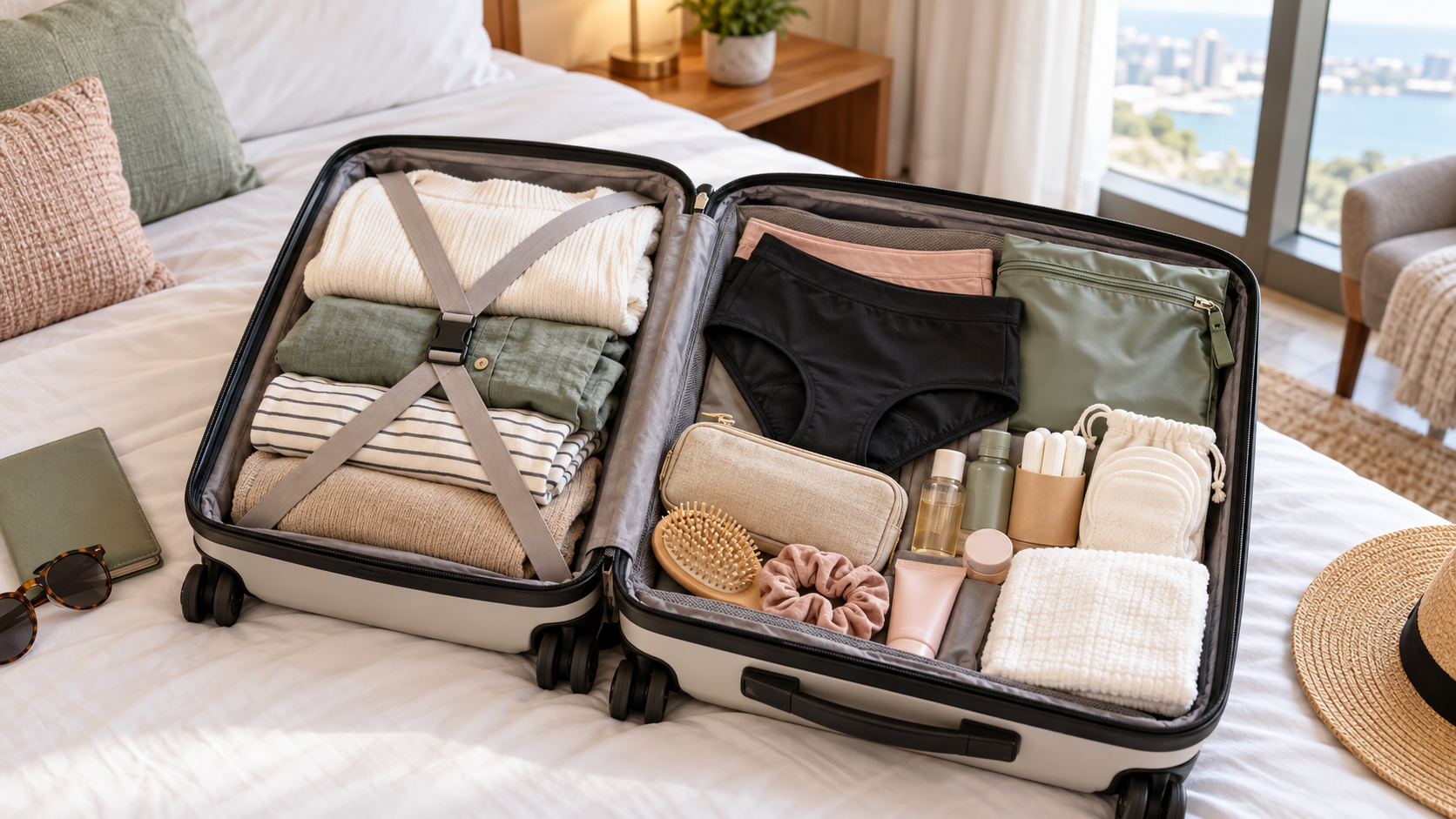
Period underwear for travel can make menstrual care more manageable away from home. Long flights, unfamiliar bathrooms, hours on the road, limited laundry access, and packed sightseeing schedules can all make changing menstrual products less convenient.
That is where period underwear for travel can become a useful part of a broader period-care plan. Rather than carrying only one type of protection, travelers can combine reusable period underwear with pads, tampons, cups, or liners according to their flow and itinerary.
The World Health Organization’s guidance on menstrual health emphasizes access to suitable menstrual materials as well as appropriate water, sanitation, washing, drying, and disposal facilities. Planning for those needs before leaving home can make managing a period during travel considerably less stressful.
Why Period Underwear Works Well for Travel
Period underwear looks and feels similar to everyday underwear but includes an absorbent, leak-resistant gusset. Depending on the garment and its stated capacity, it may be used by itself or as backup protection with another menstrual product. For travelers, that flexibility can be more valuable than relying on one product for every situation.
- Comfort: a well-fitting pair can reduce the need for bulky backup layers during long days.
- Leak backup: period underwear can add reassurance when bathroom access is unpredictable.
- Reusability: washable period panties can reduce the number of disposable products you need to pack.
- Versatility: different absorbencies can cover light days, regular-flow days, overnight wear, and backup use.
Absorbency labels are not perfectly standardized across brands, so always check the maker’s capacity and care guidance before a trip. Test a new pair at home first rather than discovering its fit or limits during a flight or excursion.
Start With Your Flow, Not the Length of Your Trip
A seven-day vacation does not necessarily require seven identical period-care days. Flow often changes throughout the cycle, so it is more useful to plan around expected light, regular, and heavier days.
Medium-absorbency period underwear can be especially practical during travel because it may work as standalone protection on lighter or regular-flow days or as additional backup when another menstrual product is used. On heavier days, some travelers prefer a higher-absorbency pair or combine period underwear with a tampon, pad, or cup.
For example, the first two days of a trip may call for high-absorbency protection and more frequent checks, while later days may only require medium absorbency or a liner. Pack for the pattern you usually experience, plus one spare pair in case your cycle arrives early, lasts longer than expected, or laundry plans change.
A Simple Travel Period-Protection Plan
| Travel situation | Suggested approach | What to keep accessible |
|---|---|---|
| Light-flow sightseeing day | Light or medium period underwear | One spare pair and a small wet bag |
| Regular-flow day | Medium-absorbency period underwear, alone or with backup | Preferred menstrual product and wipes or tissues |
| Heavy-flow travel day | High-absorbency pair plus your usual primary protection | Extra underwear and products in your personal item |
| Overnight or red-eye flight | Full-coverage overnight period underwear or layered protection | Fresh pair for arrival |
How Many Pairs Should You Pack?
The right number depends on flow, trip length, laundry access, drying time, and whether period underwear is your primary or backup protection. When planning period underwear for travel, a practical starting point is:
- two to three pairs for a short trip when reliable laundry is available;
- one pair per anticipated wear period, plus a spare, when laundry access is limited;
- a mix of medium and higher absorbencies rather than several identical pairs;
- an extra everyday pair for unexpected delays or schedule changes.
Reusable period underwear must be completely clean and dry before it is packed for reuse. If you are changing hotels frequently or traveling somewhere humid, allow more drying time than you would at home.
Period Underwear for Flights
Period underwear for flights can be useful because airplane bathrooms are small, seatbelt signs may delay access, and long-haul travel can stretch the time between comfortable changes. Wear a pair you have already tested and choose loose, breathable clothing that does not press tightly against the gusset.
Keep at least one clean pair in your personal item, not in checked luggage. Pack it in a breathable clean pouch, with an opaque waterproof wet bag reserved for worn underwear. Include a few individually wrapped backup products, tissues, hand sanitizer, and any pain relief you normally use and are able to take safely.
Change based on the product instructions, your flow, and how the underwear feels—not simply according to the flight duration. If another menstrual product is doing the primary absorbing, follow its safe-use instructions. The U.S. Food and Drug Administration advises changing tampons every four to eight hours and using the lowest absorbency needed; see the FDA’s tampon safety guidance.
Road Trips, Trains, and Long Excursion Days
For road trips, note rest stops before leaving and avoid burying your supplies beneath luggage. A compact change kit can fit in a daypack or glove compartment, but do not leave damp underwear in a hot car for an extended period.
Train bathrooms vary considerably, so carry the same essentials you would use on a flight. During tours or long excursion days, identify restroom opportunities early. If the day includes hiking, cycling, or extensive walking, prioritize a secure fit and check for chafing at home before relying on a pair while traveling.
Pack Clean and Worn Pairs Separately
A hygienic packing system does not need to be complicated. Use two clearly different pouches:
- Clean pouch: fully dry period underwear folded separately from shoes and toiletries.
- Wet bag: an opaque, leak-resistant bag for used pairs until they can be rinsed or washed.
If a worn pair must stay packed for several hours, follow the manufacturer’s care directions as soon as practical. Avoid sealing a damp garment for longer than necessary, because trapped moisture can encourage odor. A wet bag is temporary storage, not a substitute for washing and drying.
Washing Period Underwear While Traveling
When you rely on period underwear for travel, laundry planning matters. Care labels differ, so the manufacturer’s instructions should come first. Many reusable period underwear styles are cared for with a cold rinse, gentle washing, and air drying, while bleach and fabric softener may damage absorbent or leak-resistant layers.
When You Have a Washing Machine
- Rinse if the care label recommends it.
- Use a laundry bag to keep underwear together.
- Choose a gentle cycle and compatible detergent.
- Air dry completely before repacking, unless the label specifically permits machine drying.
When You Only Have a Sink
Use a clean sink and follow the garment’s hand-washing instructions. Wash your hands before and after handling used underwear. Rinse away detergent thoroughly, press out water without aggressive wringing, and hang the garment where air can circulate. Never drape wet period underwear directly over shared bathroom surfaces.
If privacy, water quality, or drying access is uncertain, pack enough pairs to postpone laundering. Pairing period underwear with disposable backup can also reduce the amount of washing required during transit. Maxim’s guide to organic cotton pads and pantiliners can help you compare travel-friendly backup options.
Build a Compact Period Travel Kit
Keep your travel period protection together so you can reach it quickly. A useful kit may include:
- period underwear matched to light, regular, and heavier days;
- your preferred pads, tampons, cup, or liners;
- one clean change of ordinary underwear;
- an opaque wet bag and a separate clean pouch;
- unscented tissues or wipes that are suitable for external use;
- hand sanitizer for times when soap and water are temporarily unavailable;
- a small amount of travel detergent compatible with the care label;
- any personally appropriate medication you normally use;
- a written note of your expected cycle dates if travel disrupts your usual routine.
If you prefer pads or liners as backup, review how absorbency and construction differ in this guide to period-product sustainability claims.
Comfort Tips for Flights and Road Trips
- Choose the correct size; a pair that is too tight can chafe, while a loose gusset may shift.
- Wear breathable clothing and avoid seams that rub during long periods of sitting.
- Change promptly if the underwear feels saturated, damp, or uncomfortable.
- Carry supplies in your day bag rather than relying on airport or roadside shops.
- Use only products you have tested before departure.
- Do not assume “overnight” or “heavy” means unlimited wear; follow the brand’s directions.
When Period Underwear May Not Be Enough
Period underwear is a practical tool, but it does not need to be your only tool. Heavy flow, very long travel days, limited changing access, or uncertainty about a new product may make layered protection more comfortable. Seek medical advice if bleeding is unusually heavy for you, repeatedly soaks through protection very quickly, or is accompanied by concerning symptoms such as dizziness, faintness, or severe pain.
The goal is not to travel with the fewest possible products. It is to build a flexible system that keeps you comfortable and gives you options when plans change.
Frequently Asked Questions About Period Underwear for Travel
Can period underwear go in a carry-on bag?
Yes. Clean period underwear can be packed like ordinary clothing. Keep used pairs in an opaque wet bag and follow airport security rules for any liquid detergent or toiletry products.
Can period underwear be worn through a long flight?
That depends on your flow, the garment’s tested capacity, whether it is being used alone or as backup, and the manufacturer’s wear guidance. Bring a spare and change whenever the pair feels saturated or uncomfortable.
How do you store dirty period underwear while traveling?
Use a dedicated, opaque, leak-resistant wet bag until the underwear can be washed. Do not leave damp underwear sealed longer than necessary, and wash your hands after handling it.
Is medium absorbency enough for travel?
Medium absorbency can be useful for light-to-regular flow or as backup, but it may not suit heavier days. Plan around your own flow and the specific product’s capacity.
Should period underwear replace pads or tampons on a trip?
It can be used alone when the product capacity and your flow make that appropriate, but many travelers prefer a mix. Combining reusable period underwear with familiar products creates more options for flights, overnight use, and days with limited restroom access.
Travel With a Plan, Not Period Anxiety
Period underwear for travel works best as part of a simple, tested routine: match absorbency to your flow, carry a spare, separate clean and worn pairs, and plan realistically for washing and drying. With those basics covered, flights, road trips, and busy itineraries can feel far more manageable.
This article provides general educational information and is not a substitute for individualized medical advice.