Choosing postpartum pads after childbirth can seem like a minor decision compared with everything else happening during recovery. Yet the right protection can make a noticeable difference in comfort, mobility, skin condition, and confidence.
Postpartum pads may need to manage lochia—the vaginal bleeding and discharge that occurs after childbirth—as well as occasional urinary leakage. Bladder-control problems are particularly common during and after pregnancy and childbirth, according to the National Institute of Diabetes and Digestive and Kidney Diseases’ guidance on urinary incontinence.
Rather than choosing a product based on absorbency alone, consider these seven features.
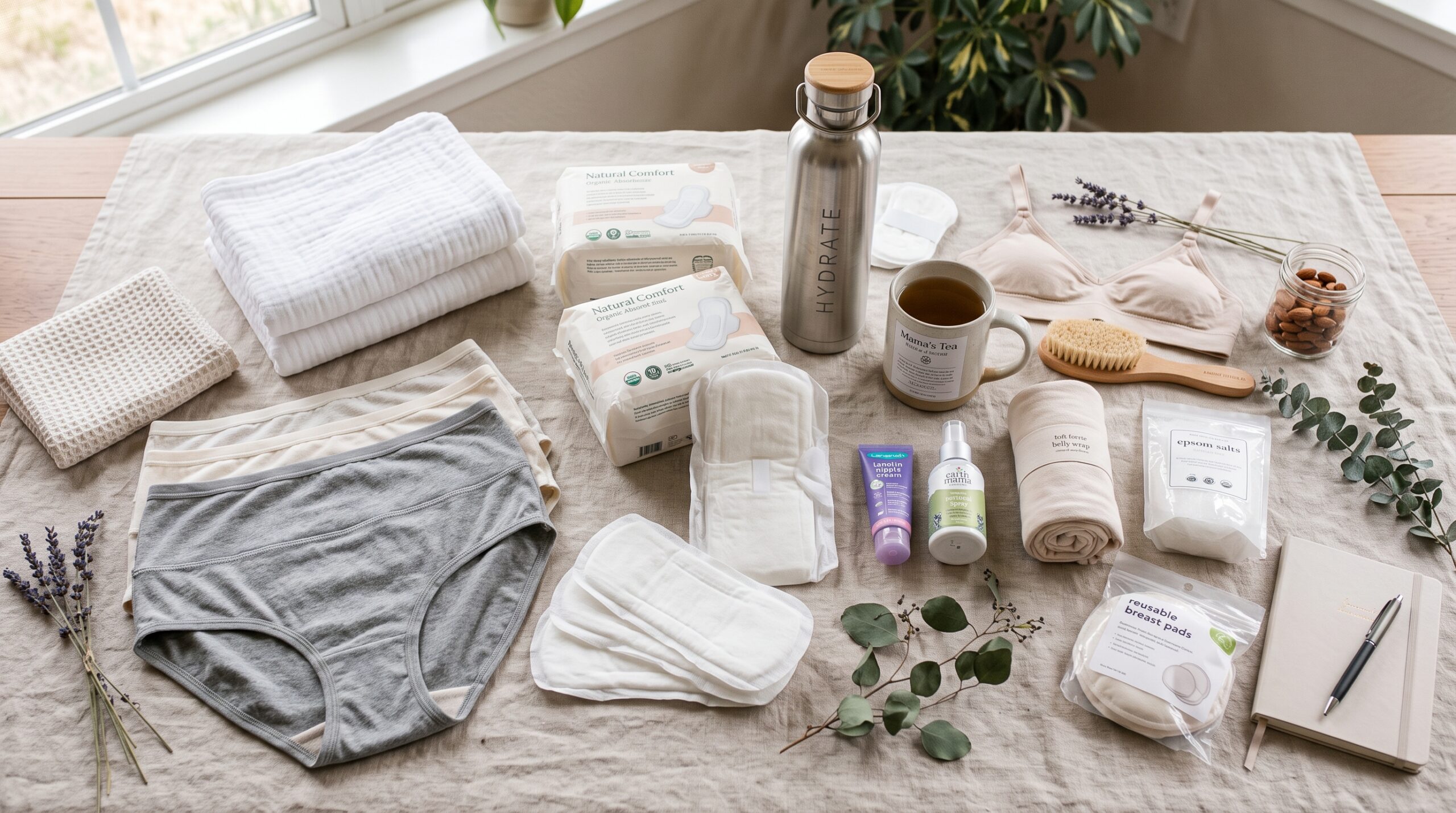
Choosing postpartum protection involves more than simply finding the most absorbent pad.
1. Choose Postpartum Pad Absorbency for Your Current Flow
Postpartum bleeding typically changes during recovery, so the level of protection you need on one day may not be appropriate several weeks later. Early postpartum discharge may require a higher-capacity maternity pad, while lighter protection may become sufficient as bleeding decreases.
Absorbency is also important for people experiencing urinary leakage. Stress incontinence can cause urine to escape when coughing, laughing, sneezing, or exercising because these activities increase pressure on the bladder.
The goal is not automatically to choose the thickest pad available. Look for enough capacity to manage your expected flow without unnecessary bulk.
2. Adequate Length and Coverage
A postpartum pad needs enough surface area to provide protection while sitting, sleeping, feeding a baby, walking, or changing positions.
Longer pads can provide additional front-to-back coverage when discharge is heavier or movement makes leaks more likely. Coverage becomes especially important overnight, when a pad may remain in one position for longer periods.
Consider both the pad’s dimensions and how securely it stays aligned with your body. Even a highly absorbent pad can leak if it does not provide enough coverage.
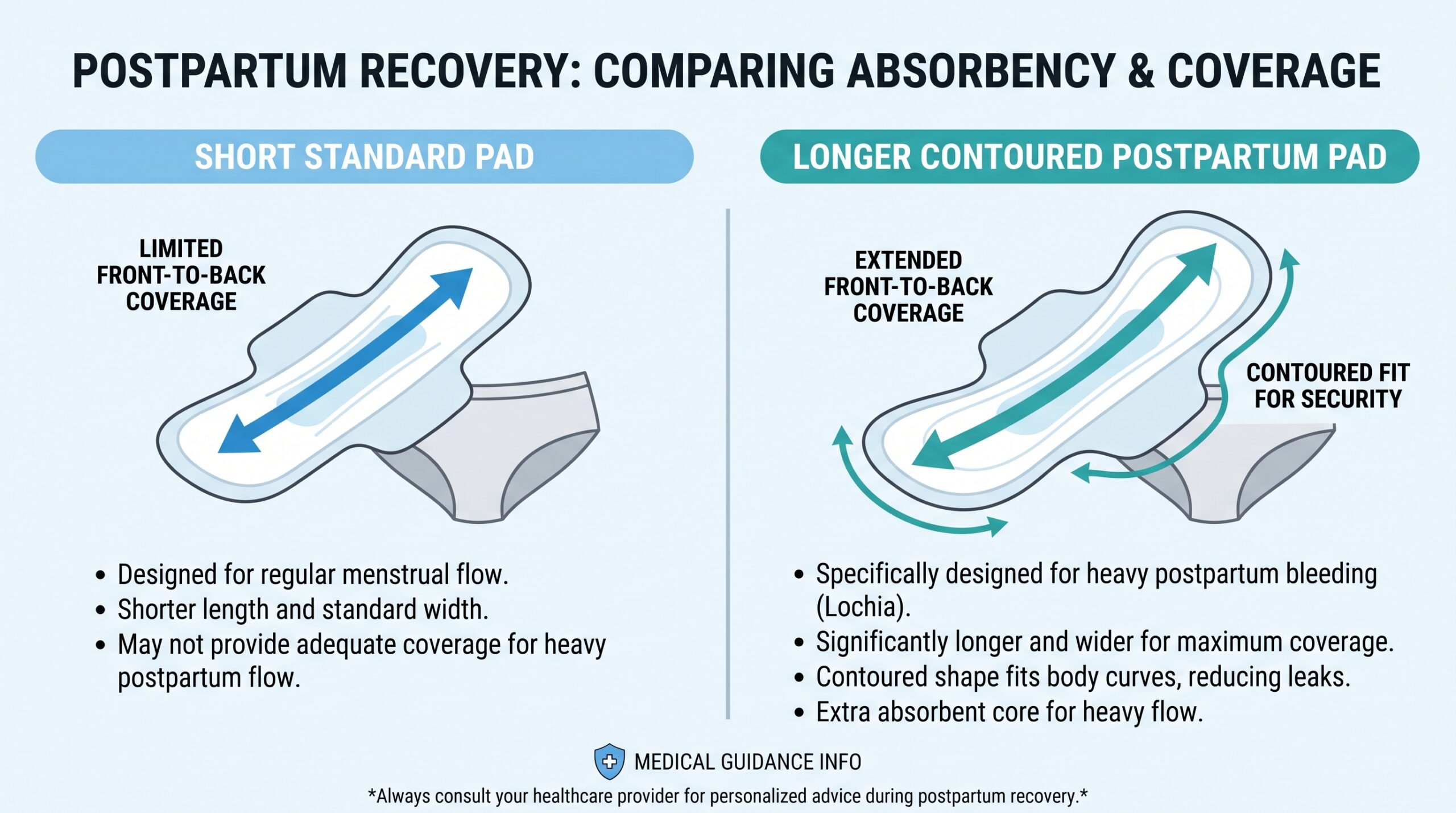
Length, shape, and positioning can be as important as absorbency for controlling postpartum leaks.
3. A Shape That Follows the Body
A flat absorbent rectangle may shift, bunch, or leave gaps as the wearer moves. Contoured pads are designed to follow the body’s natural curves more closely.
Better anatomical fit can help keep the absorbent area where it is needed and reduce the possibility of fluid escaping around the sides. It can also make a larger-capacity pad feel less cumbersome.
For example, Maxim leak-proof incontinence and maternity pads are contour-shaped and designed for maternity and incontinence protection. They also use an organic cotton topsheet and are described as unscented and fragrance-free.
These are useful examples of the types of specifications to compare rather than reasons to select a pad based on brand alone.
4. Look for Effective Fluid Distribution
Absorbency is not simply a question of how much liquid a material can hold. Where the liquid goes after reaching the pad matters, too.
Well-designed pads use layers, channels, or similar structures to move moisture away from the initial contact point and distribute it through the absorbent core. This can help reduce localized saturation—the situation where one section becomes overwhelmed while other sections remain relatively dry.
When comparing maternity pads, look beyond claims such as “super absorbent.” Examine whether the design includes features intended to guide and distribute fluid throughout the pad.
5. Choose Soft, Skin-Friendly Contact Materials
Postpartum skin can already be tender because of swelling, stitches, tearing, hormonal changes, or prolonged exposure to moisture. The material touching the skin therefore deserves particular attention.
A soft topsheet may reduce friction, while breathable construction can help create a more comfortable environment during extended wear. People sensitive to certain materials may also prefer products with cotton-based contact surfaces.
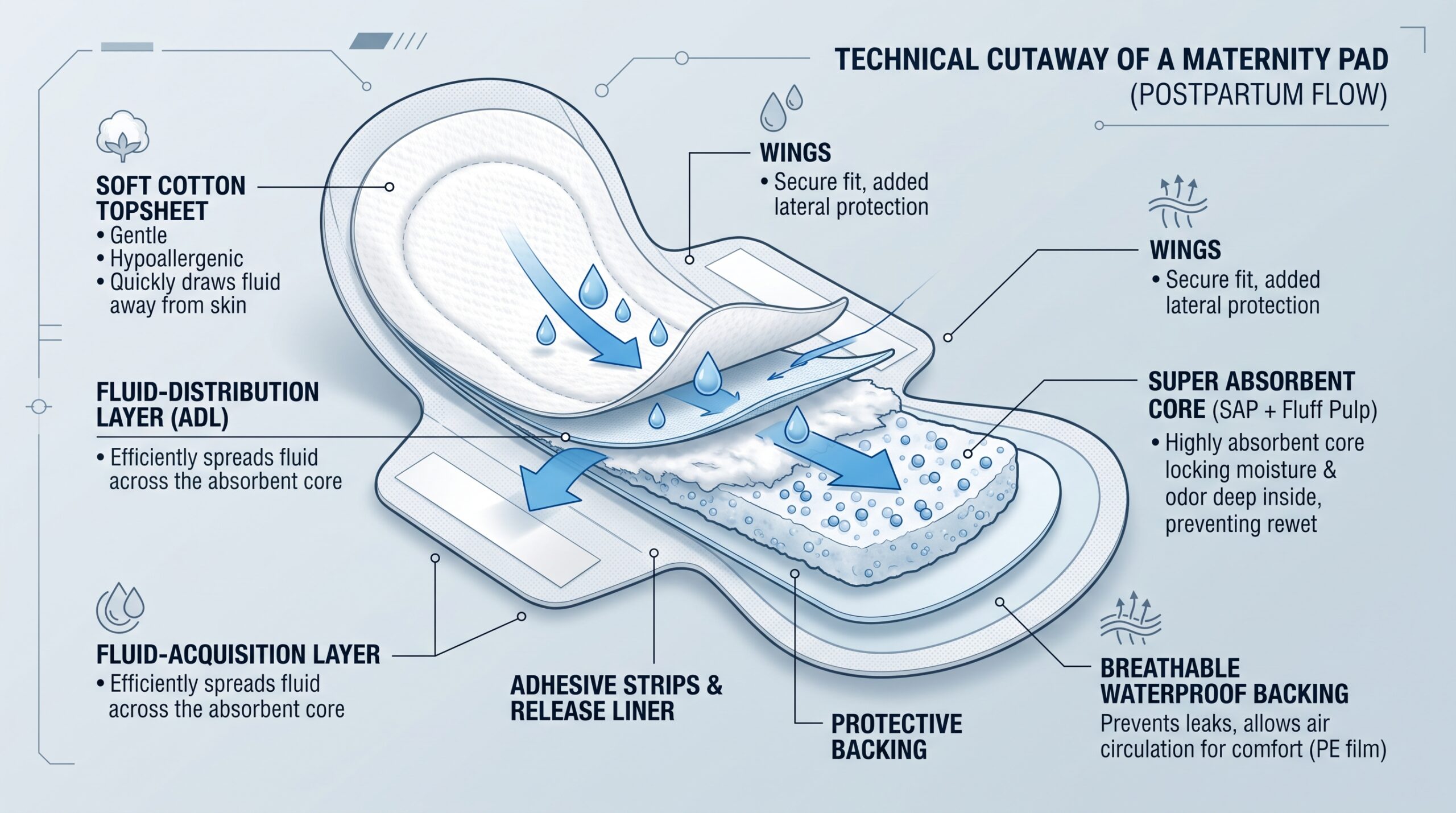
Each layer of a maternity pad performs a different role in comfort, moisture movement, and leak protection.
6. Fragrance-Free Design
Fragrance does not increase a pad’s ability to absorb postpartum discharge or urine. For people who are sensitive to scented personal-care products, avoiding added fragrance may make the product more comfortable to use.
Check product descriptions carefully rather than assuming terms such as “fresh” or “odor control” mean the same thing as fragrance-free.
This is particularly useful during postpartum recovery, when a pad may remain in close contact with sensitive intimate skin for much of the day.
7. Secure, Convenient Everyday Use
Finally, consider how the pad fits into real postpartum life.
A useful product should remain reasonably secure during movement, be easy to change, and fit the underwear you plan to wear during recovery. Individual wrapping can also be helpful when storing spare pads in a diaper bag, hospital bag, bathroom cabinet, or purse.
Think about your routine as well as the product specification. You may prefer higher-capacity protection overnight and a lighter option later in recovery. Having more than one absorbency level available can make transitioning easier.
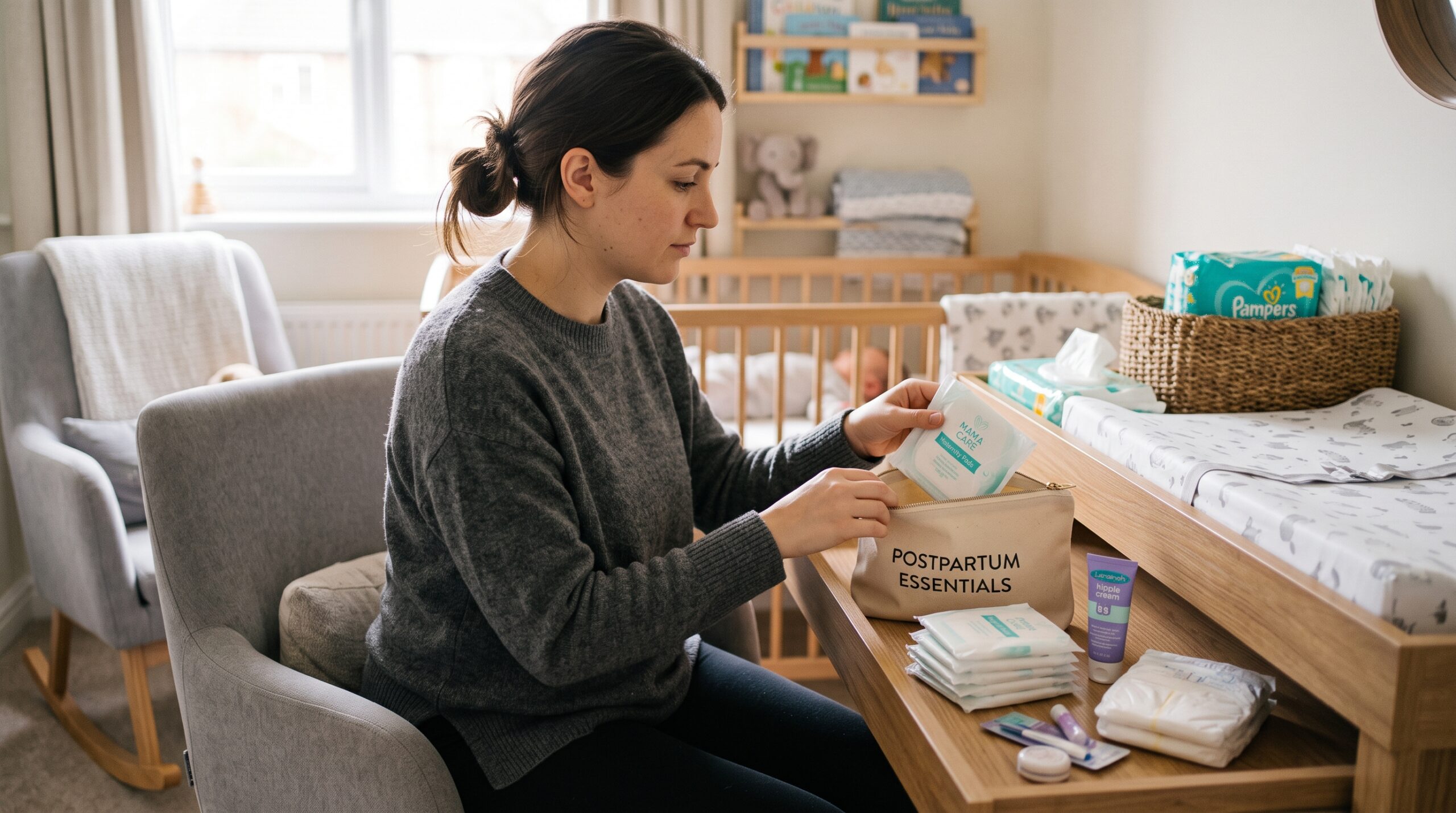
Practical features such as portability and easy pad changes matter during everyday postpartum recovery.
Remember: Pads Manage Fluid—They Do Not Treat the Cause
Pads can help manage normal postpartum discharge and urinary leakage, but they should not be used to hide symptoms that need medical assessment.
The American College of Obstetricians and Gynecologists explains that normal postpartum bleeding and discharge is called lochia and generally becomes lighter over time. ACOG identifies bleeding heavy enough to soak through two pads an hour for more than one to two hours as a warning sign requiring medical attention. See ACOG’s guidance on conditions to watch for after childbirth for additional postpartum warning signs.
Persistent urinary leakage also deserves attention rather than simply being accepted as an unavoidable consequence of childbirth. Pelvic-floor muscle training may help some people with leakage related to weakened pelvic-floor muscles; the NIDDK guide to pelvic-floor and Kegel exercises explains the approach and recommends consulting a healthcare professional when appropriate.
Choosing the Best Postpartum Pads for Your Recovery
The best postpartum pads are not necessarily the thickest or most heavily promoted options. If you’re comparing absorbency levels more generally, our guide to choosing light, regular, or super pad absorbency explains how flow and coverage influence product choice.
Treat those seven features as a checklist rather than focusing on a single claim. The result is a more informed choice—and postpartum protection better suited to the changing realities of recovery.