Sustainable period care is often discussed through big lifestyle changes: switching to reusables, rethinking packaging, or replacing single-use products altogether. But for many people, the most realistic improvements are smaller and more practical. A lower-waste menstrual routine does not have to mean abandoning familiar products. It can begin with understanding where waste comes from, how product design affects disposal, and why non-applicator tampons can play a useful role in reducing unnecessary plastic.
The core principle is simple: the most effective waste is the waste that is never created. The U.S. Environmental Protection Agency explains that source reduction—preventing waste before it exists—is one of the most effective ways to conserve resources and reduce environmental impact. In menstrual care, that idea applies directly to product format: fewer components usually mean fewer materials to manufacture, package, transport, and discard.
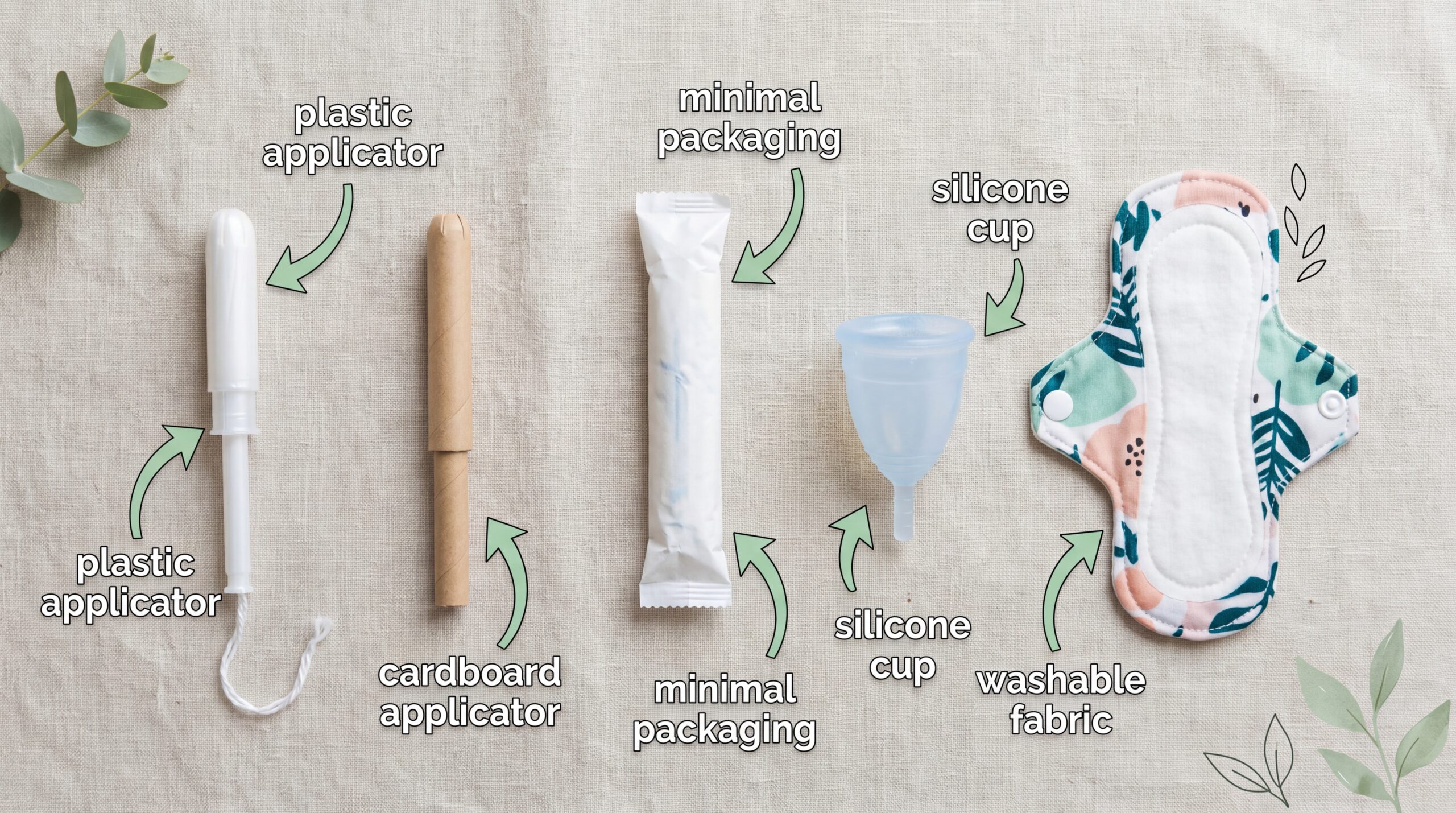
Product format is one of the most important factors in reducing period-care waste.
Where Period-Care Waste Comes From
Single-use menstrual products generate waste in several layers. There is the product itself, the wrapper, any secondary packaging, and—in many tampon designs—the applicator. Plastic applicators are convenient for many users, but they add a separate disposable component that does not contribute to absorbency. For people who are comfortable inserting tampons without an applicator, eliminating that extra part can reduce plastic use while preserving the familiar function of a tampon.
This is where non-applicator tampons become relevant. They are not the only lower-waste option, and they are not the right fit for everyone, but they represent an accessible step for people who prefer tampons and want to reduce disposable plastic. Instead of changing the entire menstrual routine, the user changes one design feature: the applicator.
Why Source Reduction Matters More Than “Perfect” Sustainability
Sustainable product choices are sometimes framed as all-or-nothing decisions. In practice, lower-impact habits often work better when they match real bodies, schedules, health needs, and comfort levels. A person who dislikes reusable products may still make a meaningful reduction by choosing products with fewer disposable parts. A traveler may prefer tampons over bulkier period products but still want to avoid carrying and discarding plastic applicators. A student, shift worker, or athlete may need a compact option that fits easily into a pocket or bag.
The EPA’s waste management hierarchy places source reduction at the top because preventing waste is environmentally preferable to managing it after disposal. That principle helps explain why design simplification matters. A non-applicator tampon avoids creating one category of waste in the first place, rather than relying on recycling systems that may not accept small, contaminated, or mixed-material personal-care waste.
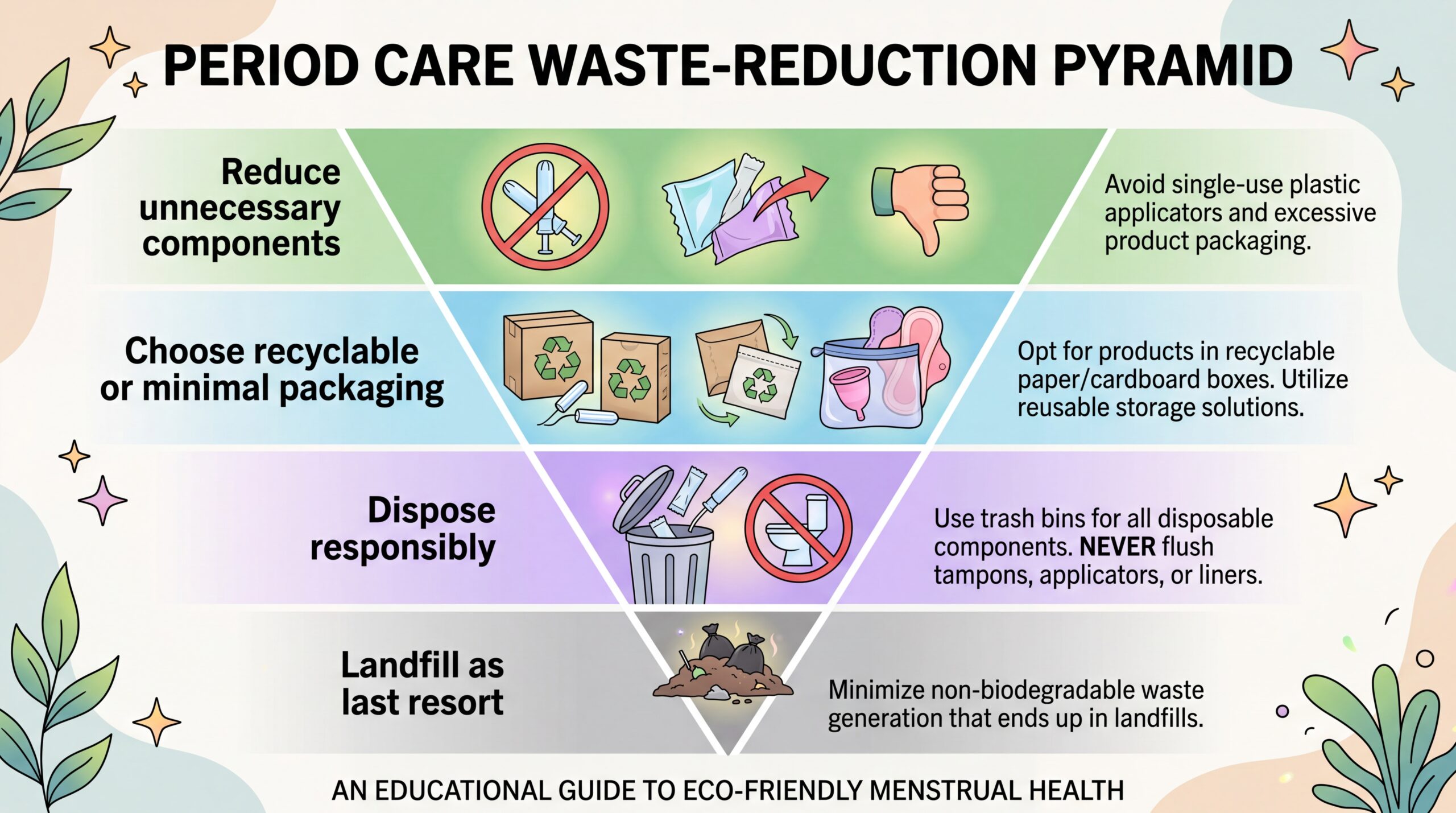
Lower-waste period care starts with reducing unnecessary disposable components.
The Practical Role of Non-Applicator Tampons
Non-applicator tampons are compact, discreet, and generally require less material than applicator-based versions. The main tradeoff is technique. Some users find them intuitive; others prefer an applicator for comfort, mobility, or accessibility reasons. Neither preference is wrong. The best product is one that the user can insert comfortably, change regularly, and use safely.
For those who already prefer or are willing to learn non-applicator use, products like Maxim Organic Cotton Non-Applicator Tampons offer a practical example of lower-waste design paired with simpler material choices. The product uses certified organic cotton, includes an organic cotton withdrawal cord, is chlorine-free, and is made without added fragrances, dyes, rayon, viscose, or pesticides. In a sustainability context, the key point is not that one product solves the waste problem, but that material selection and format design both matter.
Safety Still Comes First
Waste reduction should never come at the expense of menstrual health. Tampons are regulated medical devices in the United States, and safe use depends on absorbency selection, hygiene, and changing frequency. The U.S. Food and Drug Administration advises users to choose the lowest absorbency needed and notes that if a tampon can be worn up to eight hours without needing replacement, the absorbency may be too high.
That guidance is important for eco-conscious consumers because “using fewer products” should not mean wearing a tampon longer than recommended. Lower-waste period care is about smarter design and better matching—not stretching use beyond safe limits. A person can reduce unnecessary plastic by choosing a non-applicator format while still changing tampons appropriately and alternating with pads, period underwear, or other products when needed.
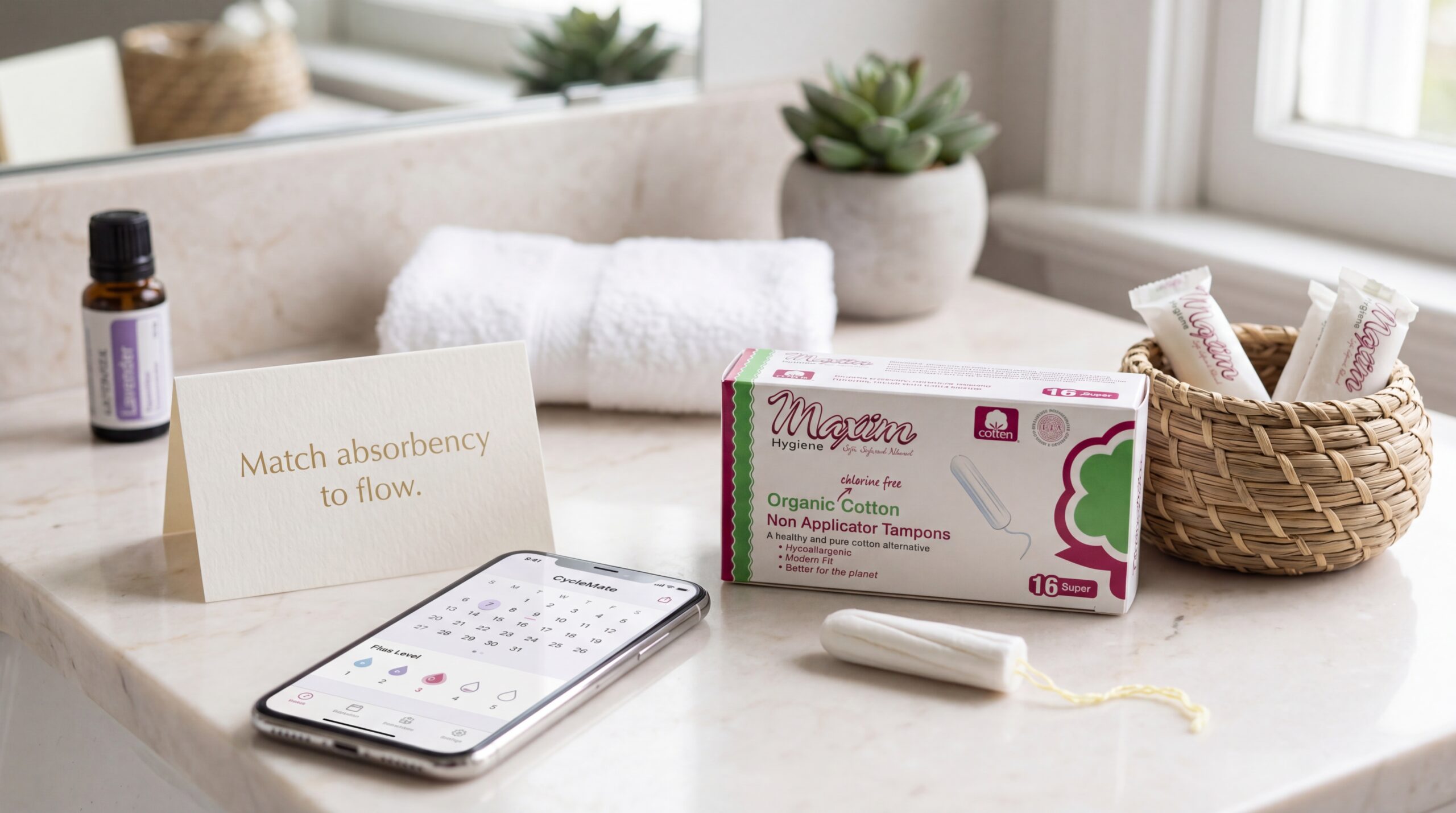
A safer lower-waste routine still depends on matching absorbency to actual flow.
Material Transparency and Consumer Confidence
Many consumers are also looking beyond waste and asking what their period products are made from. This is especially relevant for products used on or inside the body. Research interest in menstrual product ingredients has grown, including studies examining the presence of chemicals such as phthalates, phenols, and parabens in some menstrual and intimate-care products. A 2024 systematic review published in BJOG reported measurable levels of various endocrine-disrupting chemicals across menstrual product categories, while also emphasizing the need for better exposure and health-risk data.
This does not mean every product is unsafe, nor does it mean consumers should panic. It does mean ingredient transparency is valuable. Choosing fragrance-free, dye-free, chlorine-free, and cotton-based options can be part of a precautionary approach for people who want fewer unnecessary additives in personal-care products. Organizations such as the National Institute of Environmental Health Sciences also identify endocrine-disrupting chemicals as an ongoing public health research area, reinforcing the importance of continued study and clearer product information.
Building a Lower-Waste Routine That Actually Works
A realistic lower-waste menstrual routine may combine several choices. Someone might use non-applicator tampons during the day, pads overnight, and reusable period underwear on lighter-flow days. Another person might reserve tampons for exercise and use a cup at home. The most sustainable routine is usually the one a person can maintain safely and consistently.
When evaluating tampons through a waste-reduction lens, consider three questions. Does the product contain unnecessary disposable components? Are the materials clearly identified? Does the absorbency match the user’s actual flow? Non-applicator tampons answer the first question directly by removing the applicator. Organic cotton and additive-conscious designs address the second. Safe absorbency selection addresses the third.
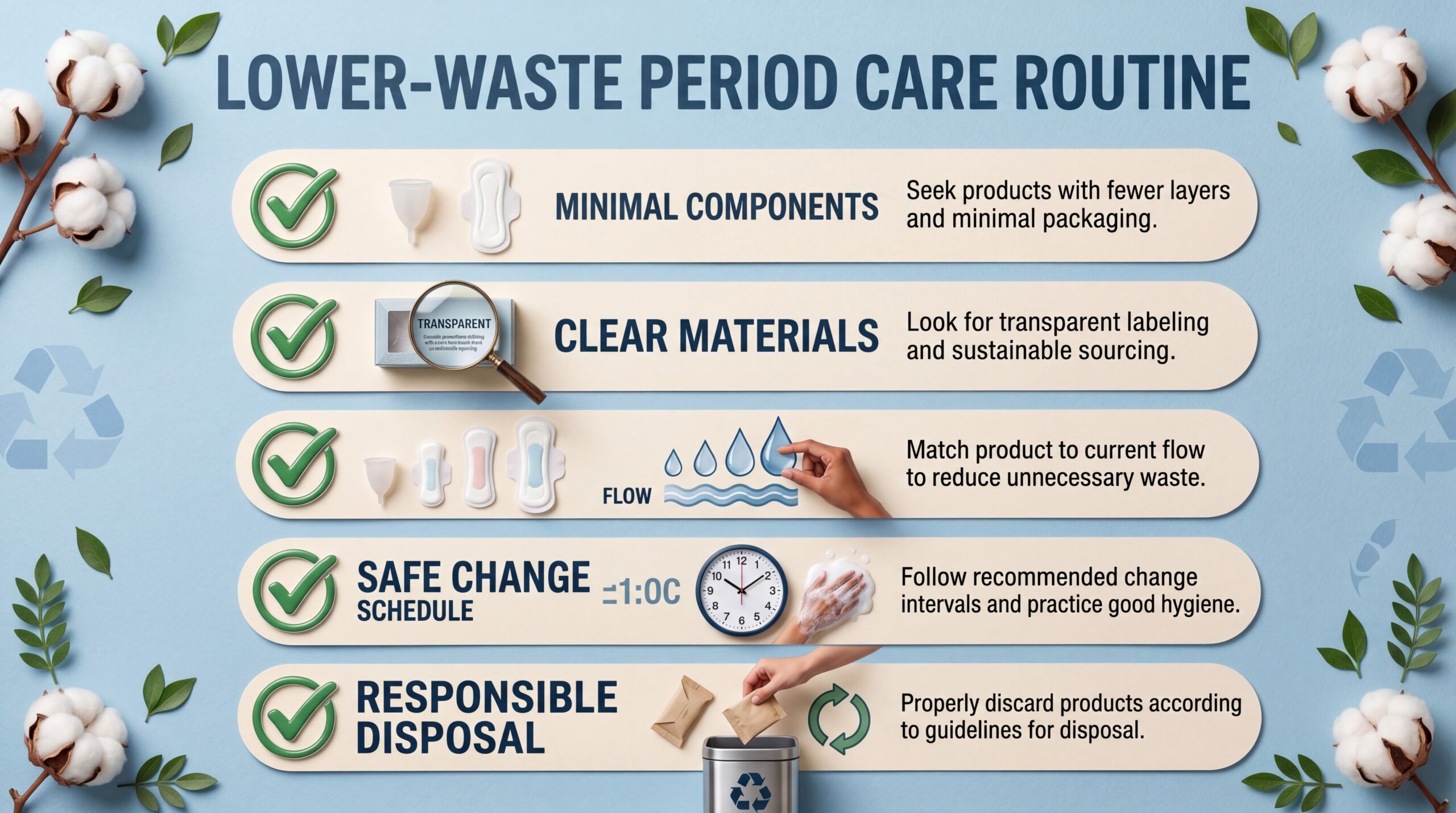
Sustainable period care works best when environmental goals and health practices are considered together.
Conclusion
Non-applicator tampons are not a universal solution, but they are a practical example of source reduction in everyday menstrual care. By removing the applicator, they reduce one disposable component while preserving the familiar function of a tampon. When paired with responsible absorbency selection, safe changing habits, and transparent materials, they can help users build a period routine that is both practical and lower waste.
For consumers who want to reduce plastic without completely changing how they manage their period, non-applicator organic cotton tampons offer a thoughtful middle ground: less material, fewer unnecessary additives, and a design that supports sustainability through simplicity.