
Silver ion technology offers a material-based approach to odor control in feminine care products. Unlike fragrance, which mainly masks unwanted smells, silver-containing materials may help manage conditions associated with odor at the product surface without relying on perfume.Increasingly, manufacturers are exploring material-based approaches—including silver ion technology—to help manage odor at the product surface without relying on perfumes.
Understanding how these materials work can help consumers make more informed decisions about pads and pantyliners, particularly when comfort, discretion, and fragrance-free design are priorities. It is also important to distinguish everyday product odor management from treatment of a medical condition: a hygiene product can help manage moisture or odor within the product, but it is not a substitute for medical evaluation when unusual symptoms appear.
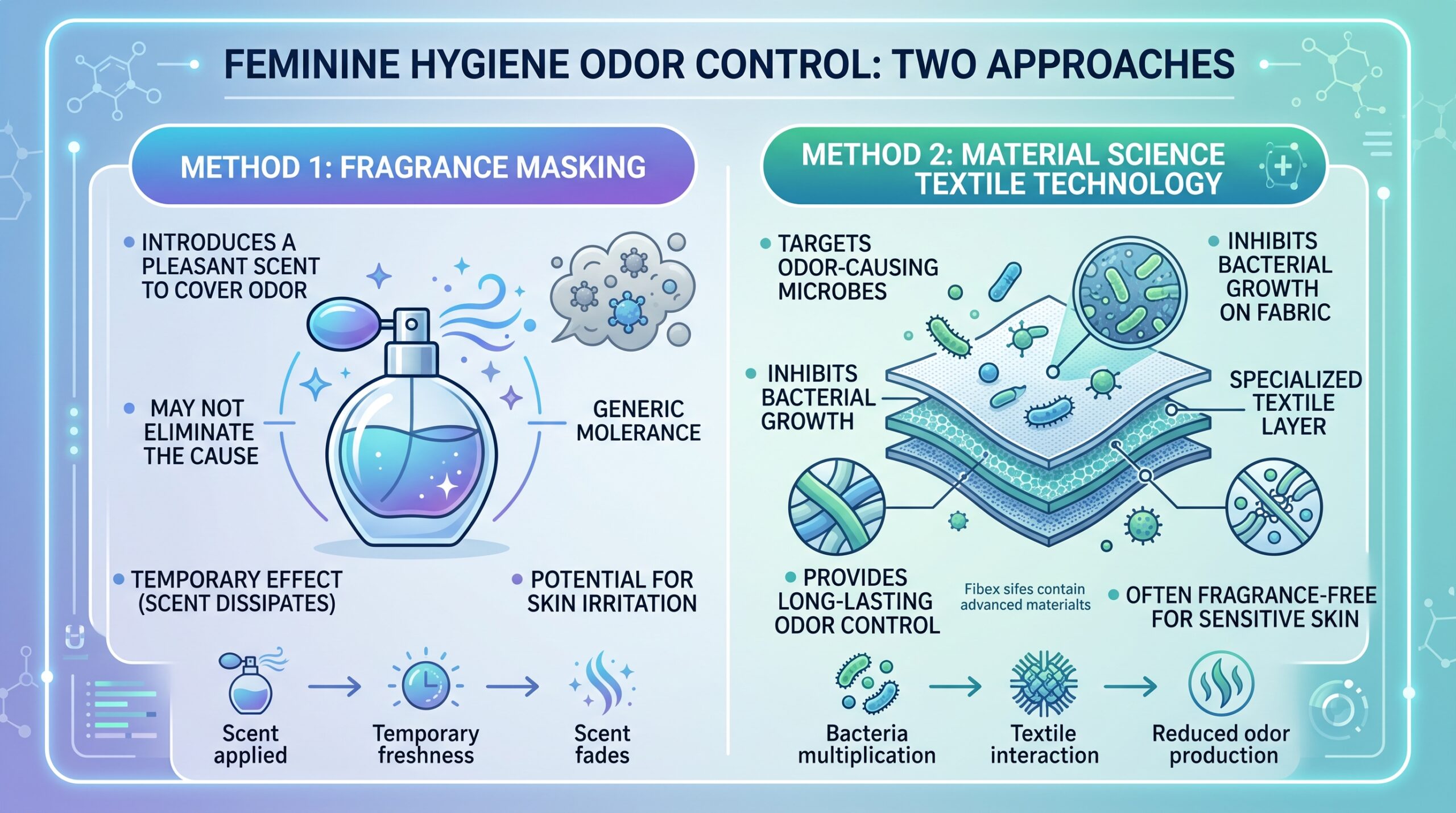
Odor masking and material-based odor control rely on fundamentally different approaches.
Why Odor Can Develop in Pads and Pantyliners
The external intimate area naturally encounters sweat, normal vaginal discharge, small amounts of urine, skin oils, and moisture. When these fluids remain in a warm environment, microorganisms can interact with organic compounds and contribute to noticeable odors.
That does not mean every odor signals a health problem. Normal vaginal secretions can vary throughout the menstrual cycle and may have a mild odor. However, the National Center for Biotechnology Information’s clinical guidance on vaginal discharge notes that normal discharge generally should not have an offensive odor or be accompanied by irritation, itching, or burning.
For everyday hygiene products, the practical goal is therefore not to sterilize the body. Instead, good product design focuses on managing moisture, airflow, absorbency, surface comfort, and conditions within the pad or liner that can contribute to unwanted odor.
What Is Silver Ion Technology?
Silver ions are electrically charged forms of silver, commonly written as Ag+. They have been studied extensively because of their interactions with microorganisms.
Research summarized in a 2024 review available through the National Institutes of Health’s PubMed Central database describes several mechanisms associated with silver-based antimicrobial activity. Depending on the material and formulation, silver can interact with microbial cell membranes, proteins, and other cellular structures, interfering with normal microbial processes.
This science has led to the use of silver-containing materials in applications ranging from textiles and coatings to certain medical and industrial products.
However, the effectiveness of silver technology depends heavily on how it is incorporated. Concentration, material structure, moisture conditions, contact time, and the form of silver used can all influence performance. The words “silver ion” on a package should therefore not be interpreted as a universal guarantee of a particular antimicrobial or health outcome.
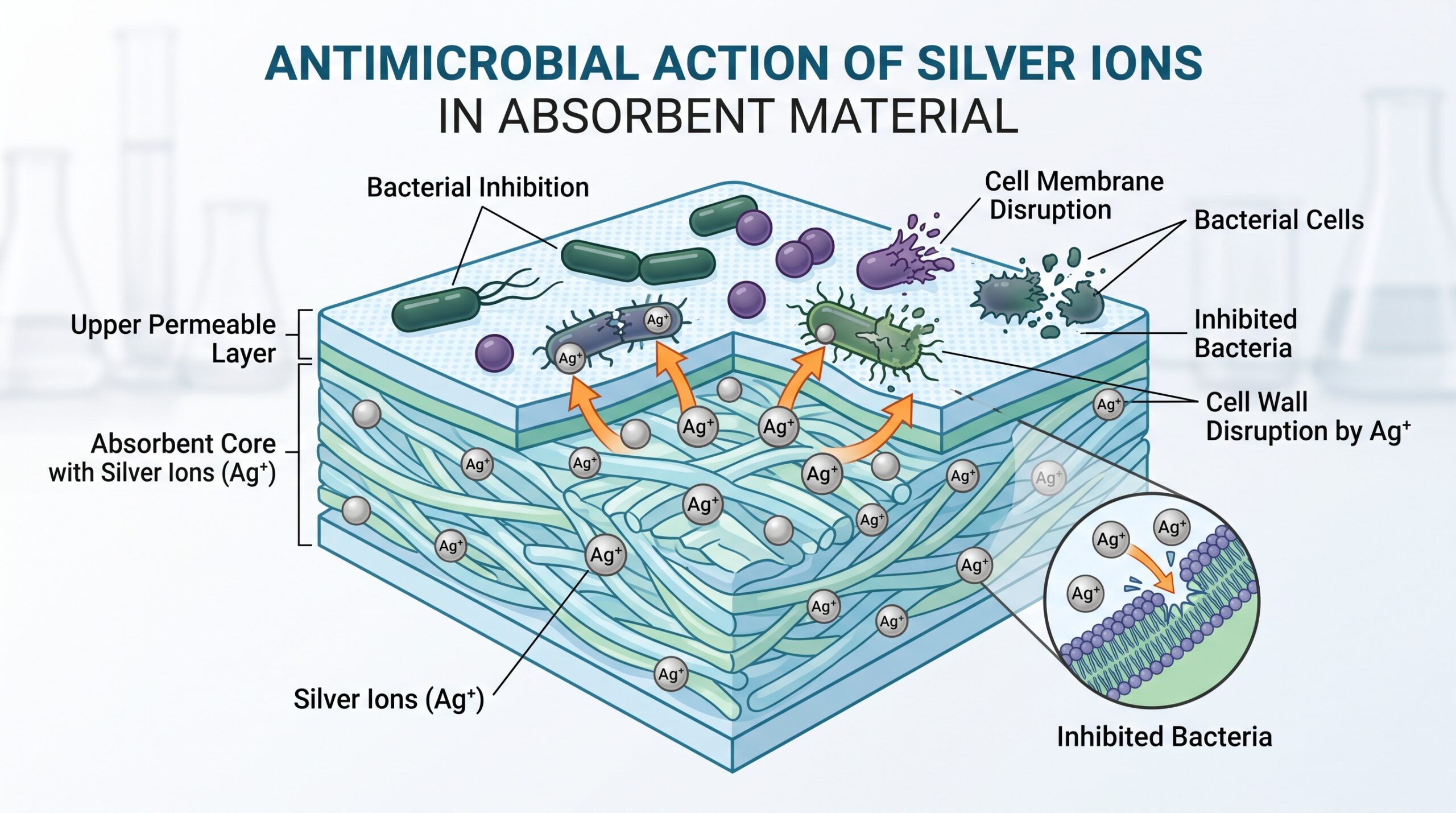
Silver ions can be incorporated into functional materials designed to influence microbial activity at the product surface.
Silver Ion Odor Control Is Not the Same as Fragrance
A fragranced pad or liner typically addresses odor by adding another scent. The original odor-producing compounds may still be present; the fragrance simply changes what the user perceives.
Material-based odor-control technologies take a different approach. When silver is incorporated into a product for antimicrobial material protection, its role may be to reduce the growth of microorganisms that contribute to odor within or on the treated material.
This distinction is important from both a scientific and regulatory perspective. The U.S. Environmental Protection Agency explains in its guidance on antimicrobial treated articles that claims about protecting a treated product itself are different from public-health claims about protecting the person using it.
In practical terms, a liner designed with odor-control material should not automatically be interpreted as preventing vaginal infections or treating a health condition. Those are much broader medical claims.
Why Fragrance-Free Design Can Matter
Some consumers simply prefer fragrance-free intimate care because they do not want added scent competing with perfumes, deodorants, or other personal-care products. Others find highly fragranced products uncomfortable.
A fragrance-free approach also makes the function of odor-control materials conceptually clearer: instead of covering odor with perfume, the product can focus on absorbency, breathability, moisture management, and material technology.
For example, MaxION Silver Ion & Tourmaline Ultra Thin Pads and Liners combine an ultra-thin feminine care format with silver-ion and tourmaline-based material technology. In an educational context, products like these illustrate how manufacturers can incorporate functional materials into everyday pads and liners while maintaining a discreet, portable design.
The important point is not that a single ingredient determines overall product performance. Comfort also depends on fit, topsheet material, absorbency, airflow, thickness, adhesive performance, and how frequently the product is changed.
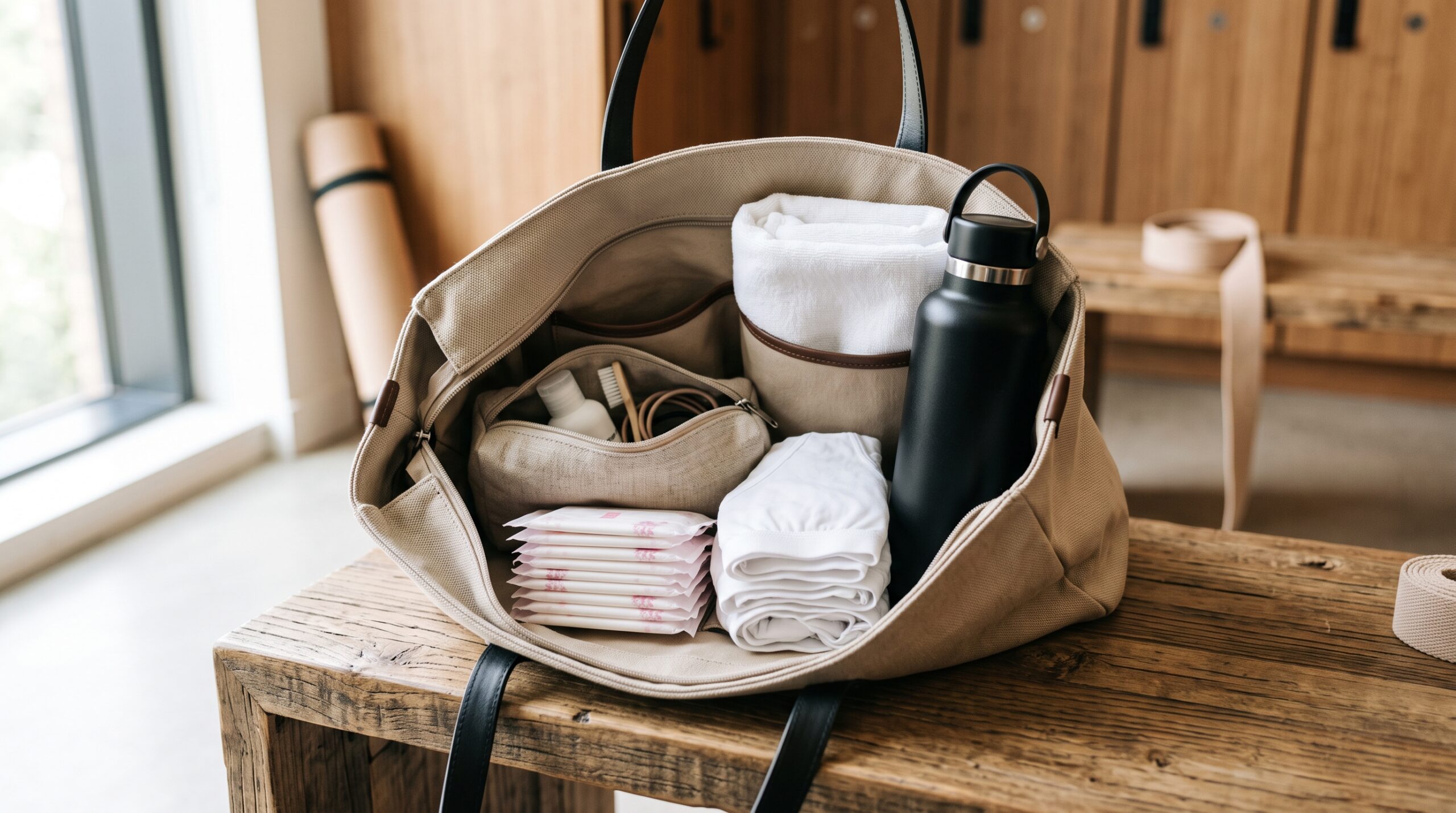
Individually wrapped liners make everyday freshness products easier to keep available at work, the gym, or while traveling.
What Silver Ion Technology Cannot Do
Consumers should be cautious about assuming that stronger antimicrobial language automatically means a better feminine hygiene product.
The vaginal microbiome contains beneficial microorganisms that contribute to a healthy environment. Everyday external hygiene is therefore different from attempting to eliminate bacteria indiscriminately.
Persistent or unusually strong odor may also have causes that a pantyliner cannot address. For example, an updated NCBI overview of bacterial vaginosis explains that disruption of the vaginal bacterial balance can produce characteristic strong-smelling discharge and may require medical treatment.
If odor is new, persistent, distinctly fishy, or accompanied by itching, burning, pain, unusual discharge, or irritation, changing pads or liners should not be treated as the sole solution. A healthcare professional can help determine whether an underlying condition is responsible.
Choosing an Odor-Control Pad or Liner
When comparing products, look beyond a single technology claim. Consider whether the product provides the absorbency appropriate for your needs, feels breathable against the skin, fits securely, and is comfortable enough for the amount of time you plan to wear it.
For daily liners in particular, thinness and portability can matter because the product may be carried in a purse, work bag, travel kit, or gym bag. Individually wrapped options can also help keep unused liners clean until needed.
Silver ion technology is best understood as one component of modern material engineering—not a replacement for good hygiene, appropriate changing frequency, or healthcare when symptoms are unusual.
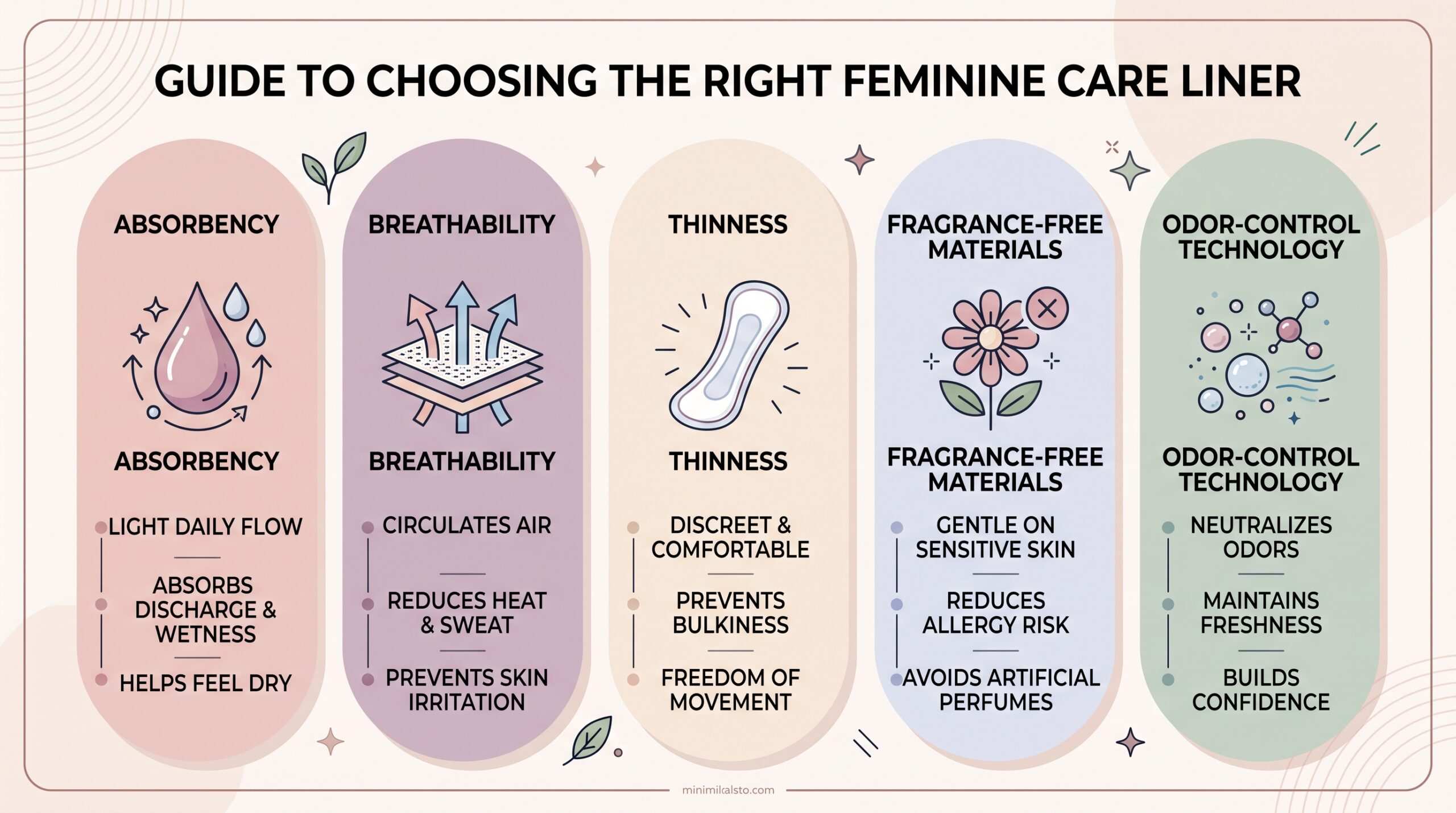
Product performance depends on the complete design, not on one ingredient or technology alone.
Silver Ion Technology in Feminine Care: The Bottom Line
Silver ion technology offers an interesting example of how material science is being applied to feminine care. Rather than simply adding fragrance to cover unwanted smells, silver-containing materials may help control microbial activity associated with odor within the product.
That distinction is useful—but so are realistic expectations. Odor-control materials are only one part of pad and liner design, and they should not be confused with treatments for infections or other medical conditions.
For consumers, the most practical approach is to choose feminine care products based on overall comfort, appropriate absorbency, breathability, material preferences, and lifestyle needs. When those fundamentals are combined with thoughtfully applied odor-control technology, the result can be a more discreet and comfortable everyday hygiene experience.