In the grand tapestry of history, there are threads often overlooked, yet they weave narratives that profoundly
impact everyday lives. One such narrative belongs to Mary Beatrice Davidson Kenner, an inventor whose
ingenuity revolutionized feminine hygiene. While her name may not be as widely recognized as some, her
contribution to women’s health and comfort is immeasurable.
Born in May 1912 in Monroe, North Carolina, Mary Beatrice Davidson Kenner grew up in a time when societal
norms often stifled the ambitions of women, especially women of color. Despite facing racial and gender
discrimination, Mary’s inventive spirit remained undeterred.
Mary Kenner’s journey towards innovation began at an early age, nurtured by a family that valued creativity
and resilience. Encouraged by her father, an inventor himself, Mary learned the value of perseverance and the
power of imagination. These lessons would shape her future endeavors.
In the 1920s and 1930s, menstruation was often a taboo topic, discussed in hushed tones if at all. Women
relied on makeshift solutions like rags or homemade pads, often uncomfortable and unhygienic. Mary
recognized this pressing need for improvement and set out to devise a better solution.
Her first invention, patented in 1956, was a sanitary belt with a moisture-proof napkin pocket. This innovation
aimed to provide women with a more secure and comfortable option during menstruation. However, despite its
practicality, Mary faced barriers in marketing her invention. The prevailing stigma surrounding menstruation
hindered its widespread acceptance.
Undeterred by setbacks, Mary continued to refine her ideas. In 1959, she submitted another patent application,
this time for an improved version of the sanitary pad. Her design featured an adjustable belt and an innovative
moisture-resistant lining. This invention represented a significant leap forward in menstrual hygiene, offering
women a more reliable and discreet solution.
Despite the groundbreaking nature of her inventions, Mary faced numerous challenges in bringing them to
market. Discrimination, lack of access to resources, and societal taboos surrounding menstruation all posed
formidable obstacles. Yet, Mary’s determination remained unyielding.
While Mary Kenner’s inventions did not achieve the commercial success they deserved during her lifetime,
their impact would be felt in the years to come. Her pioneering work laid the foundation for the modern sanitary
pad industry, influencing subsequent innovations in feminine hygiene products.
Mary Beatrice Davidson Kenner’s legacy extends far beyond the realm of invention. Her story serves as a
testament to the resilience of the human spirit and the power of perseverance in the face of adversity. By
challenging societal norms and advocating for women’s health and dignity, Mary paved the way for future
generations of inventors and activists.
Today, as we reflect on Mary Kenner’s remarkable contributions, let us honor her memory by continuing to
champion equality, inclusivity, and innovation. In celebrating her legacy, we recognize the importance of
uplifting voices that have been marginalized or overlooked, ensuring that their stories are not lost to history.
Mary Beatrice Davidson Kenner may have been a quiet trailblazer, but her impact reverberates loudly in the
ongoing pursuit of progress and equality. As we navigate the complexities of the modern world, let us draw
inspiration from her resilience, her ingenuity, and her unwavering belief in the power of invention to shape a
better future for all.
Who was the black woman who invented menstrual pads?
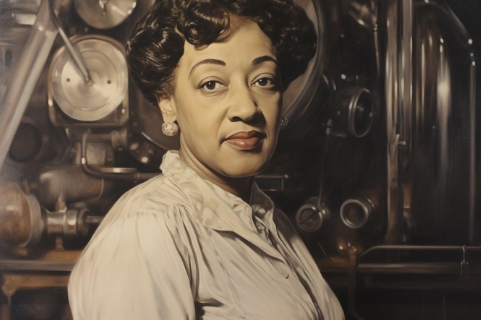
Mary Beatrice Davidson Kenner
Mary Beatrice Davidson Kenner was an African American inventor who made significant contributions to women’s
health and hygiene. Born in 1912 in North Carolina, Kenner faced racial and gender discrimination throughout her life.
Despite these challenges, she invented several innovative products.
One of her most notable inventions was the sanitary belt, which she patented in 1956. The sanitary belt was a precursor
to the modern maxi pad, providing a more comfortable and convenient alternative to the menstrual pads of the time.
Kenner’s invention revolutionized menstrual hygiene for women, but due to racial discrimination, she struggled to find a
company willing to manufacture her product.
Kenner was a prolific inventor, holding five patents in total. Her other inventions included an improved bathroom tissue
holder and a carrier attachment for walkers. Throughout her life, she advocated for women’s rights and encouraged
young people, especially women and minorities, to pursue careers in STEM fields. Mary Beatrice Davidson Kenner’s
contributions to women’s health and her perseverance in the face of adversity have left a lasting impact on society
Mary Beatrice Davidson Kenner was an African-American inventor who created several life-changing devices. Learn
about her groundbreaking inventions and legacy.
Mary Beatrice Davidson Kenner (May 17, 1912 – January 13, 2006) was an American inventor most noted for her development of the adjustable sanitary belt.
During her life, Mary Kenner filed a total of five patents to the US government, more than any other African American
woman in history. She never became rich from her inventions or received any awards or formal recognition, like many
black women whose extraordinary talents are so often overlooked.