Menstrual care is often discussed in terms of absorbency: light, regular, medium, heavy, overnight, or backup protection. But absorbency is only one part of the comfort equation. The materials that touch the skin can influence breathability, moisture control, odor management, friction, and irritation risk—especially for people with sensitive skin or recurring vulvar discomfort.
The vulvar area is delicate, warm, and naturally exposed to moisture during menstruation. That means fabric choice in menstrual care is not simply a preference; it is a practical health and comfort consideration. A product may be highly absorbent, but if it traps heat, contains unnecessary fragrance, or causes rubbing, it can become uncomfortable during daily wear.
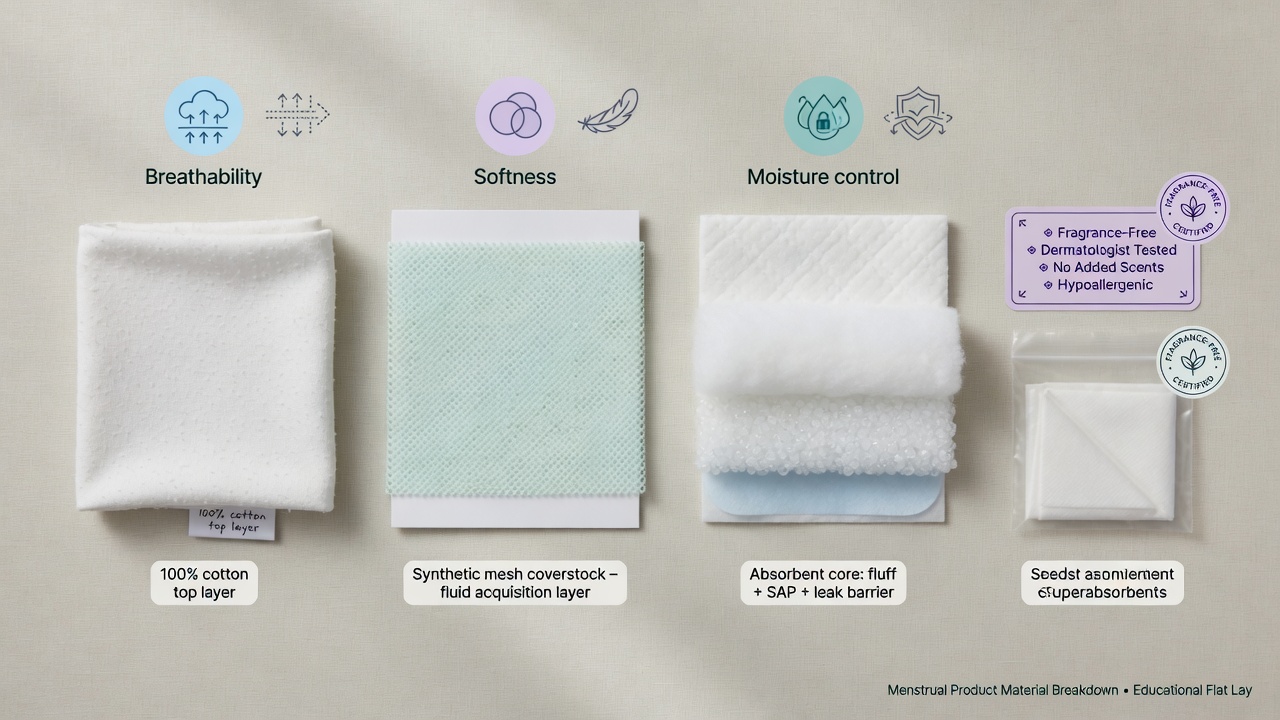
Fabric choice affects how menstrual products feel, breathe, and perform against sensitive skin.
The Skin-Contact Layer Matters Most
In pads, liners, and period underwear, the skin-contact layer is the material that sits directly against the vulva. This layer should feel soft, reduce friction, and allow moisture to move away from the skin. When the top layer is rough, heavily processed, scented, or poorly breathable, the wearer may notice itching, warmth, chafing, or general discomfort.
The American College of Obstetricians and Gynecologists advises avoiding perfumed products, deodorants, and other irritants around the vulva, and recommends fragrance-free cleansing practices for vulvovaginal comfort. This is important because many people assume irritation is always caused by infection, when in some cases it may be worsened by contact with fragranced or irritating products. ACOG also advises cotton underwear and avoiding deodorant-containing pads or tampons for certain vulvar concerns.
For menstrual underwear, this makes the inner fabric especially important. Cotton is often chosen because it is familiar, soft, and breathable. While no single fabric is perfect for every person, cotton-based inner layers can be a helpful option for those who want a gentler feel during longer wear.
Cotton, Breathability, and Moisture Balance
Cotton is widely valued in intimate apparel because it allows more air circulation than many tightly constructed synthetic materials. Breathability matters because trapped heat and moisture can create a less comfortable microclimate against the skin. During menstruation, that microclimate can become more noticeable because blood, sweat, and movement are all present at the same time.
This does not mean synthetic materials are automatically bad. Many modern period products use synthetic performance layers to help wick moisture, improve stretch, or strengthen leak protection. The key is thoughtful layering: the fabric touching the skin should support comfort, while hidden absorbent and leak-resistant layers should manage fluid without creating a plastic-like feel.
A good fabric system balances three functions: softness against the skin, absorbency inside the garment, and leak resistance on the outer side. When one of those functions dominates at the expense of the others, comfort can suffer. For example, a product that is very leak-resistant but poorly breathable may feel hot. A product that is very soft but lacks fluid control may feel damp too quickly.
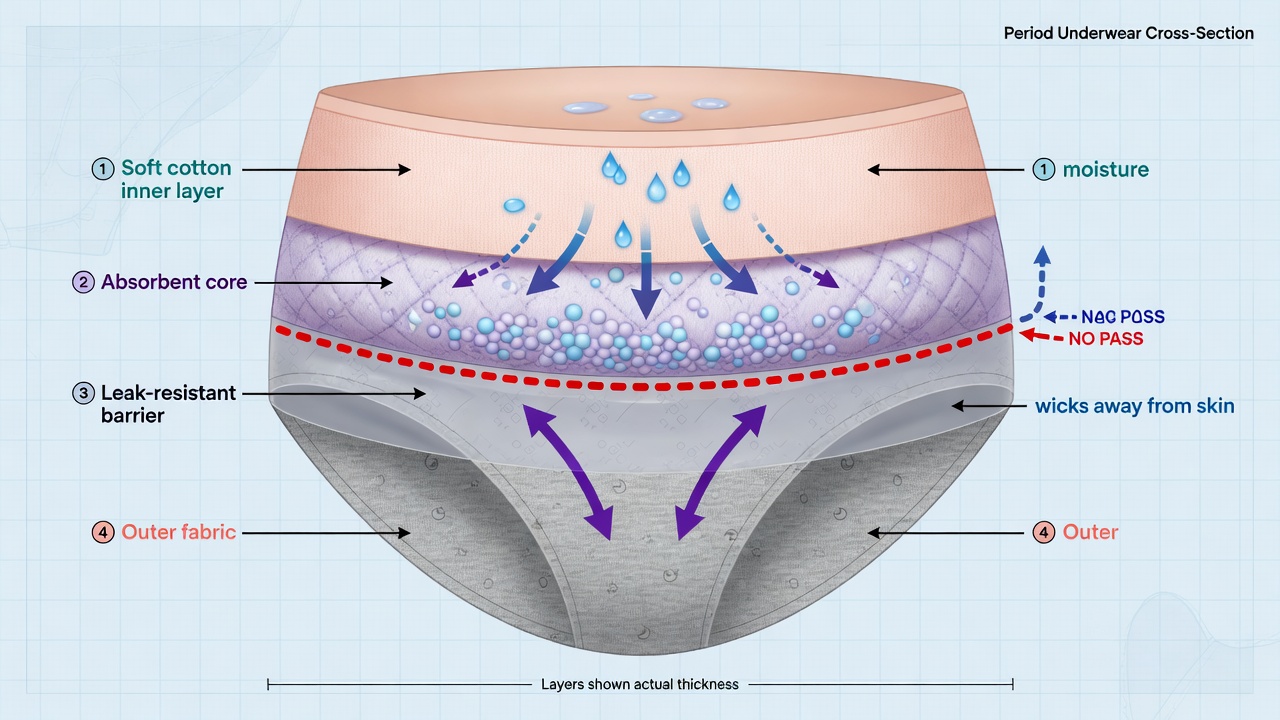
Effective period underwear depends on a balanced layer system, not absorbency alone.
Why Fragrance-Free Design Is Important
Fragrance can make a product seem fresher before use, but it is not necessary for menstrual protection. In fact, fragrance is one of the most common categories of ingredients people try to avoid when they experience vulvar sensitivity. Scented menstrual products may also mask odor rather than address the conditions that cause it, such as prolonged moisture exposure or infrequent changing.
The U.S. Food and Drug Administration regulates tampons and provides safety guidance on proper use, absorbency, and disposal. While the FDA’s tampon guidance focuses mainly on single-use tampon safety, it also underscores a broader point: menstrual products should be selected and used according to their intended function, absorbency level, and safe-use instructions.
For people choosing reusable menstrual underwear, fragrance-free design is a practical advantage. It reduces unnecessary exposure to scent additives and keeps the focus on material performance: absorbency, comfort, washability, and fit.
Sensitive Skin: Common Irritation Triggers to Watch
Sensitive skin reactions can be complex. Menstrual discomfort may come from hormones, moisture, friction, soaps, laundry detergent, pads, tampons, clothing fit, or a combination of factors. That is why it is useful to evaluate menstrual products as part of the full skin environment.
Common triggers include tight clothing, heavily fragranced body washes, scented pads or liners, harsh laundry detergent, plastic-feeling back sheets, and products that keep moisture pressed against the skin for too long. Research on intimate hygiene notes that harsh soaps and irritating products can aggravate vulvar skin and mucous membranes, which supports the value of simple, gentle, purpose-appropriate materials.
This is where menstrual underwear can be useful for some wearers. Instead of relying only on adhesive pads with plastic backings, a well-designed pair of period underwear can offer a softer garment-like feel while still providing absorbency and backup protection.
A Practical Example: Cotton-Lined Period Underwear
The Maxim adjustable waistband period underwear is one example of how fabric selection and fit can work together in menstrual care. The product page describes it as black classic bikini period underwear with organic cotton, medium/heavy absorbency options, and an adjustable waistband designed to fit flexible size ranges. Maxim also positions it for medium-to-heavy flow, nighttime protection, and backup wear.
From an educational standpoint, the most relevant takeaway is not simply that the product absorbs fluid. It is that it combines several comfort-oriented features: a cotton-based intimate layer, fragrance-free positioning, reusable wear, and an adjustable waistband that can reduce fit-related pressure. For people who experience bloating or body-size fluctuation during their cycle, adjustability may help the garment stay secure without feeling restrictive.
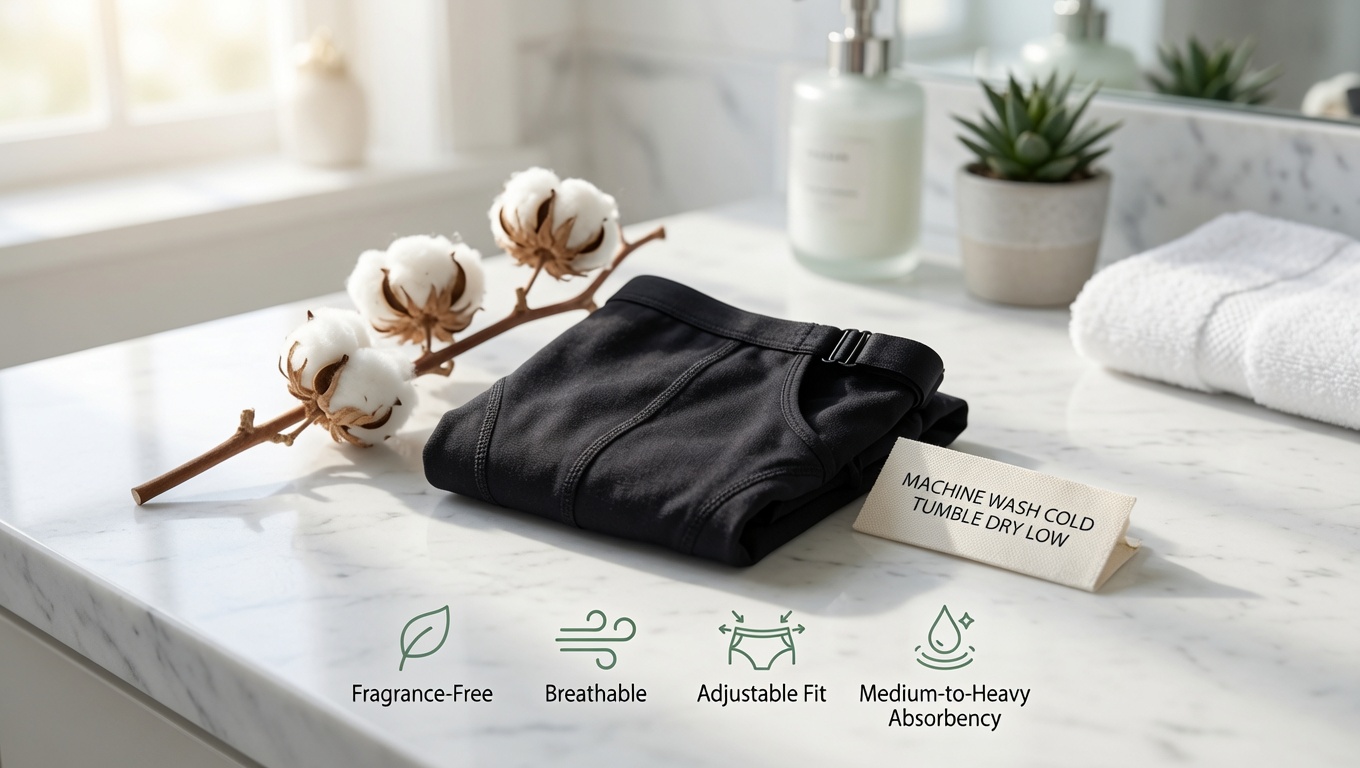
Cotton-lined, fragrance-free period underwear can support comfort for daily and overnight menstrual protection.
Fabric Choice Should Match Use Case
Different menstrual days call for different product strategies. A light-flow day may require only minimal protection. A heavier day may require higher absorbency or backup protection with a tampon, cup, or disc. Overnight wear may call for more coverage and a secure fit. The best material choice depends on how long the product will be worn, how much fluid it must manage, and how sensitive the wearer is to heat, friction, or fragrance.
For reusable underwear, care habits also matter. Washing according to product instructions helps maintain absorbency and reduce buildup from detergent, softener, or residue. People with sensitive skin may prefer fragrance-free laundry detergent and may avoid fabric softeners, which can leave coatings on absorbent textiles.
The goal is not to declare one menstrual product universally superior. Instead, the goal is to understand how materials behave against the body. Cotton can support softness and breathability. Synthetic layers can support wicking, stretch, or leak resistance. Fragrance-free design can reduce unnecessary irritant exposure. Adjustable fit can reduce pressure during cycle-related bloating.
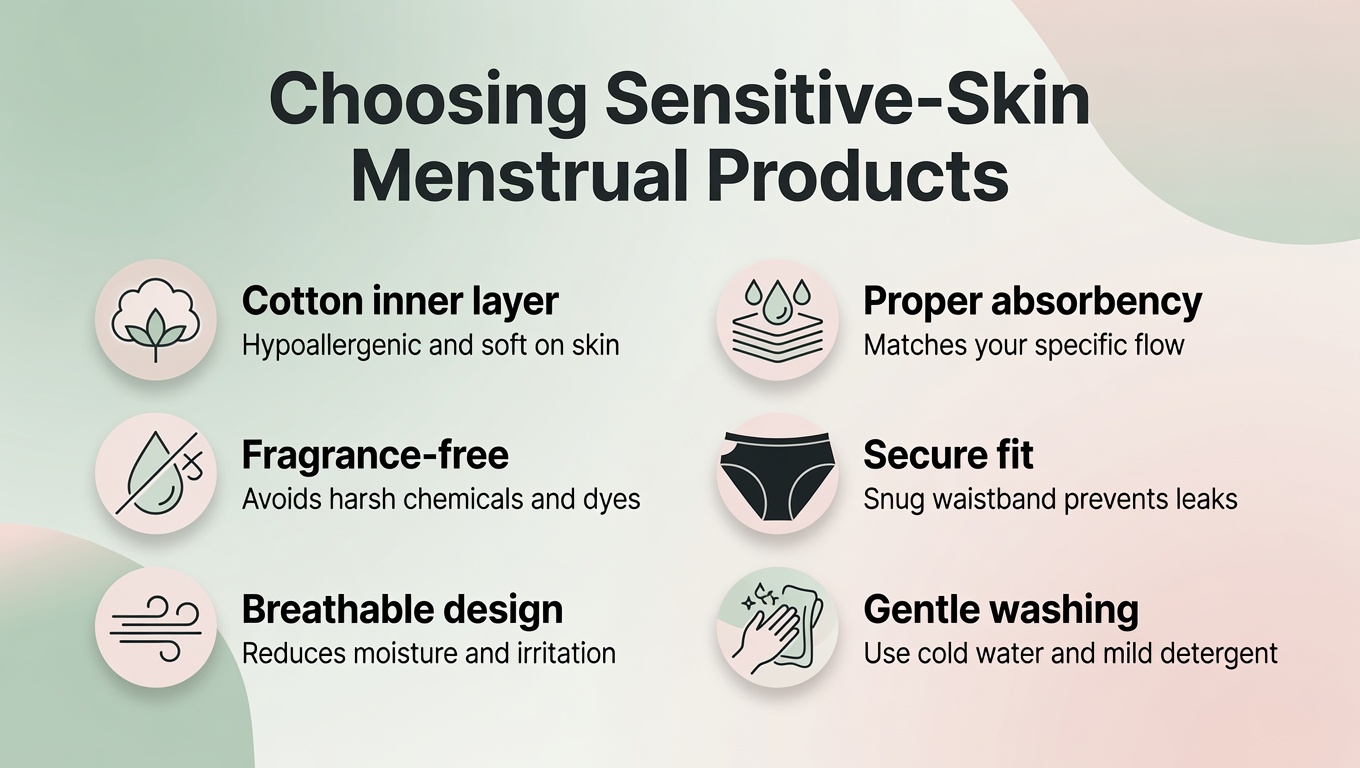
Sensitive-skin menstrual care starts with material awareness and simple product-selection habits.
Final Thoughts
Fabric choice in menstrual care deserves more attention because it directly affects daily comfort. Absorbency matters, but so do softness, breathability, fragrance-free construction, moisture control, and fit. For people with sensitive skin, these details can make the difference between protection that merely works and protection that feels comfortable enough for real life.
Cotton-lined, fragrance-free menstrual products are not just a “natural” preference; they are part of a practical approach to reducing unnecessary irritation. When combined with thoughtful absorbency and a secure but flexible fit, they can help create a more comfortable menstrual care routine—one built around the body’s needs rather than around marketing claims.