Tampon design can affect how easy a product is to handle, insert, and remove. While absorbency often gets most of the attention, features such as applicator shape, finger grips, security veils, and withdrawal cords also influence the overall user experience.
In the United States, tampons are regulated as medical devices by the Food and Drug Administration (FDA). The agency evaluates more than absorbency alone; manufacturers provide information about materials, applicators, tampon integrity, fiber shedding, and string strength. Understanding these design features can help consumers look beyond packaging claims and make more informed choices. The FDA’s tampon safety and use guidance provides additional information about how tampons are regulated and used safely.
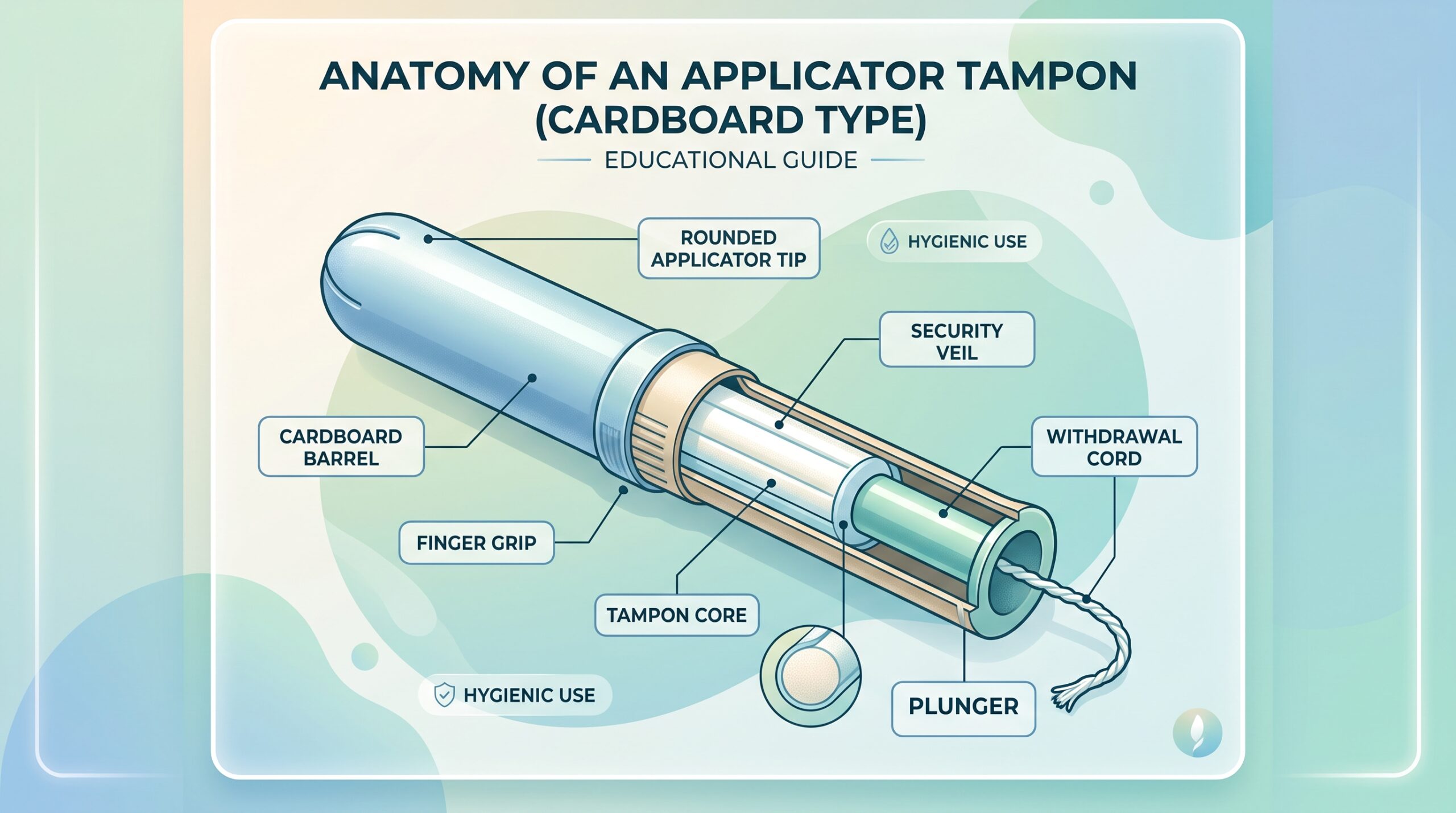
Small design details can influence how a tampon is handled, inserted, and removed.
How Tampon Applicator Shape Affects Insertion
An applicator acts as a delivery system that helps position the absorbent tampon. Its geometry therefore matters.
A rounded applicator tip is designed to create a smoother leading edge during insertion. Meanwhile, the barrel needs enough structural integrity to retain its shape while the tampon is being positioned and released. Applicators may be made from plastic or cardboard, and each material produces a different handling experience.
Cardboard offers an alternative for consumers interested in reducing plastic in disposable period products. Because paper-based materials have different surface and rigidity characteristics than plastic, thoughtful applicator geometry becomes especially important. Rounded tips and carefully formed barrels can help balance material choice with usability.
The FDA’s premarket guidance for menstrual tampons specifically identifies tampon and applicator shape, dimensions, materials, and other design features as characteristics relevant to device evaluation.
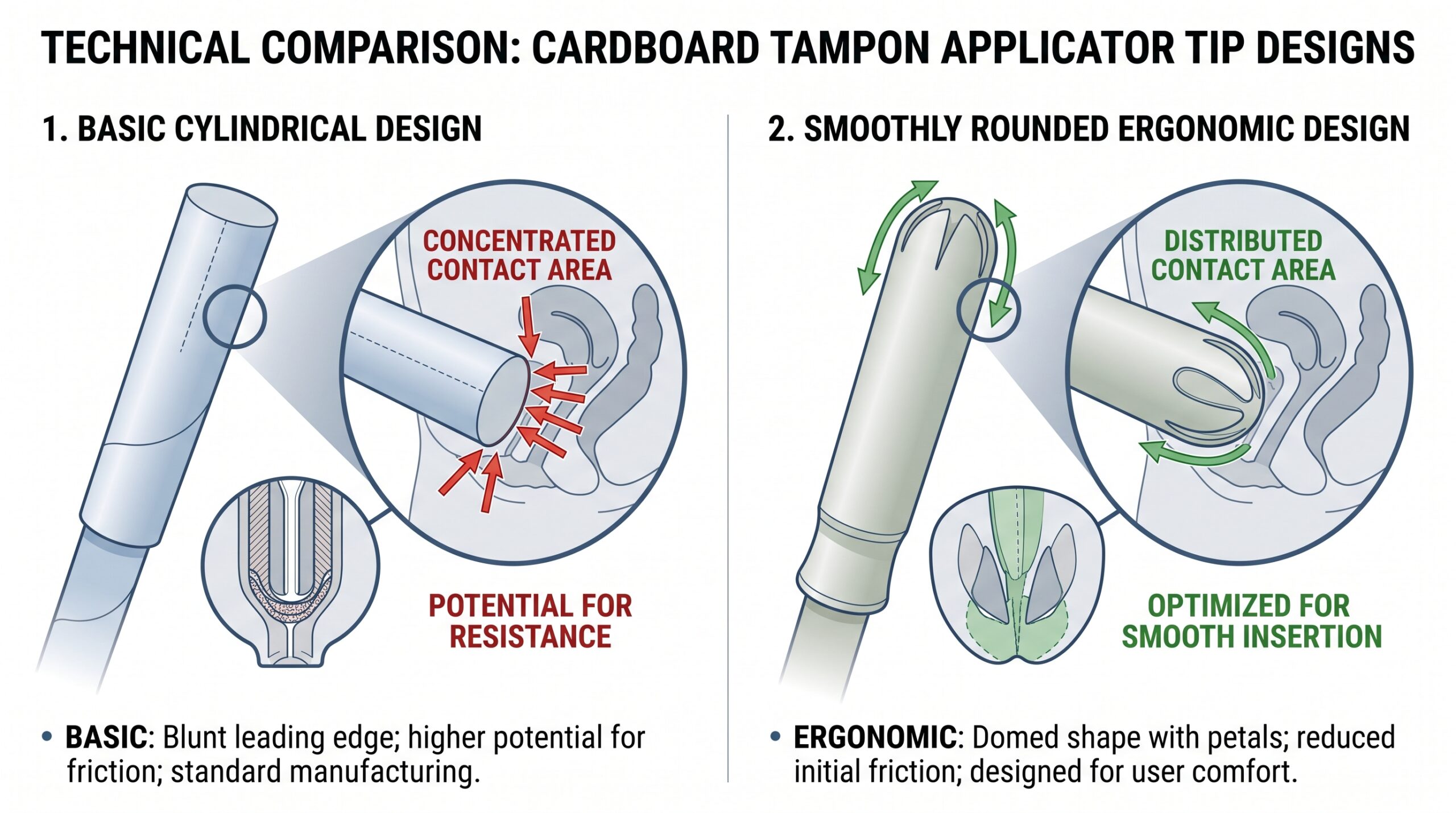
Applicator geometry can affect how a tampon is guided and handled during insertion.
Finger Grips Help Improve Control
A tampon applicator also has to stay stable while the plunger is pressed. This is where the finger-grip area becomes important.
Grooves or textured areas provide a defined place for the fingers to hold the applicator. Better control can make it easier to stabilize the barrel while advancing the tampon from the applicator. This seemingly small feature demonstrates a broader principle of product design: usability depends on the interaction between multiple components, not one feature in isolation.
For example, the Maxim Organic Cotton Cardboard Applicator Tampons use a cardboard applicator with a rounded tip and finger-grip grooves. Rather than being decorative details, these features address practical handling requirements associated with an applicator made from paper-based material. Product listings also describe the tampon as using an organic cotton absorbent core and an organic cotton security veil.
What Is a Tampon Security Veil?
The absorbent core of a tampon is composed of fibers engineered to absorb menstrual fluid. Some tampon designs add a thin outer layer—often called a security veil or overwrap—around that core.
The purpose of this layer is to help keep fibers contained and maintain the integrity of the tampon during use and removal. Fiber control is not merely a marketing consideration. FDA premarket guidance recommends that manufacturers demonstrate performance characteristics related to fiber shedding, tampon integrity, and withdrawal-string strength.
A security veil should therefore be understood as one component within a larger system. The absorbent core handles fluid, while the surrounding structure helps the tampon retain its physical integrity.
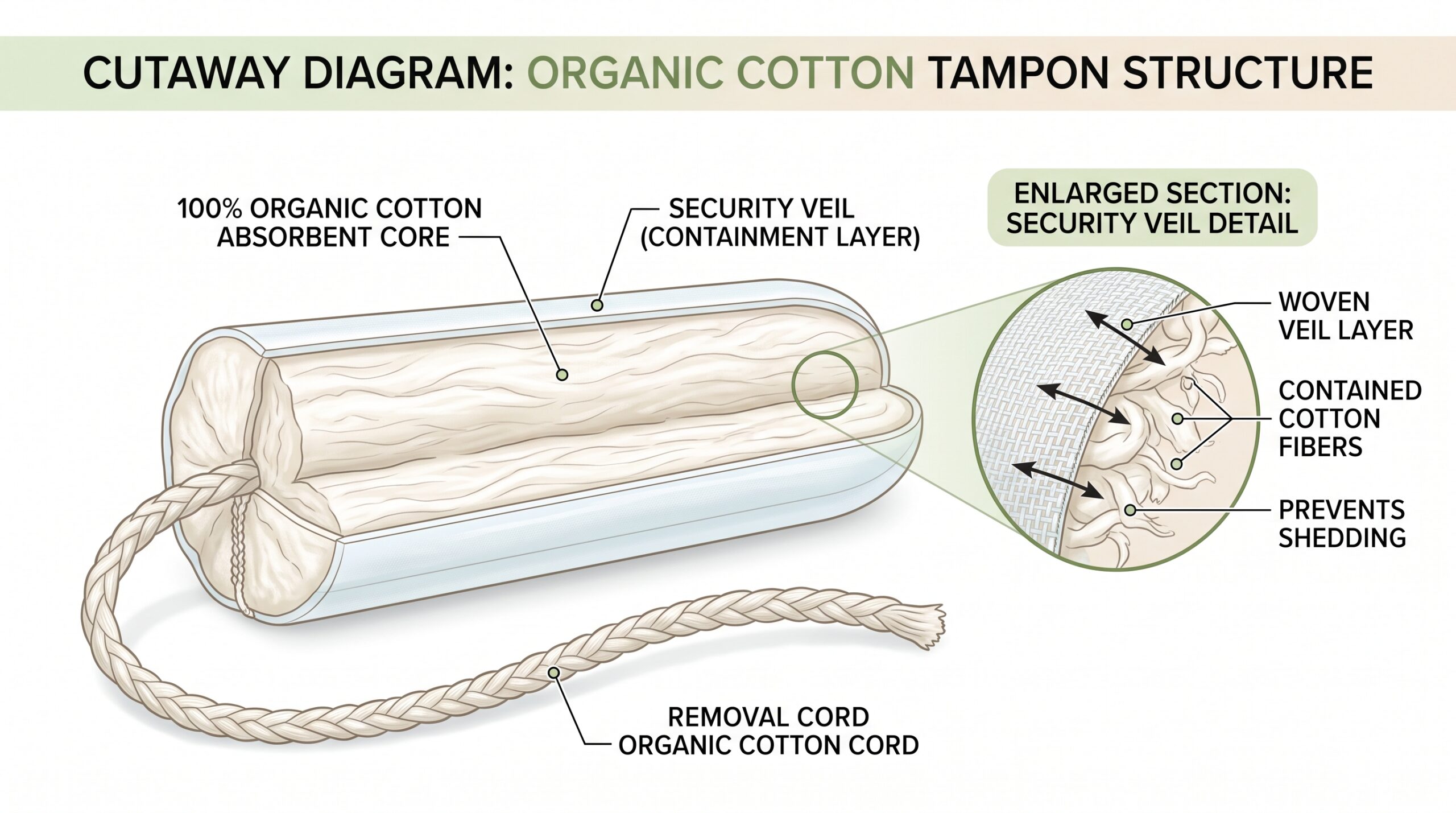
A security veil forms an outer layer around the absorbent core and helps support tampon integrity.
Why the Tampon Withdrawal Cord Matters
The withdrawal cord may look simple, but it performs an essential mechanical function. It must remain securely attached so the tampon can be removed after use.
This is why string strength appears among the performance characteristics addressed in FDA guidance. A well-designed tampon must function as a complete system: absorbent core, outer structure, withdrawal cord, and, when present, applicator all have distinct jobs.
Consumers should also follow the instructions supplied with the product rather than relying solely on familiarity with other brands, because applicator construction and handling can differ.
Design Cannot Replace Proper Tampon Use
Good engineering can make a tampon more practical to handle, but design features do not replace safe-use habits. The FDA recommends washing hands before and after insertion, using tampons only during menstruation, selecting the lowest absorbency needed, and changing each tampon every four to eight hours. A tampon should never be worn for more than eight hours.
The FDA’s updated menstrual product safety overview also emphasizes following product instructions and changing menstrual products regularly.
Anyone experiencing pain, unusual discharge, fever, discomfort, or other unexpected symptoms while using a tampon should stop use and contact a healthcare professional.
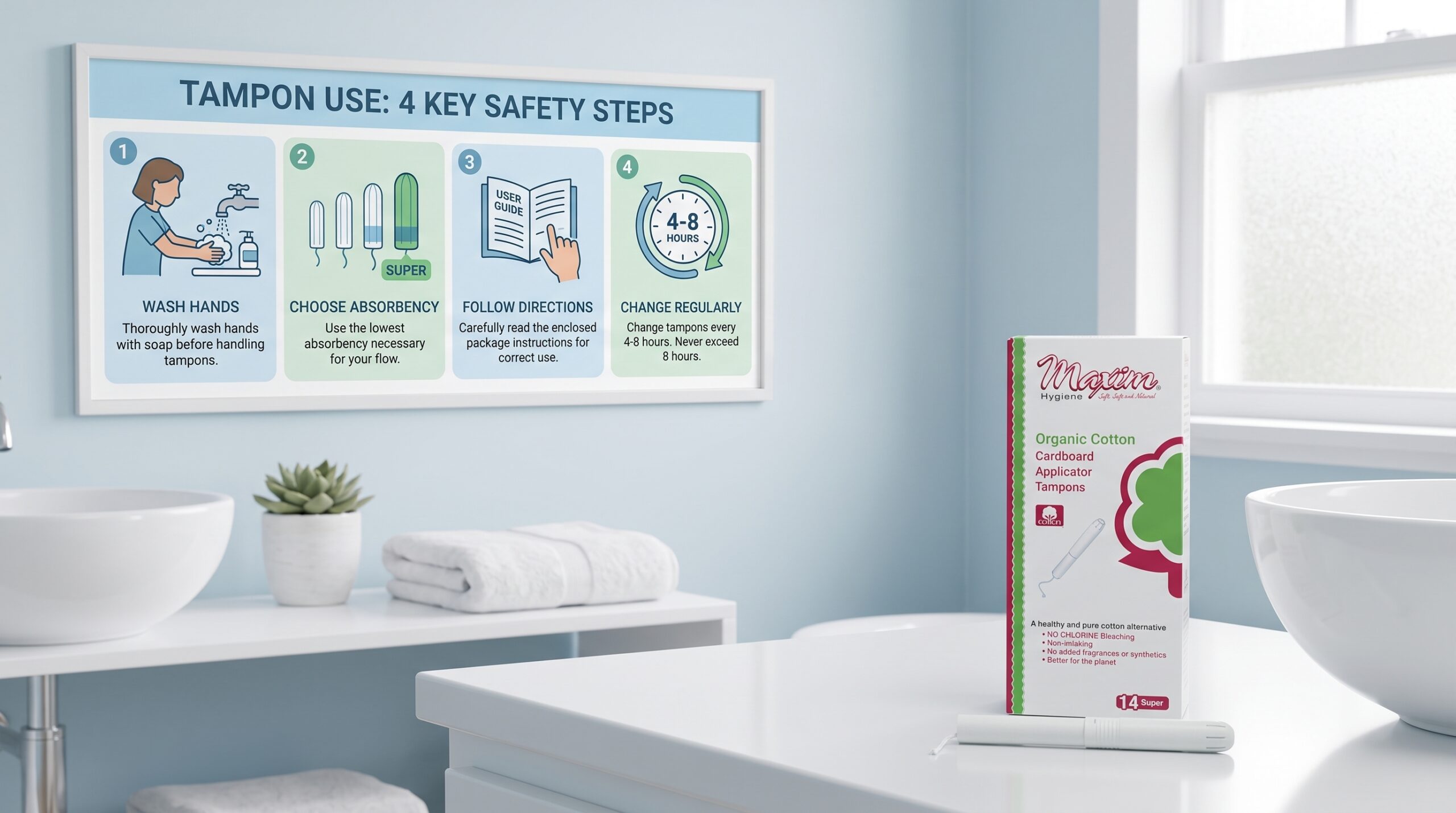
Product design works best when paired with correct tampon selection and safe-use practices.
How Tampon Design Features Work Together
When comparing tampons, it is useful to think beyond a single feature such as “organic,” “cardboard,” or “rounded tip.” A well-considered tampon design combines material selection with applicator geometry, grip, fiber containment, withdrawal strength, absorbency, and clear instructions.
That systems-level perspective makes it easier to understand why seemingly minor details matter. A rounded applicator tip can support insertion, finger grips can improve handling, a security veil can support fiber containment, and a strong withdrawal cord helps ensure dependable removal.
Ultimately, the best product choice depends on individual comfort, menstrual flow, and personal preferences. Knowing what each component is designed to do gives consumers a more useful basis for making that choice.