
Imagine a school bathroom, shared by teenage girls and boys. Perhaps unisex bathrooms make you uneasy, but even so, you probably envision a line of stalls, each with its own door, and a row of sinks with clean water, soap and paper towels. Now, envision this: instead of toilets, there’s a trench of deep pits in the dirt, with stalls delineated by crumbling brick walls. There are no stall doors. No sinks with clean water. No soap or towels. This “bathroom” isn’t in the school, it’s behind it, out of sight from teachers or any other adults. How uneasy do you feel now? How much more susceptible are young girls to menstrual shaming and sexual assault in a setting like this?
You have just imagined the typical school latrines in many rural villages in Rwanda. Unsanitary, open structures, latrines are a humiliating and perilous place for girls. Hopelessly exposed, girls are spied on and taunted by boys, and when a girl menstruates, she must endure the nightmare of public ridicule. Without access to soap and water, and too poor to afford sanitary supplies, there is no hope of staying clean. In her stained school uniform, a girl becomes an easy target for widespread bullying. Even worse, with no doors or adult supervision, each time a girl goes to the latrines, she risks unwanted spying, physical advances and sexual violence. It’s no wonder that many girls stumble academically when they reach puberty. They stay home when they have their period, fall behind in school and drop out before graduation.
A Fierce Woman Seeks A Solution
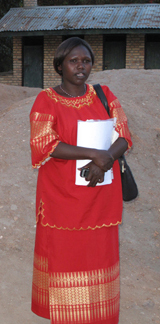
Mediatrice, the #FierceWoman behind building safer latrines in Rwanda
In 2007, Médiatrice Mushimiyimana, an English teacher at Byimana Primary School in Rwanda, observed this disturbing trend among girls in her school. Once confident learners, everything changed when they reached puberty. Their attendance plummeted along with their ability to keep up in class. Bright girls were dropping out before graduation, a set-up for a life of poverty and limited opportunity.
As our hosts for this post, Maxim Hygiene, like to say, Médiatrice truly is a Fierce Woman. She was determined to reverse this trend. She wanted to keep girls safe and in school, so she enlisted 34 colleagues to her cause. Together, they created an organization called Think About the Young Girls and applied to Global Grassroots’ Academy for Conscious Change to develop the skills they would need to launch their own solution. Following training, and with seed money from Global Grassroots, Médiatrice and her team registered Think About The Young Girls as a sustainable nonprofit and put their plan into action. The results were astounding, in large part because they recognized that a true solution required more than new facilities. If they were to succeed, entrenched cultural attitudes would need to change as well.
Tackling the Problem
Think About the Young Girls began building new latrines for the girls. There were roadblocks along the way, but Médiatrice and her group persevered. When the rising cost of bricks exceeded their budget and construction came to a halt, they resourcefully salvaged bricks from the old latrines and brainstormed ways to raise funds. Local officials, inspired by their efforts, built a new block of latrines quickly and easily, but only for the boys, leaving the girls entirely dependent on their Fierce Woman’s grassroots efforts. Mediatrice and her team successfully closed the gap in funds by offering workshops in the community.
Cultural practices presented their own set of challenges. The longstanding taboo against speaking about menstruation and sexuality meant that most girls and boys were woefully unprepared for the physical and psychological changes that accompanied puberty, and had no guidelines for appropriate behavior. Even among adults, misconceptions about human sexuality were rampant. Médiatrice and her group were undeterred. They embarked upon a massive outreach campaign.
Over time, Think About the Young Girls educated nearly 1,000 students, parents, teachers and community members about menstruation, sexual development and gender violence. They established two anti-violence clubs for youths. When they discovered that all of the local restaurants and bars had shared latrines, with one-third reporting incidents of sexual assault in those latrines, Think About the Young Girls conducted educational programs with local business owners, who went on to start their own anti-violence club.
Girls Get A Chance to Excel
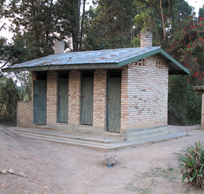
The new, cleaner, and safer latrines serving 635 girls.
At last, Médiatrice saw her goal come to fruition. Byimana Primary School had clean, safe latrines serving 635 girls. But that’s not all. She and her group went on to build a washroom and bathing facility, complete with water tank, and they stocked the facilities with soap and sanitary supplies. Now, girls had the means to take care of themselves, in safety and with dignity. In addition, the girls reported that teasing, harassment and sexual attacks were a thing of the past, and they could finally focus on their studies.
The numbers speak for themselves. In the first year the new latrines were built, the national exam passing rate among girls jumped from 14.7% to 76%. A year later, a staggering 87.5% passed the national exam. Médiatrice, promoted to headmistress at a neighboring school as a result of her innovative leadership, says only this, “I just feel proud that there is something that I thought – and then I did – and then succeeded.” Humble words from one of Global Grassroots’ Fierce Women who has changed lives.
Maxim Hygiene Products would like to thank Global Grassroots for sharing this inspiring story with us. We are proud to have them as a member of our #FierceWomenFunded social responsibility campaign where 10% of our online sales goes to charities empowering women. If you want to support Global Grassroots with your next purchase of Maxim Hygiene products, just visit our online store and enter the following coupon code at checkout: GLOBALGR