
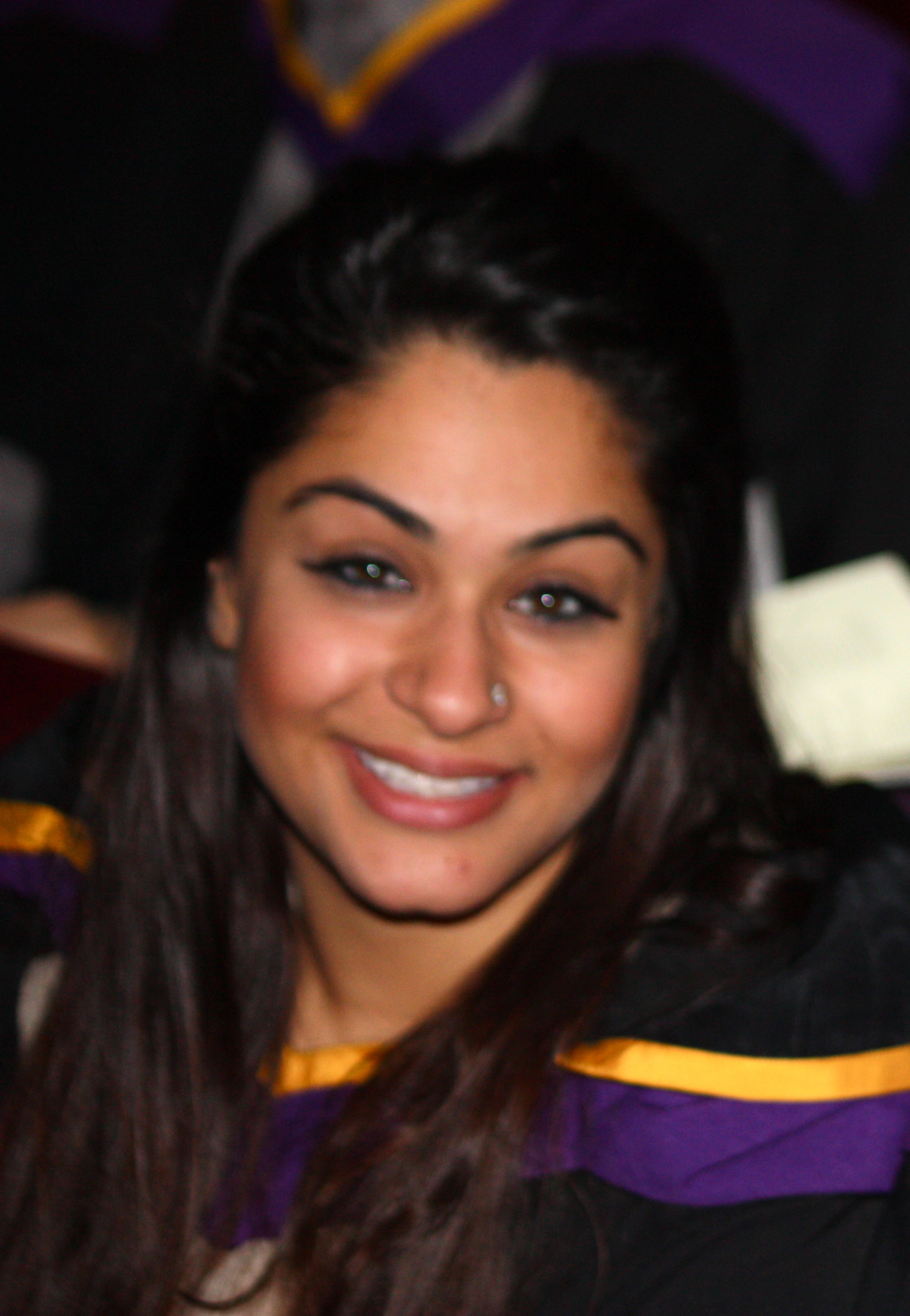
 Since we first launched our Fierce Women Series, we’ve featured “fierce women” of all ages, from a high school teen who beat the TSS odds and an 81 year old runner who holds the fastest time in the NYC Marathon for her age group. With May being the biggest graduating month for thousands of students ready to make a splash into the real world at the start of June, we thought what better month than to feature a recent college grad who made some fierce moves during her college years.
So, how does fierce differ in the college world? It really doesn’t, except for maybe giving up a few keg parties in exchange for organizing meaningful rallies or volunteering at a local community center. We define fierce women as those women who look around them and instead of only seeing problems, they see solutions. They see hope in the face of despair. They see change in the face of stagnancy and they find the inspiration for that revolution within themselves and in the potential beauty of others and the world around them.
College is the first time for many students where they have the freedom to explore such thoughts in whatever discipline they choose and that’s why we chose Komal Garewal as our fierce woman of the month. How is she changing the world? “By challenging apathy.”
During her freshman year of college at Middlebury, she and three other female students decided to create a documentary for a class called Story and Rituals. Proposing the idea that stories perpetuate rituals and customs, and that these rituals create the fabric of social cohesion and moral code, the four girls produced a video that told the stories of women from the war ravaged countries of Afghanistan, Sudan, Bosnia and Rwanda. The documentary is entitled “Not Just Numbers” and can be viewed at: http://www.abroadview.org/stories/media/video/watch/notjustnumbers.htm.
Komal went on to incorporate social justice pieces in many of her classes and much of her work after college focusing on themes of health and inequity prevalent in South Asia such as female infanticide, organ trafficking and paid kidney donations, and HIV campaigns that further marginalized commercial sex workers. Her work aimed to honor women and to dignify them in the face of structural violence, patriarchy, and poverty. Seeing that the value of women was often tied to their biology, she aimed to redefine women and their role in the world.
Maxim Hygiene aims to dignify women in the same way. Choosing how to deal with your period and to do so in a way that is healthy is empowering. We aim to give women and girls the information necessary for them to make the right decision. We hope to encourage making informed decisions instead of blindly following along the path of others. Komal, a student of medical anthropology understands how important it is for women to take an active role in decision making processes, especially those that relate to their bodies. “It is the first step in empowerment, control and independence. Women must engage with their rights to their own bodies and the rights to their own decisions,” she writes.
Here are some excerpts from our interview with Komal:
Do you think you’re a fierce woman?
“I’m just a girl who chooses to open her eyes and engage with what she sees. Being blind to the injustices and inequalities around you is a waste of the ability to see. Seeing without understanding and understanding without acting is akin to participating in the very systems that produce inequalities. I want to believe I have ferocity in me and I hope that the decisions I make throughout my life increase the tenacity of my fierceness.”
You said your goal is to challenge apathy. When did you realize that?
“My passion for challenging apathy grew from my annual visits to India as a child. Seeing the income disparity and suffering of the masses constantly bothered me. I got in trouble with my family countless times for offering beggars money or food. My family didn’t care. They raced through the sunburnt streets of New Delhi in a shiny Mercedez with tinted windows. Sitting in it was an experience of complete alienation. You weren’t able to feel the heat, taste the dust on your lips, or catch the light reflected in the eyes of the women and children who tapped on the windows of the car. Those rides were always about getting to another destination and never about the journey.”
What was the most difficult part in creating the documentary?
“I think choosing the stories to tell and the images to compliment the words of those women were both difficult. In choosing stories, we are editing a history and a reality of women. I found myself asking, ‘Who am I to do this?’ The sad thing, though, is that many of these women don’t have voices in the global arena. Having a voice implies that they are heard and the power to choose what is heard and who hears it is a daunting one.
Choosing how to publicize the documentary was also pretty difficult. We had produced something that was powerful and we wanted to make sure people saw it. I think every human is compassionate – sometimes, we just need to be given a cause to rally behind. We have to be reminded to care and reminded that our actions have ramifications beyond what we see in the mundane activities of our lives.
I was an advocate of playing the video all across campus in dining halls and the walls of our dorms. Many of the images were graphic, but I wanted to shock people into being empathetic. There is a difference between sympathy and empathy. Sympathy victimizes the object whereas empathy inspires the viewer. I wanted people to understand and to feel outraged at the injustices occurring around the world.”
What is the one message you want to leave our readers with?
“We live in a globalized world. The inherent definition of globalization means the eradication of boundaries, time and space. It is finally possible to experience and create a presence or affect a movement anywhere in the world. The people who have tools and resources at their disposal have a duty to not sit idly by while there are other people in the world without those same resources. Have the courage to try and change things, even if you think they may not work. Hope is inspiring; its power is constantly underestimated.”
So no matter what your age and whether or not your running the marathon or directing a documentary, find ways to be fierce and let us know about it because we’d love to feature YOU as our next featured fierce woman of the month!