
 Pelvic organ prolapse, or POP as it is sometimes called, is a condition that can affect both men and women, although it is much more common in women. This condition occurs when one of the organs in the pelvis shifts out of place. Typically, in men, it is the bladder that shifts, while women may have issues with their uterus, bladder or bowels. POP can be caused by childbirth, or it can result as part of the aging process.
There are numerous treatment options available for POP, and they typically depend on the severity of the prolapse. Here are a few of the options:
1. Strengthening the muscles. In very mild cases of POP, an exercise known as “Kegels” can help strengthen the pelvic muscles and may shift the prolapsed organ into place. This treatment is often combined with a diet rich in fiber to help prevent constipation and excess straining. Weight loss has also been found to be effective in treating slight prolapses.
2. Surgical treatment. If the prolapse is more severe and is causing pain, surgery may be necessary. This treatment places the prolapsed organ back into place and secures it where it should be. There are some risks associated with this treatment, and complications include a recurrence of the prolapse, particularly if the patient does not follow the surgery with Kegels and maintaining a healthy weight.
3. Transvaginal mesh. This type of surgical mesh procedure has been used for about a decade to help patients who have suffered a pelvic organ prolapse or stress urinary incontinence (SUI). During this surgery, a piece of mesh is placed transvaginally (across the vagina) to support the prolapsed organ and keep it in place.
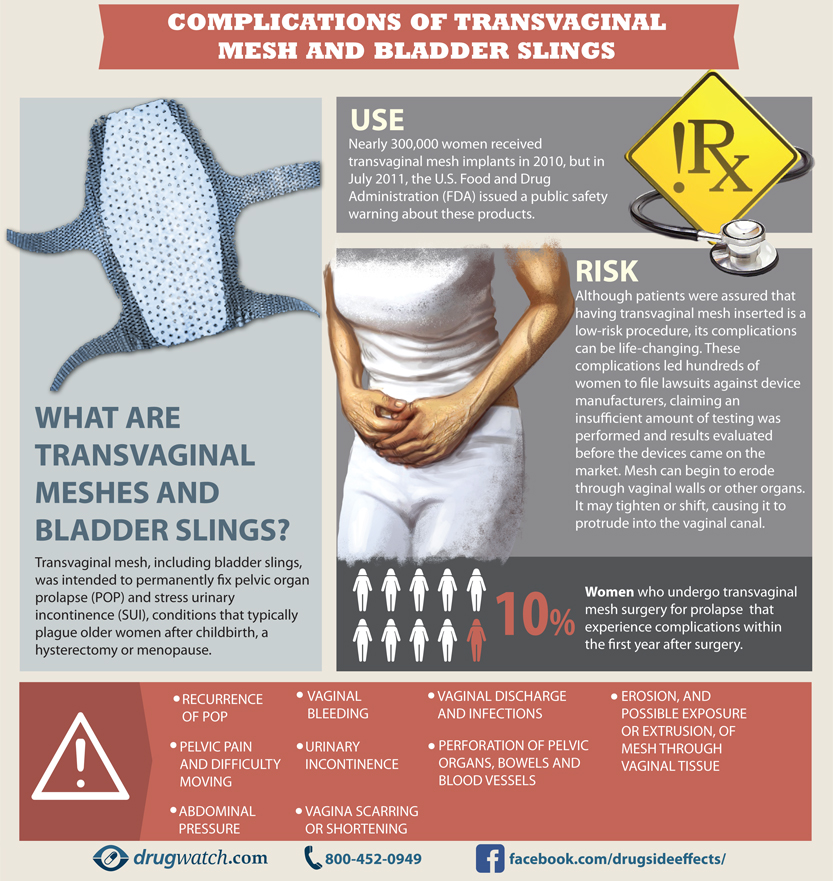
All surgeries carry risks, but there are a surprising number of complications associated with the transvaginal mesh procedure. The mesh is typically made of a polymer product, and it has been known to erode into nearby tissues and organs.
It is vital to make sure that your doctor provides you with several treatment options so that you can make an educated decision on which treatment is best for you. There will always be risks associated with surgeries, so before you get under the knife spend some time researching other options.
The FDA has indicated that the traditional non-mesh surgery can be just as effective in the treatment of pelvic organ prolapse and comes with fewer risks. Before you decide which treatment option is right for you, ask your doctor if they know about the risks associated with transvaginal mesh and whether they have received the FDA-recommended special training for this procedure.
You have the right to know the potential complications you are facing before you go through with any surgery. If you do decide to go through with surgery, make sure to pack Maxim Maternity Pads for your post surgical needs at the hospital. The pads provided at the hospital are usually synthetic laden and bleached with chlorine; that’s the last thing you want close to your fresh wounds. Maxim’s 100% cotton Maternity Pads will keep you Soft, Safe and Natural! Don’t let the name on the package fool you, although they are called Maternity Pads many women use them for their heavy menstrual needs and both men and women use them after any surgeries done in the genital area.
Elizabeth Carrollton writes about defective medical devices and dangerous drugs for Drugwatch.com.