
Period underwear has become a practical option for people who want menstrual protection that feels familiar, washable, and easy to build into daily routines. But for beginners, the choices can feel confusing: light or medium absorbency? Bikini or boyshort? Backup protection or standalone wear? The right pair depends less on trends and more on three practical factors: your flow, your preferred fit, and your lifestyle.
Maxim Hygiene’s product guidance emphasizes education-first content that helps readers make informed hygiene decisions rather than pushing hard-sell messaging.
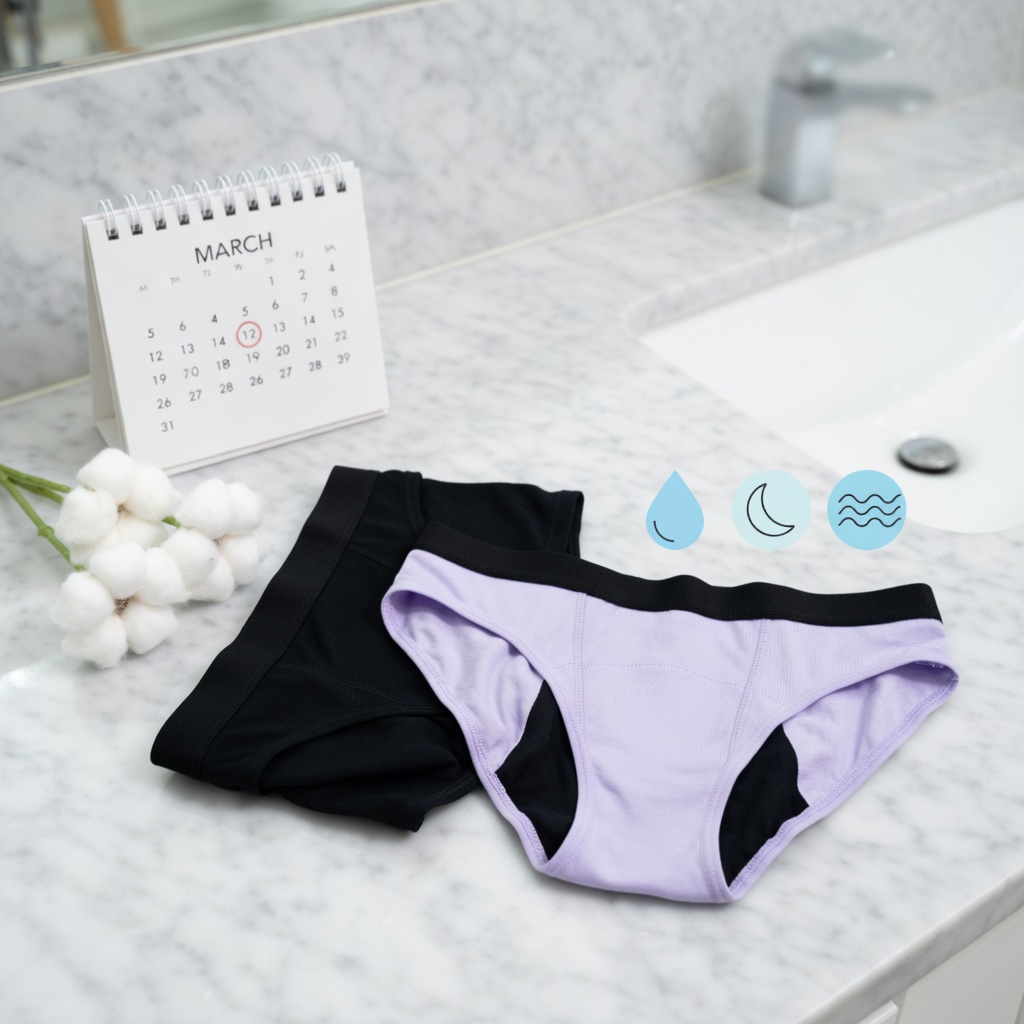
Choosing period underwear starts with understanding your flow, fit preference, and daily routine.
Start With Flow Level, Not Guesswork
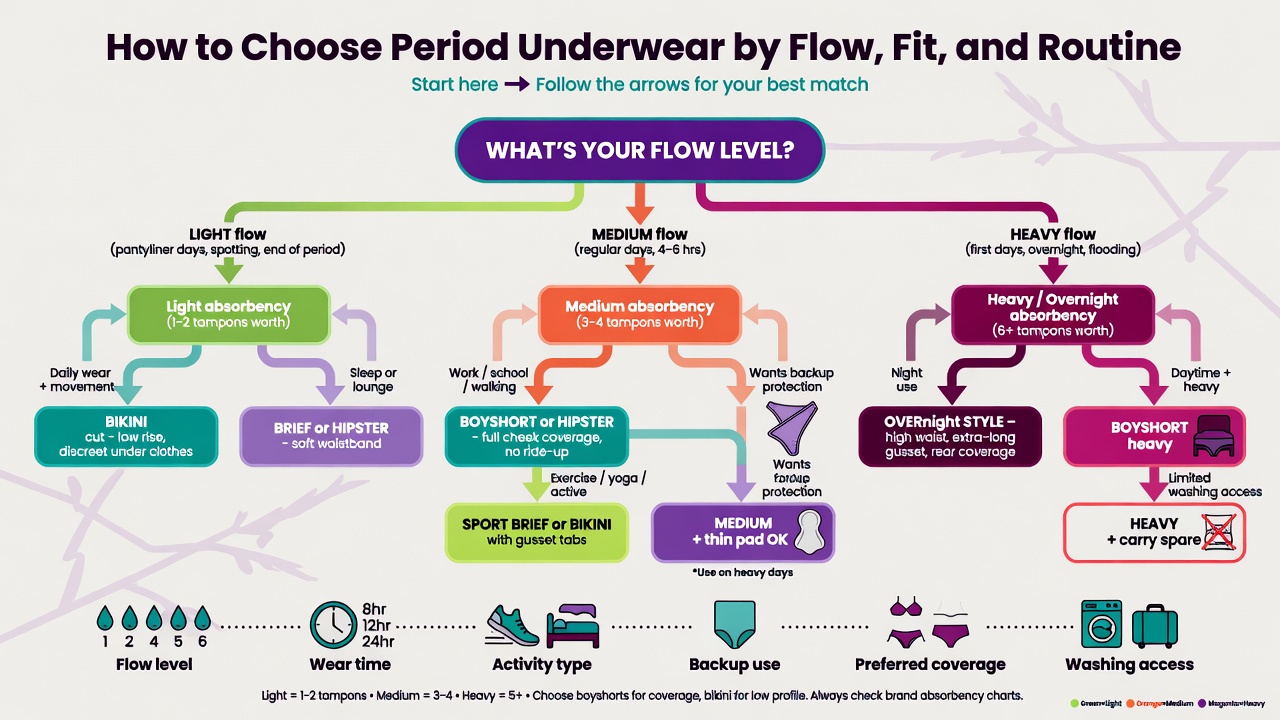
The first step in choosing period underwear is identifying how much absorbency you actually need. Flow can change throughout a cycle, so one absorbency level may not cover every day. A lighter pair may work well at the beginning or end of a period, while medium absorbency is often better for regular daytime wear, commuting, errands, school, or work.
For many beginners, medium absorbency is a practical starting point because it offers more coverage than a liner-style option without feeling overly bulky. The Maxim medium absorbency bikini-boyshort period underwear is positioned for everyday medium-flow routines and uses an organic cotton inner layer, absorbent core, and breathable leak-proof TPU barrier.
A helpful rule is to match absorbency to your most common use case. Are you looking for backup with a tampon or cup? A discreet option for workdays? A washable alternative for moderate-flow days? Each answer points to a different absorbency strategy.
| Flow or Use Case | Suggested Period Underwear Type | Best For | Helpful Tip |
|---|---|---|---|
| Very light flow or spotting | Light absorbency | Last period days, discharge, tampon backup | Choose a low-profile fit for daily comfort |
| Regular daytime flow | Medium absorbency | School, work, errands, commuting | A good beginner-friendly starting point |
| Heavier flow | Heavy absorbency or backup pairing | First cycle days, long outings | Consider pairing with pads, tampons, or cups |
| Overnight use | Higher absorbency with fuller coverage | Sleep and longer wear windows | Prioritize secure fit and leak-resistant edges |
| Backup protection | Light to medium absorbency | Tampon, cup, or pad backup | Choose based on comfort and clothing style |
Understand Fit: Bikini, Boyshort, and Coverage
Fit matters because period underwear must stay close enough to the body to support absorbency and leak protection. A bikini fit usually feels familiar and discreet under clothing. A boyshort fit offers more side and back coverage, which some people prefer for security and comfort.
A bikini-boyshort hybrid can be especially useful for beginners because it balances everyday wearability with a little more coverage than a classic bikini. The goal is not compression; it is secure contact. If the underwear shifts, gaps, or bunches, it may not perform as intended.
When evaluating fit, consider:
- Whether the leg openings feel secure without digging in
- Whether the waistband stays in place when sitting or walking
- Whether the gusset coverage matches your body and flow pattern
- Whether the fabric feels breathable during long wear
OEKO-TEX notes that textile safety testing can apply across every stage of textile production, from yarn to finished product, which is a useful concept for consumers thinking about skin-contact fabrics. For period underwear, comfort is not only about softness; it is also about breathability, moisture management, and how materials feel against sensitive skin.
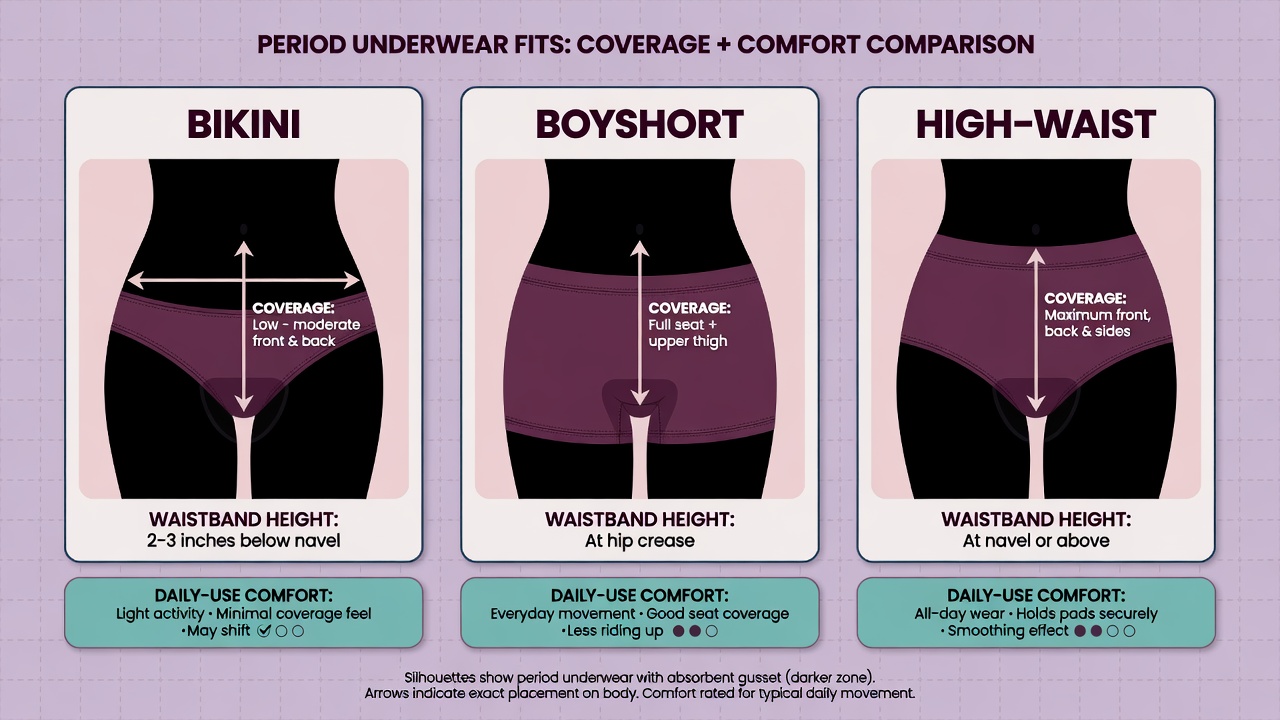
Different underwear cuts offer different levels of coverage, security, and clothing compatibility.
Match Period Underwear to Your Lifestyle
A person who works from home may choose differently than someone who commutes, travels, plays sports, or spends long hours on campus. Lifestyle should guide not only absorbency but also how many pairs you keep in rotation.
For work and school, medium absorbency period underwear can offer discreet, washable protection during regular flow days. For travel, it may be helpful to pack multiple pairs in a waterproof pouch and bring a backup product. For workouts, breathable stretch and secure leg openings become more important. For overnight, many people prefer fuller coverage and higher absorbency.
Cleveland Clinic explains that period underwear can be sanitary when washed properly, and recommends avoiding fabric softener or dryer sheets because they may affect performance. This matters because choosing period underwear is not only about the first wear; it is also about care habits that preserve absorbency and comfort over time.
Think About Materials, Especially for Sensitive Skin
Because period underwear sits close to delicate skin for hours, fabric choice deserves attention. Organic cotton is often preferred by people looking for a soft, breathable inner layer. Maxim’s organic cotton reusable pads and period underwear category supports readers who want washable menstrual care options, while the brand’s natural and organic cotton pads and liners may be useful for those who prefer disposable backup on heavier days.
For readers who use multiple product types across a cycle, organic cotton tampons can also be part of a flexible period routine. The FDA advises tampon users to follow safe-use directions and notes that tampons cleared by the FDA are intended for one-time use only.
The larger lesson is that period care does not need to be all-or-nothing. Some people wear period underwear alone on medium-flow days, use it as backup on heavy days, and switch to pads, liners, or tampons depending on schedule and comfort.
Beginner Mistakes to Avoid
One common mistake is buying only one pair and expecting it to cover an entire cycle. A more realistic approach is to build a small rotation: one or two pairs for medium-flow days, backup products for heavier times, and lighter options for spotting or discharge.
Another mistake is choosing absorbency based only on advertising language. Instead, pay attention to your own cycle patterns. If you usually change a regular pad every few hours on day two, medium absorbency underwear may work best as daytime protection or backup rather than all-day standalone wear. If your flow is lighter, medium absorbency may offer reassuring coverage.
Care mistakes also matter. Washable period underwear should generally be rinsed after use, washed according to garment instructions, and air-dried when recommended. High heat, harsh detergents, and fabric softeners may reduce performance over time.
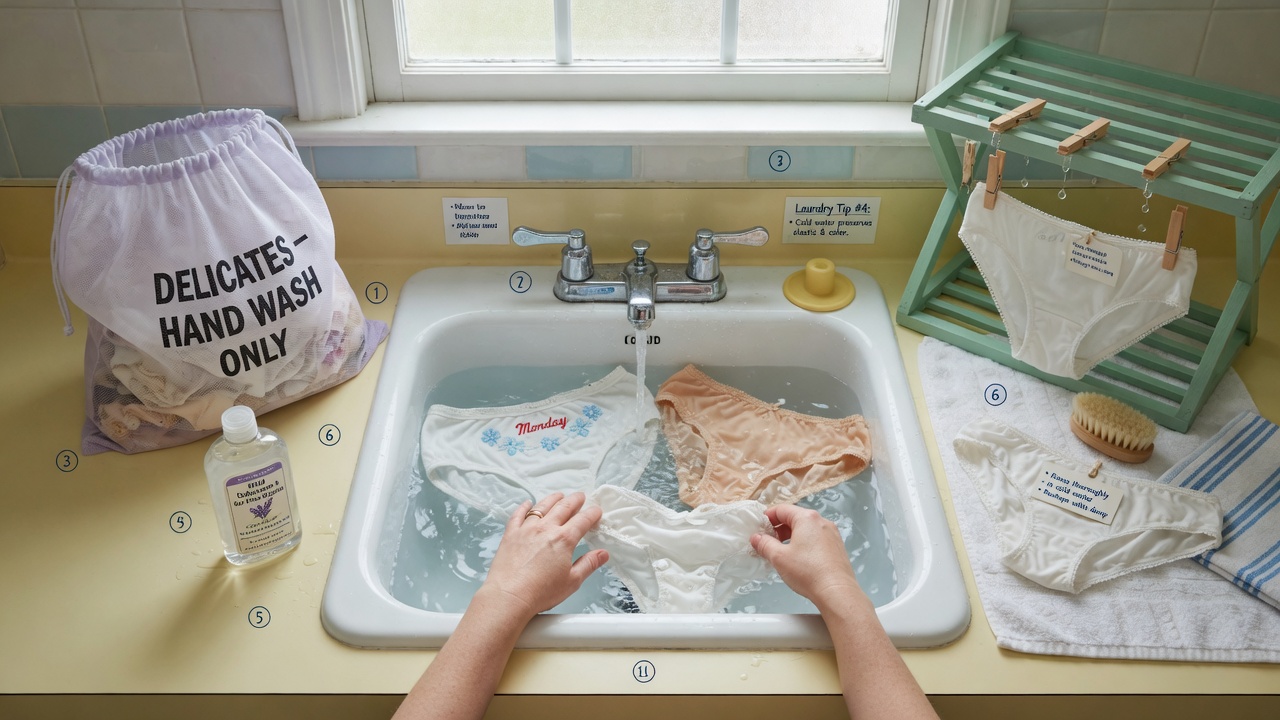
Proper washing habits help reusable period underwear maintain comfort and absorbency.
A Simple Starter Plan
For beginners, the easiest plan is to start with your most predictable flow day. If your regular daytime flow is moderate, a pair such as Maxim organic cotton medium absorbency bikini-boyshort period underwear can help you test fit, fabric feel, and absorbency before building a larger routine. If you already use pads or tampons, treat period underwear as a comfort-focused backup first, then adjust as you learn how it performs for your body.
Period underwear works best when the choice is personal and practical. Start with flow level, choose a fit that stays secure, consider skin-contact materials, and match your selection to real daily routines. With the right approach, reusable period underwear can become a dependable part of a flexible, informed menstrual care system.