
Every month, many women can predict their period before a calendar app does. The clue is not always cramps, cravings, or mood changes. Sometimes it is the sudden appearance of deep, painful breakouts along the chin, jawline, or cheeks.
This pattern is often called hormonal acne or period acne. It can feel frustratingly predictable: your skin clears, you start to feel like yourself again, and then the same breakout cycle returns before your next period.
But hormonal acne is not only a skin issue. For many women, it affects confidence, self-image, social life, dating, work, and the way they feel in their own body. That deserves a more serious conversation than “just cover it with makeup.”
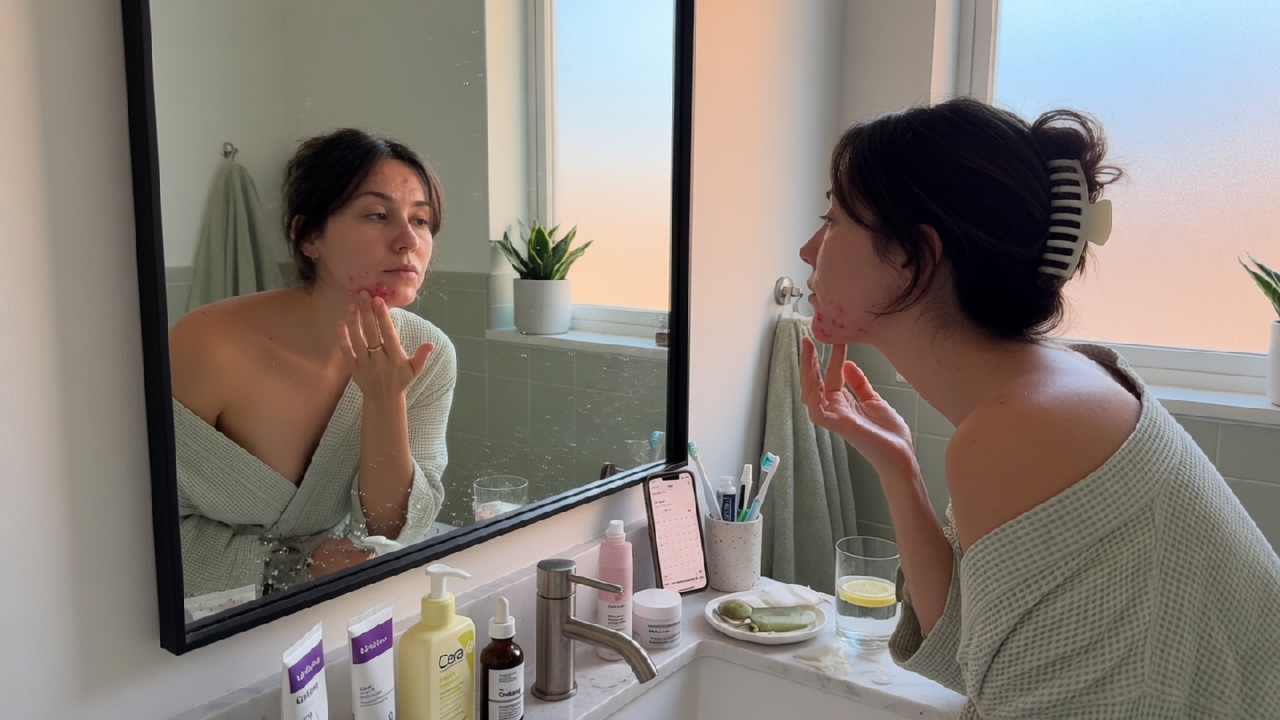
Hormonal acne often appears in a predictable monthly pattern, especially around the chin and jawline.
What Is Hormonal Acne?
Hormonal acne refers to acne that is influenced by hormone fluctuations. It is especially common in adult women and may appear or worsen around the menstrual cycle. According to the American Academy of Dermatology’s guide to adult acne, fluctuating hormone levels are one of the major reasons adults experience breakouts, and adult acne is more common in women than men.
For many women, breakouts appear in the days before menstruation. The U.S. Office on Women’s Health notes that the menstrual cycle is one of the common acne triggers.
During the premenstrual phase, shifting estrogen, progesterone, and androgen activity can influence oil production. More oil, more inflammation, and more clogged pores can create the perfect environment for painful blemishes.
Hormonal acne often shows up as:
- Deep, tender pimples
- Cyst-like bumps under the skin
- Breakouts around the chin and jawline
- Pimples that return in the same areas each month
- Skin that feels oilier before a period
This does not mean every breakout is hormonal. Acne can also be influenced by genetics, medications, skincare products, stress, sleep, and certain health conditions. But when breakouts follow a monthly rhythm, hormones are often part of the picture.
Why Period Acne Feels So Personal
One of the most overlooked parts of hormonal acne is the emotional weight it carries.
A breakout can change how a woman moves through her day. She may avoid photos, cancel plans, feel distracted during meetings, or spend extra time trying to make her skin look “acceptable.” Even when nobody else notices as much as she does, the internal pressure can be exhausting.
That pressure does not come from acne alone. It comes from the cultural message that women are expected to look effortlessly polished at all times.
Women are often told to love themselves, embrace their bodies, and feel confident. At the same time, beauty culture still rewards clear, smooth, poreless skin as if it were a requirement for being professional, attractive, or put together.
That contradiction is where hormonal acne becomes more than a dermatology issue. It becomes a self-worth issue.
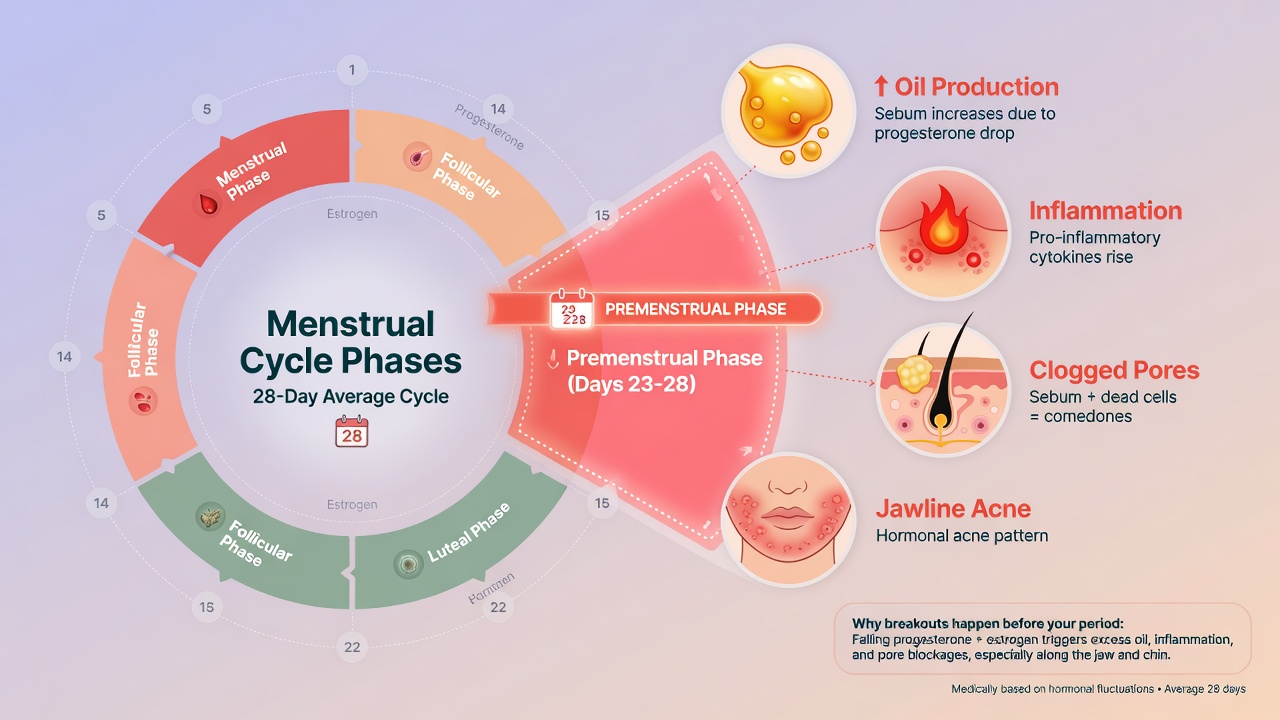
Hormonal acne often follows a cycle because skin responds to internal hormonal changes.
Why “Just Cover It Up” Is Not Enough
For too long, women with hormonal acne have been offered cosmetic solutions before medical understanding.
“Use a full-coverage foundation.”
“Try a stronger concealer.”
“Stop stressing.”
“Wash your face better.”
These comments are not only unhelpful; they can also be misleading. Hormonal acne is not a sign that someone is dirty, careless, or failing at skincare. Acne forms through a combination of oil production, clogged pores, bacteria, inflammation, and, in many cases, hormonal influence.
A study published through the National Library of Medicine found that many women with acne reported worsening before menstruation, supporting the reality of premenstrual acne flares.
So the better question is not, “Why can’t women hide it better?”
The better question is, “Why are women expected to hide a common biological skin change at all?”
Normalizing Hormonal Acne Without Ignoring Treatment
Hormonal acne should be normalized, but that does not mean women should be expected to silently tolerate painful or persistent breakouts.
Both ideas can be true:
Menstrual skin changes are normal.
Acne does not make anyone less clean, beautiful, or capable.
Women deserve better access to effective care.
Women also deserve to see real skin represented in beauty, wellness, and healthcare spaces.
The American Academy of Dermatology’s information on hormonal therapy for acne explains that certain hormone-related treatments, including oral contraceptive pills and spironolactone, may help some women with acne. These are medical options that should be discussed with a qualified healthcare provider, especially for acne that is painful, cystic, scarring, or emotionally distressing.
A gentle skincare routine may also help support the skin barrier. This often includes a mild cleanser, non-comedogenic moisturizer, sunscreen, and targeted acne ingredients recommended by a dermatologist. What women do not need is shame disguised as skincare advice.
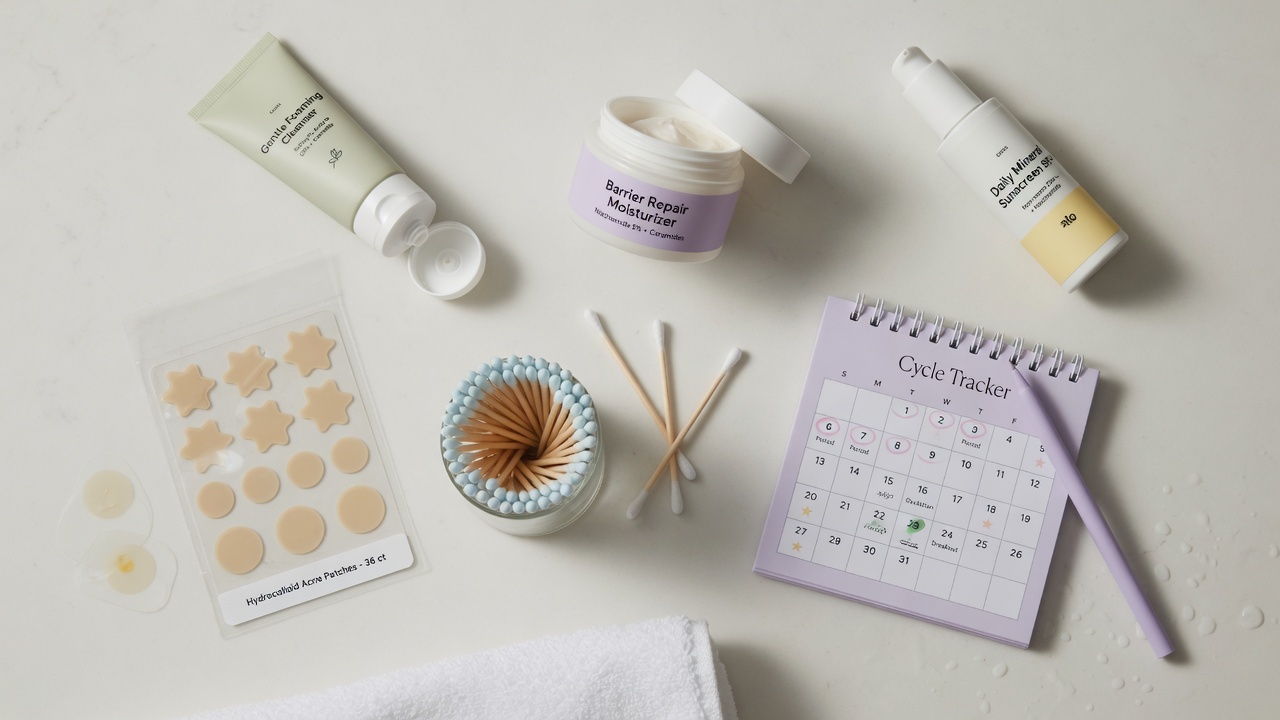
A supportive routine can help manage breakouts without turning skin care into self-criticism.
ractical Ways to Support Skin During Monthly Breakouts
There is no single routine that works for everyone, but a few principles can help reduce irritation and make hormonal breakouts easier to manage.
First, avoid attacking the skin. When a breakout appears, it is tempting to scrub harder, apply multiple drying treatments, or pick at painful bumps. This can make inflammation worse and increase the risk of marks or scarring.
Second, track the pattern. If acne consistently appears seven to ten days before your period, that information can help you prepare and can also be useful when speaking with a dermatologist or healthcare provider.
Third, protect active pimples from friction and picking. For surface-level pimples, pimple patches can be a practical tool because they help create a barrier between the blemish and your hands, makeup, mask, or pillowcase. For example, MaxSkin Spot Suckers acne patches for active-day breakout care can fit into a busy routine as a discreet way to cover and protect individual spots. They are not a cure for hormonal acne, but they can help make an active breakout feel more manageable while skin heals.
Fourth, seek medical guidance when acne is painful, recurring, cystic, or leaving dark marks or scars. Hormonal acne is common, but that does not mean you have to manage it alone.
How Hormonal Acne Shapes Identity
When clear skin is treated as a symbol of discipline, attractiveness, or professionalism, breakouts can start to feel like personal failure.
A woman may think:
“I look unprofessional.”
“I look messy.”
“I do not want people looking at me.”
“I need to cancel.”
“I hate that this happens every month.”
These thoughts are not vanity. They are the result of living in a culture that often treats women’s faces as public property, open to judgment and correction.
That is why hormonal acne belongs in a broader conversation about women’s health, mental health, body autonomy, and beauty standards.
[IMAGE PROMPT: 16:9 aspect ratio. A diverse group of women with visible real skin texture, mild acne, freckles, pores, and natural complexions standing together confidently in soft studio lighting. Editorial beauty campaign style, inclusive and empowering, no heavy retouching.]
[FILENAME: real-skin-hormonal-acne-women-confidence-beauty-standards-maximhy.jpg]
[ALT-TEXT: Diverse women with real skin texture and visible acne standing confidently together.]
[CAPTION: Real skin includes texture, pores, scars, and sometimes acne.]
[SHORT DESCRIPTION: An inclusive beauty image challenging the idea that confidence requires flawless skin.]
The Conversation Women Deserve
Instead of asking women, “Have you tried better makeup?” we should be asking better questions.
Why is clear skin treated as a requirement for confidence?
Why are menstrual skin changes still surrounded by embarrassment?
Why do beauty campaigns show acne mostly as a “before” problem?
Why do so many women feel alone in something so common?
How can healthcare, skincare, and wellness brands educate without making women feel broken?
Hormonal acne before your period may be common, but the shame around it should not be.
Women deserve accurate information, better treatment access, realistic beauty standards, and practical tools that help without blaming them. They deserve to understand what is happening in their skin and to feel supported while they manage it.
Because the goal is not to pretend hormonal acne does not matter.
The goal is to stop letting it define a woman’s worth.