
Acne care is often framed around “fighting” breakouts, but healthier blemish care usually starts with a gentler question: how can we protect irritated skin while it recovers? That is where hydrocolloid acne patches have earned their place in modern skincare routines. Unlike harsh scrubs or aggressive spot treatments, hydrocolloid patches create a small protective covering over a blemish, helping manage surface-level fluid while reducing the urge to touch, squeeze, or pick.
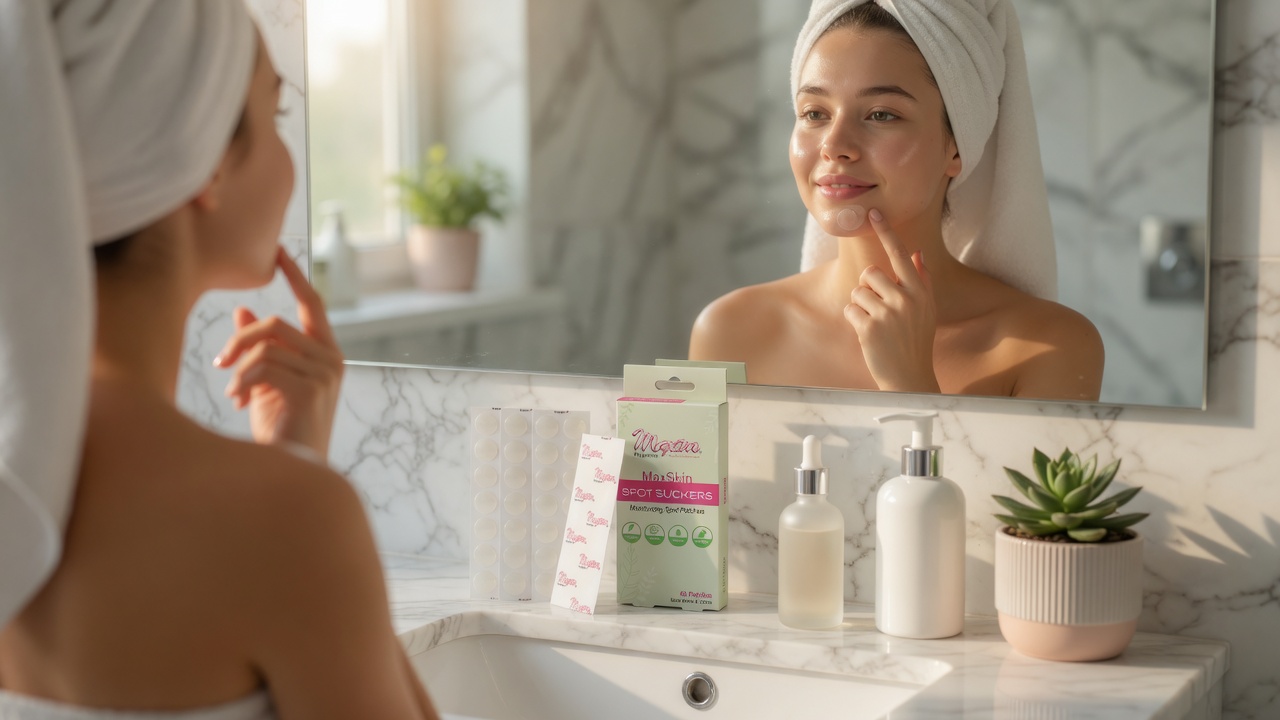
Hydrocolloid acne patches offer a simple way to protect blemishes during daily or overnight care.
Hydrocolloid material was originally developed for wound dressing use, where maintaining a moist, protected environment can support skin repair. Research on moist wound healing has found that wounds generally heal better in a balanced moist environment than when they are allowed to dry out excessively, and hydrocolloid dressings are one category of dressing used for this purpose. A dermatology-focused review in the National Library of Medicine also notes that hydrocolloids have been studied in wound care and have emerging relevance in dermatology, including acne-related applications.
For acne, the idea is simple: a hydrocolloid patch sits over the blemish, absorbs excess fluid from the surface, and forms a barrier between the spot and the outside world. This does not mean a patch “cures acne” or replaces dermatologist-directed care for persistent breakouts. Instead, it helps manage an individual blemish in a cleaner, more controlled way. This is especially useful for pimples that have visible fluid, whiteheads, or irritated surface spots.
One of the most overlooked benefits of acne patches is behavioral. Many breakouts become worse not because of the original pimple, but because the skin is picked, squeezed, or repeatedly touched. The American Academy of Dermatology warns that popping pimples at home can push contents deeper into the skin, increase inflammation, and raise the risk of infection or scarring. A patch acts as a physical reminder to leave the blemish alone while also shielding it from fingers, makeup, and environmental debris.
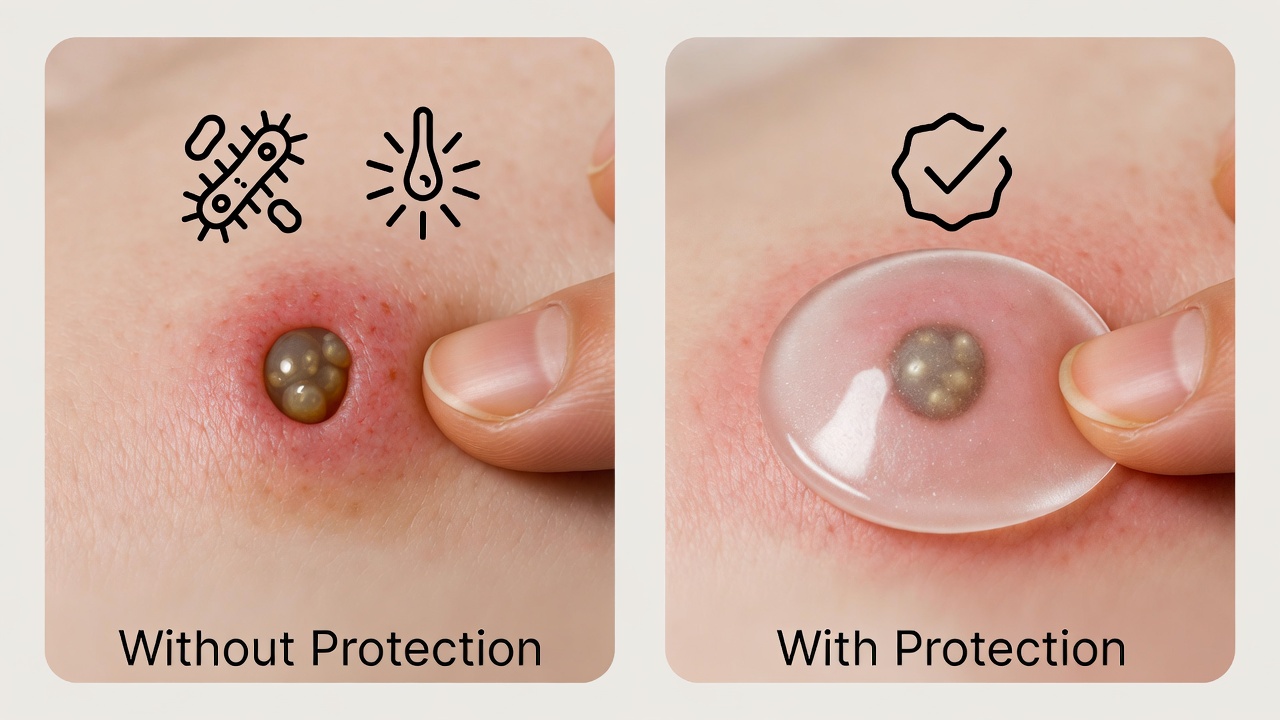
Covering a blemish can help reduce touching and picking, two habits that may worsen irritation.
To use a hydrocolloid acne patch correctly, start with clean, completely dry skin. Moisturizer, oil, or serum left on the surface can reduce adhesion and make the patch lift before it has time to work. After cleansing, place the patch directly over the blemish and press gently so the edges seal to the skin. Many patches are worn overnight or for several hours, allowing the material time to absorb surface fluid. When removing the patch, peel slowly rather than pulling sharply, especially if the surrounding skin is sensitive.
Patch size also matters. A patch should fully cover the blemish with a small margin around the irritated area. Too small, and the patch may not seal properly; too large, and it may wrinkle or lift on curved areas of the face. Products such as SpotSucker® Clear Acne Patches in 9 mm and 12 mm diameters by Maxim provide two common size options, making it easier to match smaller whiteheads or slightly larger blemishes without over-covering the skin.
Hydrocolloid patches are best understood as blemish protectors, not all-purpose acne treatments. They tend to be most useful for surface-level pimples with fluid or visible heads. They are usually less effective for deep cystic acne, widespread acne, or breakouts caused by underlying hormonal or medical factors. For moderate, severe, painful, or persistent acne, professional dermatology guidance is important. The American Academy of Dermatology recommends gentle skincare habits for acne-prone skin, including avoiding irritating products that can dry the skin and make acne look worse.
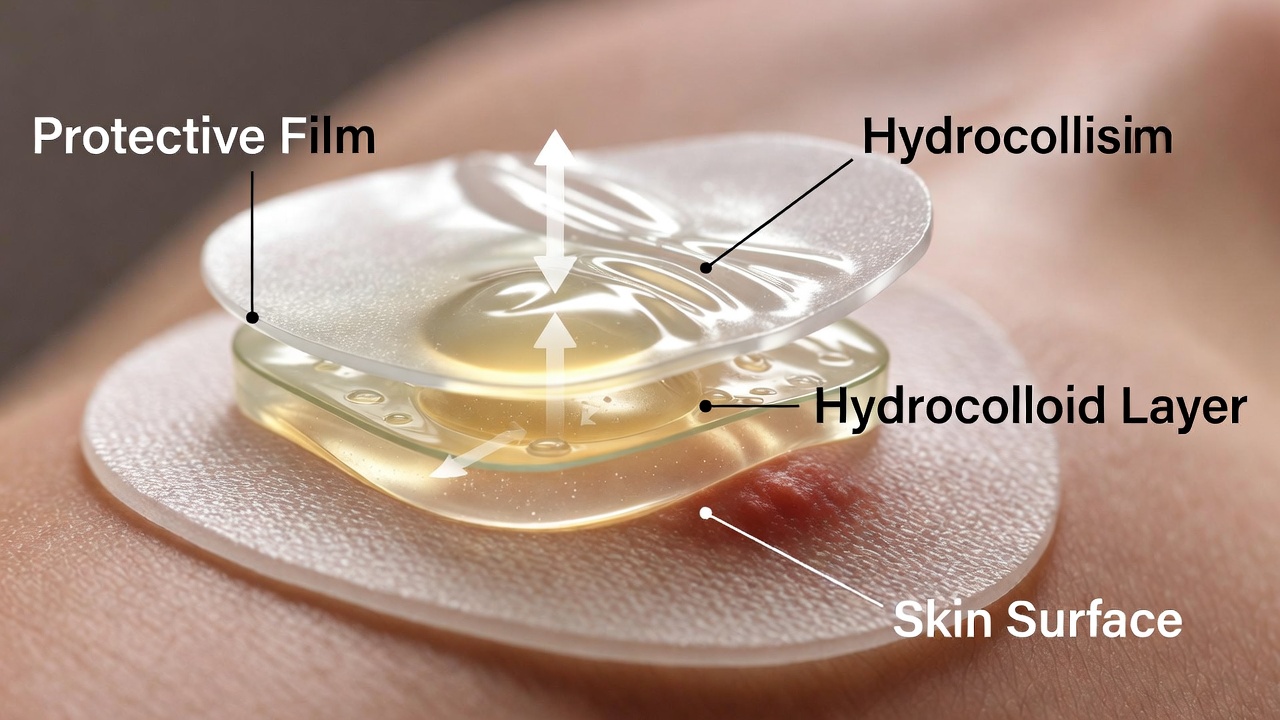
Hydrocolloid patches work by absorbing surface fluid while maintaining a protective covering over the blemish.
Some acne patches include supportive skincare ingredients in addition to hydrocolloid. SpotSucker® patches, for example, are described as containing hydrocolloid, tea tree oil, safflower oil, and butylene glycol. In this kind of formulation, hydrocolloid provides the absorbent barrier function, while moisturizing or soothing ingredients may help make the experience gentler for the skin. Still, ingredient tolerance varies by person. Anyone with sensitive skin should monitor for redness, itching, stinging, or irritation and discontinue use if the skin reacts poorly.
It is also helpful to understand how patches fit alongside traditional acne products. The U.S. Food and Drug Administration recognizes certain active ingredients for over-the-counter acne drug products, including benzoyl peroxide in specified concentrations. However, hydrocolloid acne patches are typically used differently: they physically cover and absorb rather than chemically exfoliate or kill acne-associated bacteria. That distinction is useful for people who want a non-messy, localized option for individual blemishes.
The best acne patch routine is simple. Cleanse gently, dry thoroughly, apply the patch, leave it undisturbed, then remove it carefully. Avoid layering strong actives directly underneath unless the product instructions clearly support that use, because sealing active ingredients under an occlusive patch may increase irritation for some skin types. After removal, continue with a gentle, barrier-supportive routine rather than scrubbing the area.
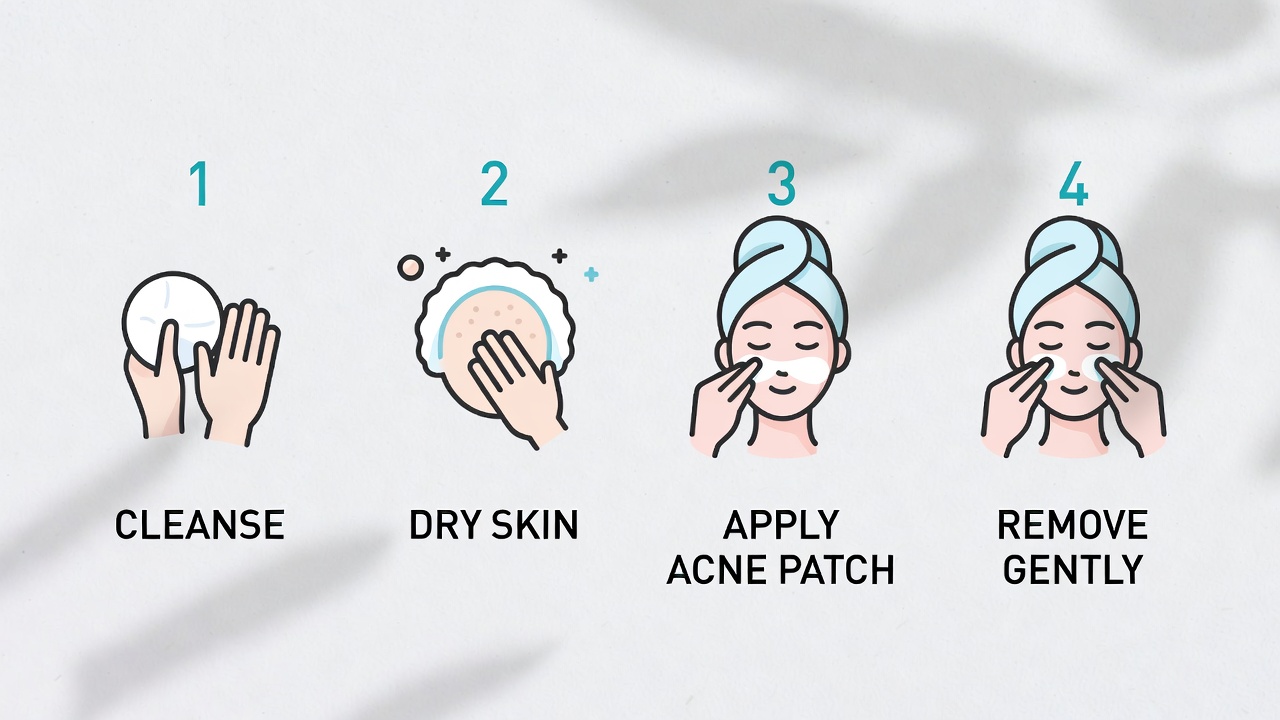
Proper application helps hydrocolloid acne patches stay in place and perform effectively.