
“Chocolate before a period” is one of those phrases that almost comes with its own laugh track. It shows up in memes, movies, workplace jokes, and casual comments between friends: She must be PMS-ing. Someone get her chocolate.
The joke is usually meant to be harmless. But for many women, PMS cravings are not a quirky personality trait or a lack of willpower. They are a real, recurring symptom connected to hormonal changes, mood shifts, appetite regulation, and the body’s need for comfort.
Premenstrual syndrome, or PMS, can include emotional and physical symptoms such as mood changes, fatigue, bloating, sleep disruption, and appetite changes. The U.S. Office on Women’s Health lists “appetite changes or food cravings” among common PMS symptoms, and the American College of Obstetricians and Gynecologists also recognizes appetite changes as part of the PMS symptom picture.
So the better question is not, “Why do women want chocolate before their period?” It is: Why do we keep turning a normal biological experience into a punchline?

PMS cravings can be understood as body signals rather than personal failures.
PMS Cravings Are Not “Lack of Discipline”
The body does not randomly decide to crave chips, chocolate, pasta, or fries for no reason. PMS symptoms commonly appear during the luteal phase, which is the time between ovulation and the start of menstruation. During this phase, estrogen and progesterone shift, and those hormonal changes can influence mood, energy, sleep, and hunger.
One important factor is serotonin, a neurotransmitter involved in mood, appetite, and emotional regulation. Some PMS-related food cravings, especially cravings for carbohydrates, may be connected to the body’s attempt to support mood and energy. Research has explored how carbohydrate intake may affect mood and appetite symptoms in people with PMS, particularly because carbohydrates can influence tryptophan availability, which is related to serotonin production.
That is why a craving can feel so specific. It is not always just “I want something sweet.” Sometimes it feels like, “I need this exact food right now.” The urgency can be emotional, physical, or both.
Chocolate has become the cultural symbol of PMS cravings because many women really do crave it before menstruation. Research on chocolate cravings has noted that these cravings can fluctuate around the menstrual cycle, suggesting that biology and hormones may play a role.
That does not mean chocolate is a medical treatment. It means the cliché exists because it is attached to a real pattern. The problem begins when that pattern is mocked instead of understood.
Why PMS Cravings Often Become Shame
Food cravings are rarely treated neutrally when women experience them. A woman craving sweets before her period may be called dramatic, emotional, indulgent, or out of control. Her hunger becomes a joke. Her appetite becomes evidence of weakness.
But notice the double standard.
When men crave protein after a workout, it is often called fueling recovery. When someone wants alcohol after a stressful day, it may be framed as unwinding. When athletes eat extra carbohydrates before an event, it is considered strategy.
Yet when women crave carbohydrates, salt, or chocolate before their period, the conversation often shifts toward discipline, emotion, or self-control.
That is not just harmless humor. It is stigma.
Stigma can change behavior. When women feel ashamed of PMS cravings, they may ignore hunger, restrict food, skip meals, or feel guilty after eating. Over time, that can turn a normal body signal into a cycle of conflict: craving, resisting, overeating, regretting, and starting again.
A healthier approach begins with this simple reframe: cravings are information, not failure.
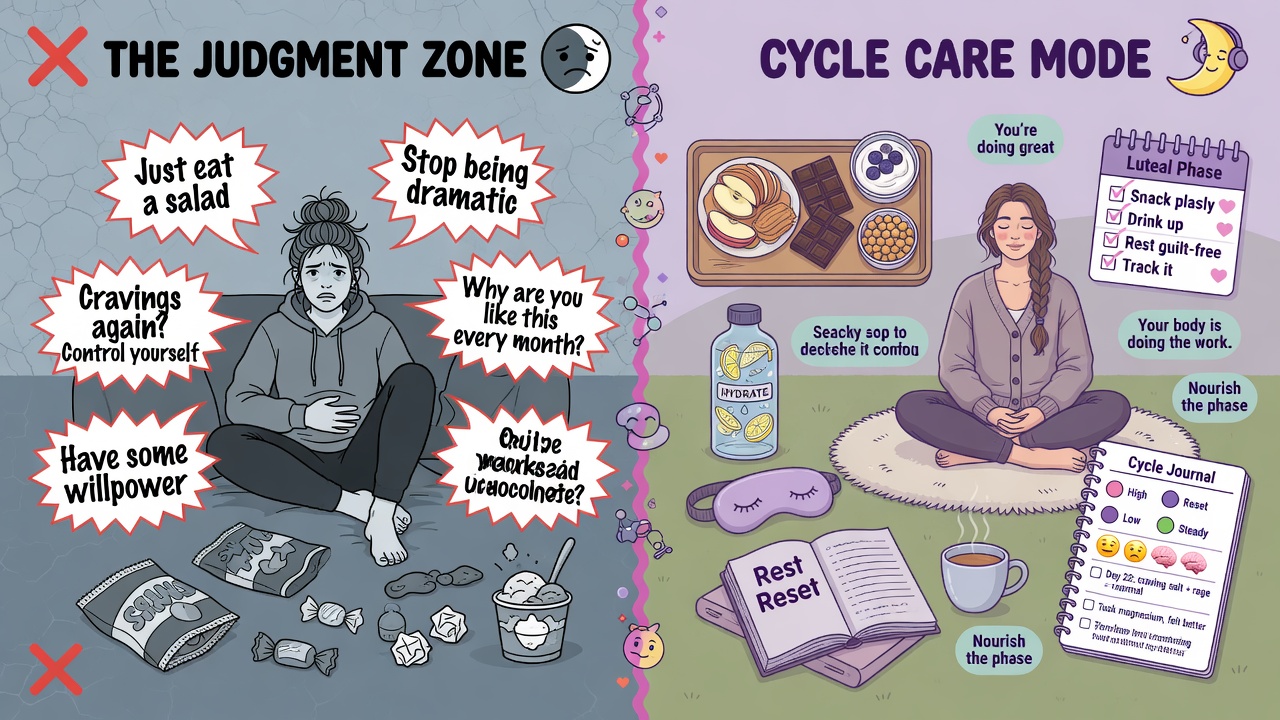
Reframing cravings as information helps replace guilt with practical support.
What Your Cravings May Be Trying to Tell You
Cravings are not always literal nutritional instructions. Wanting chocolate does not automatically mean you are deficient in one specific mineral. Craving salty snacks does not always mean your body “needs” chips. But cravings can still point to patterns worth noticing.
A sweet craving may reflect a need for quick energy, comfort, or mood support. A salty craving may show up alongside fatigue, stress, or bloating. A carbohydrate craving may be connected to shifts in mood, sleep, or serotonin-related appetite changes.
The National Library of Medicine’s StatPearls overview describes PMS as a set of psychological and physical symptoms that occur during the luteal phase and can cause meaningful distress or impairment. That matters because cravings often do not happen in isolation. They may appear alongside irritability, poor sleep, headaches, bloating, anxiety, or low mood.
In other words, cravings may be one piece of a larger cycle pattern.
This is where tracking can help. Instead of asking, “Why can’t I control myself?” try asking:
“What phase of my cycle am I in?”
“Did I sleep poorly?”
“Have I eaten enough protein or fiber today?”
“Am I stressed, overwhelmed, or under-rested?”
“Does this craving happen at the same time every month?”
This kind of self-observation turns cravings into useful data. For readers interested in a broader wellness approach, MaximHy’s future menstrual health or cycle-care resources can be naturally connected here through an internal link such as supportive cycle-care essentials from MaximHy.
Cycle Care Means Strategy, Not Restriction
Reframing PMS cravings does not mean eating anything and everything without awareness. It also does not mean forcing yourself to “beat” every craving. Cycle care sits between those extremes.
The goal is not control. The goal is support.
If you crave carbohydrates, consider pairing them with protein or fiber to help keep energy steadier. For example, toast with eggs, yogurt with fruit and granola, or rice with a protein-rich meal may feel more satisfying than eating quick sugar alone.
If you crave chocolate, you can have chocolate without turning it into a moral event. You might pair it with nuts, fruit, or a warm drink. You might choose a portion that feels satisfying and intentional. You might simply enjoy it and move on.
If you crave salty foods, hydration may also matter, especially if bloating is part of your PMS pattern. Gentle movement, adequate rest, and regular meals can also support the body during the premenstrual window.
Mayo Clinic notes that PMS symptoms can vary widely in intensity and may include food cravings, fatigue, irritability, mood changes, and depression. Symptoms can be mild for some people and disruptive for others, which is why compassion matters.
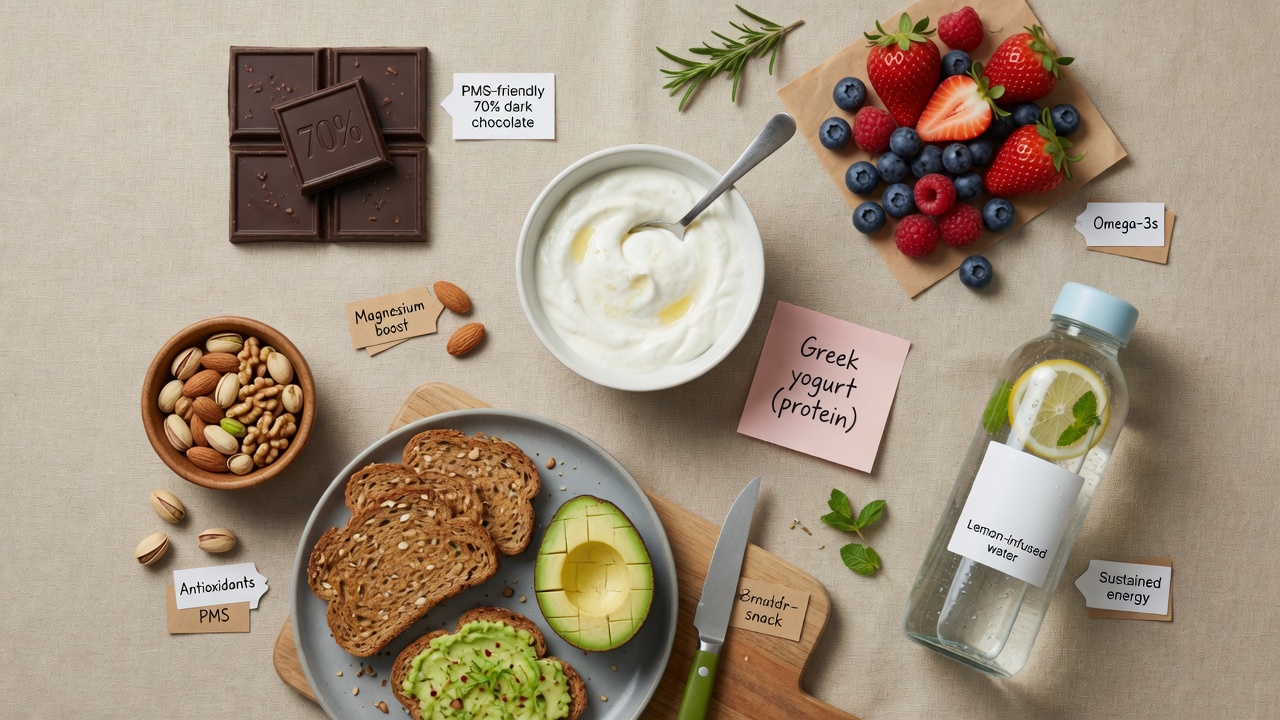
Pairing comfort foods with protein, fiber, and hydration can make cravings feel more supportive.
When PMS Cravings May Need Extra Support
Most PMS cravings are normal. But symptoms deserve professional attention when they interfere with work, relationships, sleep, eating patterns, or emotional well-being.
Severe premenstrual symptoms may be connected to premenstrual dysphoric disorder, or PMDD, a more intense condition that can affect mood and daily functioning. The Office on Women’s Health notes that severe PMS symptoms may be a sign of PMDD, and people should talk with a healthcare professional when symptoms interfere with daily life.
It is especially important to seek support if cravings are tied to binge eating, intense guilt, restrictive eating, depression, anxiety, or feeling out of control around food. That is not a character flaw. It is a sign that your body and mind may need more care than willpower can provide.
Let’s Change the Conversation Around PMS Cravings
The cultural joke about “PMS chocolate” is easy. The truth is more meaningful.
PMS cravings are not proof that women are irrational. They are not a weakness. They are not something to mock in the office, in relationships, or online. They are part of a complex interaction between hormones, brain chemistry, mood, appetite, stress, and comfort.
The question should not be, “Why do women crave chocolate before their period?”
A better question is: Why are we still laughing at women for responding normally to biology?
When we treat cravings as information, we create room for self-respect. When we treat PMS as real, we reduce shame. And when we replace jokes with education, we make it easier for women to care for their bodies without guilt.
So yes, have the chocolate if you want it. Pair it with a nourishing snack if that helps. Rest if your body is asking for rest. Track your patterns. Ask for support when symptoms feel bigger than you can manage alone.
The goal is not to win a battle against your cravings.
The goal is to listen to your body without making it the enemy.
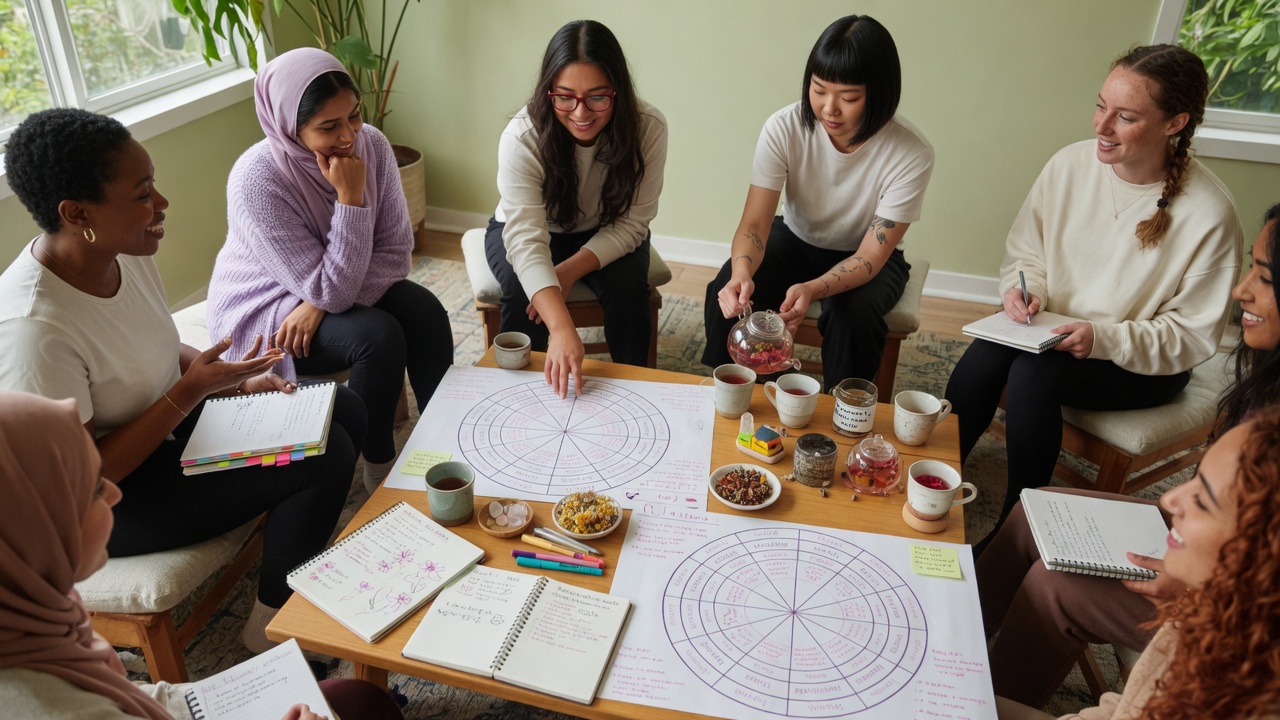
Open conversations about PMS help replace stigma with education and support.